

Reviewed · NEW ORLEANS MUSEUMS
New Orleans: The National WWII Museum Ticket
The D-Day landing craft story gives this museum a strong New Orleans connection: the boats that carried Allied troops toward Normandy were designed and built here. Inside, the scale quickly grows from local industry to a clear account of the war across Europe and the Pacific.
I like two things in particular: you can follow a servicemember’s wartime story with a paper dog tag, and the aircraft are displayed above you, with catwalks bringing you close to machines such as the B-17E Flying Fortress. The main drawback is simple: the museum is so large that a short visit leaves a lot unseen.
- New Orleans helped build the boats for D-Day. The Louisiana Memorial Pavilion links the Normandy invasion to the city’s wartime production and the American home front.
- The aircraft are overhead, not behind glass. Catwalks offer close views of restored planes, including a B-17E Flying Fortress, alongside tanks and trucks.
- The story runs from Pearl Harbor to Berlin. Campaigns of Courage covers the Pacific and European fronts through the Road to Tokyo and Road to Berlin exhibits.
- Beyond All Boundaries is an optional 4-D film. The timed presentation, narrated by Tom Hanks, uses physical effects and screen imagery to tell the war’s story.
- A few hours is not enough for everything. Set aside a full day if you want time to read, watch films, take breaks, and see more than one pavilion.
Start with the New Orleans connection
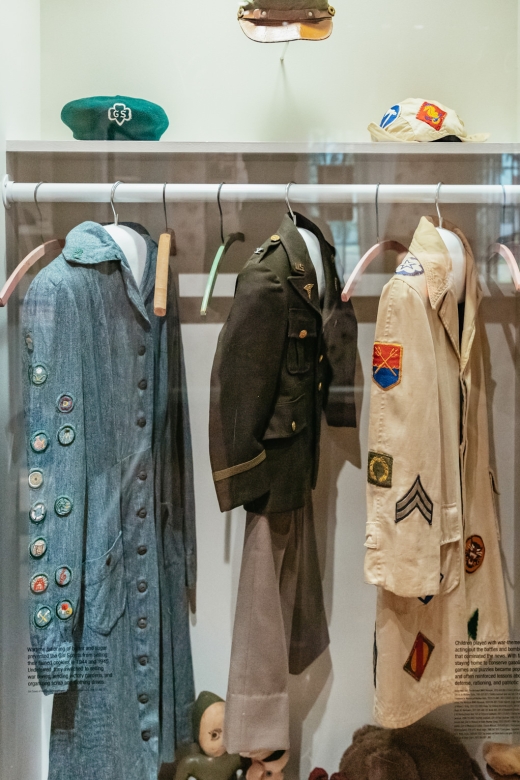
The National WWII Museum is the official World War II museum of the United States, designated by Congress. Its setting in downtown New Orleans is more than a convenient address: the city’s role in designing and building D-Day landing craft gives the museum a direct local link to one of the war’s best-known operations.
At the Louisiana Memorial Pavilion, the D-Day Invasion of Normandy exhibit places that story alongside the wider campaign. The Home Front exhibit shifts attention from battlefields to the people and work that supported the war effort. Together, these displays help answer two useful questions: how the United States prepared for war, and how people at home experienced it.
The museum presents the American experience of World War II, including why it was fought, how it was won, and what it means today. That focus gives the exhibits a strong point of view. If you want a broad, balanced account of every nation’s wartime experience, keep in mind that this is an American museum, built around the United States’ role.
Follow one person through a global war
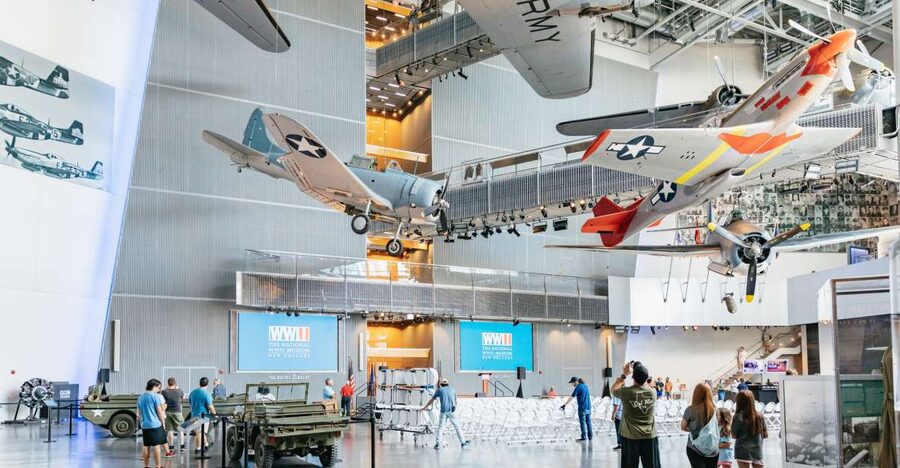
One simple way to make the displays feel less like a march through dates and battles is to pick up a paper dog tag and follow the story of a servicemember. That personal thread can help connect the big military events to the choices and hardships faced by an individual.
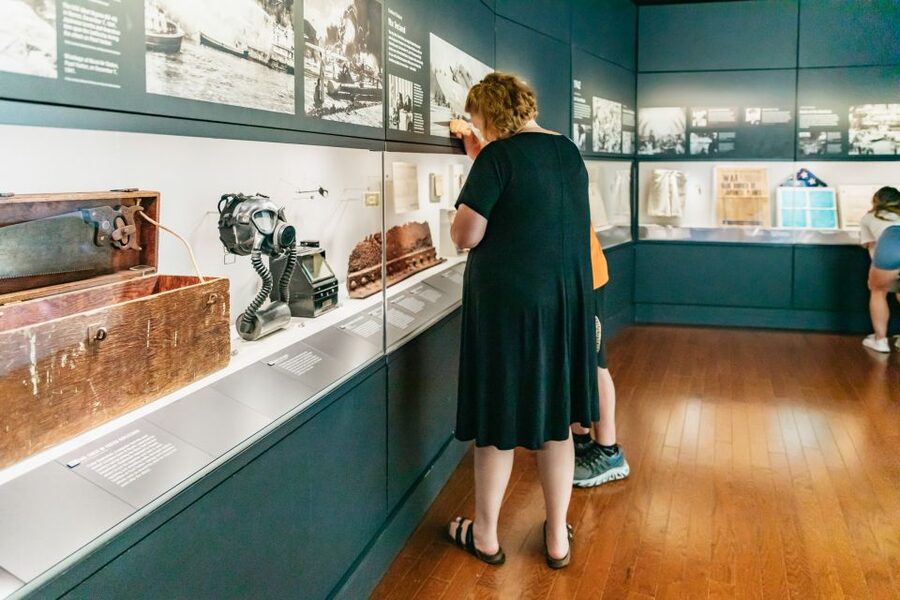
You can move at your own pace, reading exhibit text, watching short films, and stopping at artifacts that catch your attention. The displays are designed to make history accessible even without a live guide, though there is a lot to take in. If you tend to read every panel, plan generously. Several hours can pass before you have covered even part of the museum.
The scale also makes breaks useful. There are restaurants, restrooms, and places to pause within the museum, so you do not have to treat the visit as one long push from exhibit to exhibit. A visitor guide is available after your ticket is scanned, and informational booklets are offered in Chinese, English, French, Japanese, and Spanish.
More museums in New Orleans:
- The National WWII Museum Admission Ticket New Orleans
★ 5.0 · 2,202 reviews - French Quarter Walking Tour With Comp 1850 House Museum Admission
★ 5.0 · 781 reviews - The National WWII Museum Campus Pass plus 4-D Film
★ 5.0 · 672 reviews
Trace the Pacific and European campaigns
The Campaigns of Courage area follows two vast routes through the war. Road to Tokyo traces the gruelling Pacific campaign from Pearl Harbor toward Japan. Road to Berlin recreates battle settings and villages as American forces campaigned to defeat the Axis powers in Europe.
These exhibits help turn a sprawling conflict into a sequence of places, decisions, and changing conditions. They are not just a quick overview. Expect to spend time with the displays and explanatory material, particularly if you want to understand how the campaigns developed rather than simply pass through.
If you want more structure, you can add a two-hour guided tour of Road to Tokyo and Road to Berlin. A docent leads the tour, and the two hours give you a focused route through these major exhibits. The admission ticket is included, but check your selected option carefully: the time printed on a guided-tour ticket is your reserved tour time, while the museum admission itself is valid for entry at any time that day.
There is also an Arsenal of Democracy guided-tour option. The available details identify it as an add-on, but do not specify its route or duration, so check the option information before booking if those details matter to your plans.
Look up at the planes and wartime vehicles
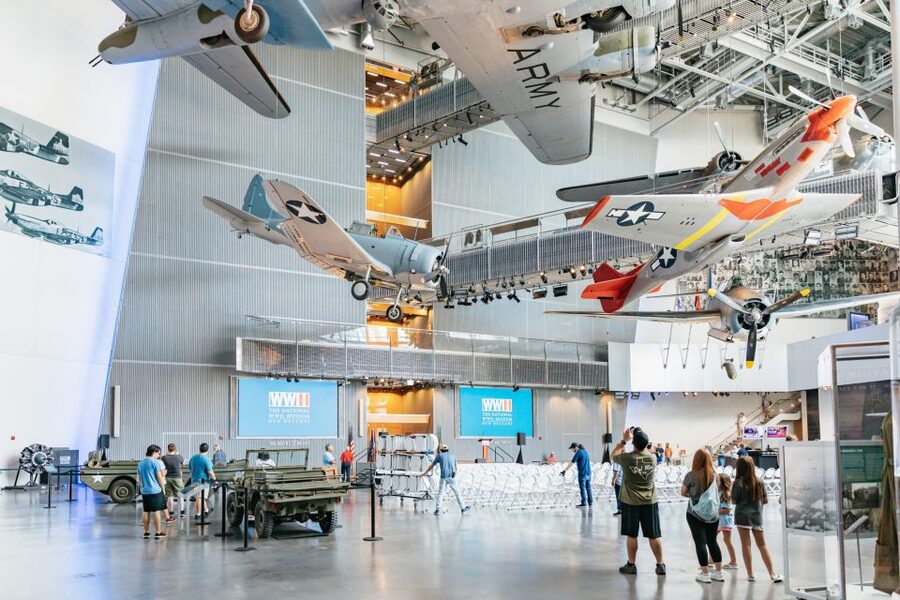
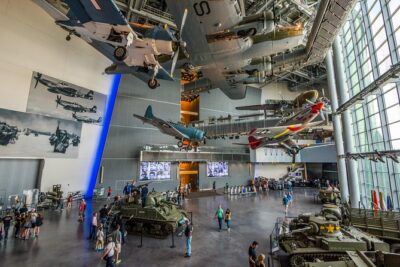
The U.S. Freedom Pavilion is one of the museum’s most striking spaces. Restored World War II aircraft hang overhead, including a B-17E Flying Fortress, with catwalks that bring you closer to the planes than a floor-level display could. The height and scale make the machinery easier to appreciate, though anyone uneasy with elevated walkways may prefer to take in the aircraft from below.
The pavilion also includes wartime tanks and trucks. Seeing vehicles alongside aircraft gives you a sense of the range of equipment involved in the war, from transport and logistics to combat. The exhibits are visually powerful, but leave time to read the accompanying information if you want more than the impressive view.
The aircraft displays are a strong reason to visit even if you are not a military-history specialist. Their size makes an immediate impression, while the restoration work and historical context give you more to consider than a quick photo stop.
Decide if the 4-D film suits your visit
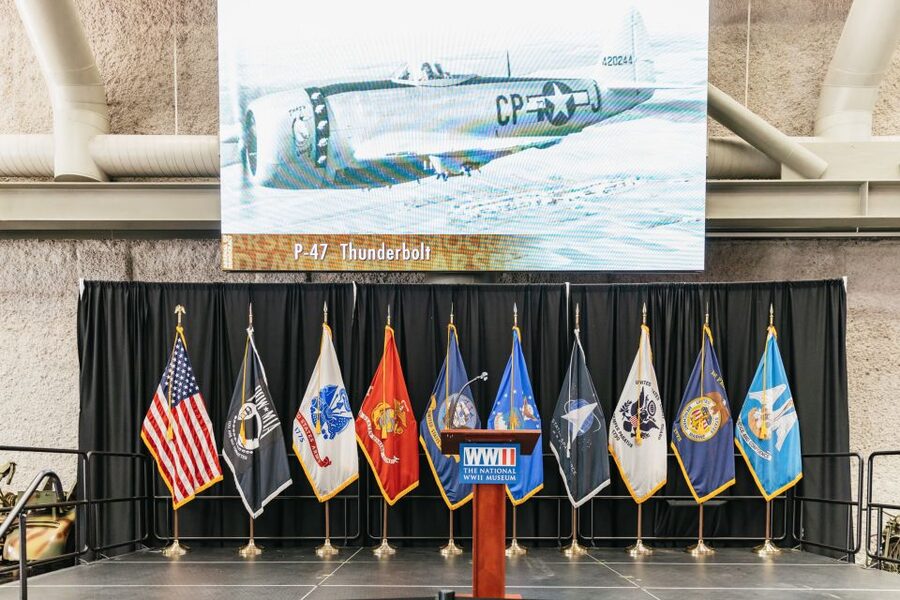
Beyond All Boundaries, narrated by Tom Hanks, plays in the Solomon Victory Theatre. The 4-D presentation combines film with physical effects to bring the war’s story to the senses. It is an optional extra, not part of every admission ticket, so choose an option that specifically includes the timed movie if you want to see it.
The film is a useful way to experience the scale and emotional weight of the conflict in a set amount of time. It can also provide a shared starting point for a family or group before you split up to explore exhibits at different speeds. The presentation is intense in tone, so it may not suit everyone, particularly younger children or anyone who prefers to avoid sensory effects.
Check the time carefully when you book. If your ticket includes the film, the time shown is your reserved movie time, not your required museum-entry time. Your admission ticket is valid for entry at any time during the day.
More tickets and passes in New Orleans:
- New Orleans: Vue Orleans Observation Deck Entry Ticket
★ 4.7 · 132 reviews - New Orleans: Audubon Aquarium & Insectarium Ticket
★ 4.5 · 93 reviews - Vue Orleans: Observation Deck Entry Ticket
★ 4.5 · 87 reviews - Audubon Zoo Ticket
★ 4.5 · 75 reviews
Give the museum more than an afternoon
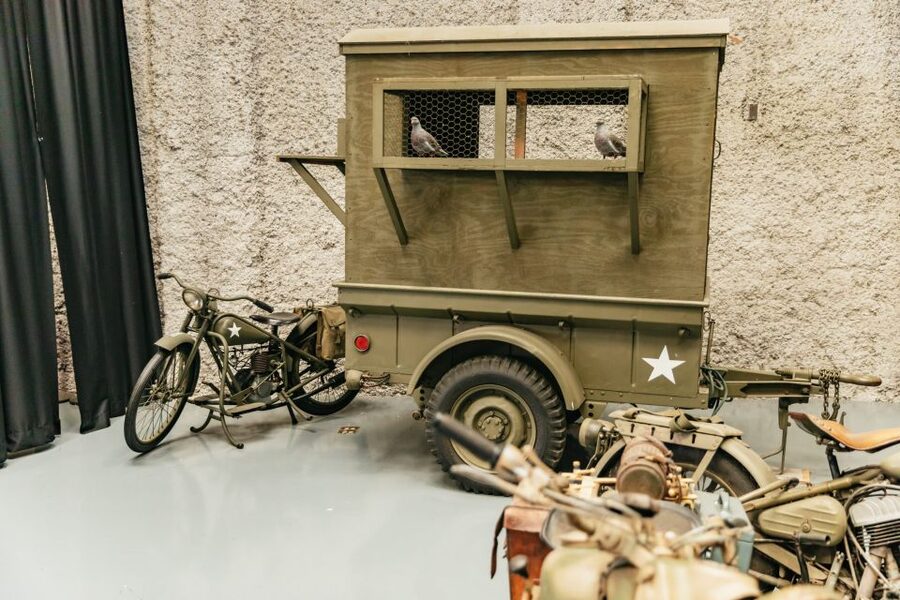
The museum is arranged across five soaring pavilions, with exhibitions, restoration work, a theatre, and dining options. That size is its great strength, but also the main planning challenge. Visitors who arrive late in the day should expect a shortened visit, and anyone arriving after 3:00 PM should not count on seeing the full museum.
A half-day can work if you choose a few priorities, such as the D-Day exhibit, the aircraft, and the 4-D film. If you want to read deeply, follow the campaigns, and take breaks, reserve the whole day. Some people return for a second day, which is a sensible option if history is a major reason for your trip to New Orleans.
The best pace is not necessarily the fastest one. The subject is heavy, and the museum is designed for looking and listening as well as moving through the galleries. Leave space for a meal or a quiet pause instead of trying to check off every building.
What the $37 ticket includes
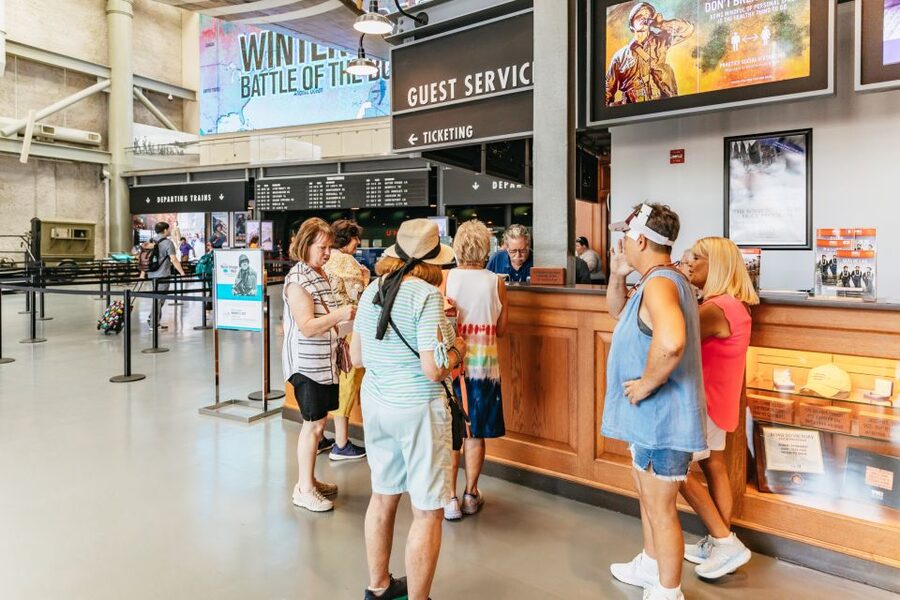
The listed admission price is $37 per person. The basic ticket gives you one day at the museum, with timed or non-timed entry depending on the option you select. Add-ons for the 4-D film and guided tours are separate choices, and their cost depends on the option available when you book.
For a quick visit, $37 may feel steep, especially if you only have a few hours. For a full day of substantial exhibits, restored aircraft, and the option to add a film or tour, the price buys access to a major museum rather than a short, guided attraction. The value depends on how much time you can give it.
Booking a timed ticket in advance helps secure your preferred entry or movie time, and the ticket lets you skip the ticket line. The admission ticket is good for anytime entry on the day if you have booked an option with a timed film or tour. Free cancellation is available up to 24 hours in advance, and a reserve-now, pay-later option is offered.
Plan the practical details before you go
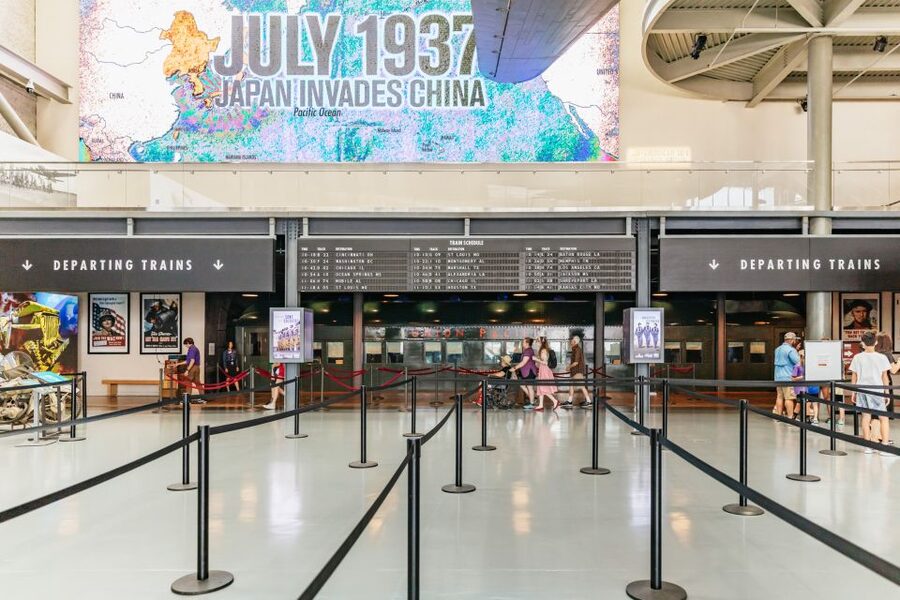
Enter at the main museum entrance on the north side of Andrew Higgins Boulevard. Show your barcoded ticket, then follow staff directions to have the barcode scanned and pick up your visitor guide. Staff and volunteers can help point you toward the right areas, which is useful in a museum with several buildings and checkpoints.
The museum is wheelchair accessible, but the number of wheelchairs available to borrow is limited and offered on a first-come, first-served basis. If you need one, plan around that limitation. No flash photography or video is allowed.
Paid parking is available in the museum garage at 1024 Magazine Street. The American Sector Restaurant & Bar is open Sunday through Friday from 11:00 AM to 2:00 PM, and Saturday from 11:00 AM to 3:00 PM. There are also other food options on site, so you can take a break without leaving the museum.
Is this museum right for your New Orleans itinerary?
I would make room for the National WWII Museum if you have a strong interest in history, military technology, or the human stories behind a global conflict. It also suits families with school-age children and teens who are ready for serious subject matter: the exhibits use visual displays, artifacts, films, and personal stories to keep the history engaging.
It is less suited to a rushed stop between other plans. You can still get something from a shorter visit, but you will need to choose what matters most and accept that you will miss a lot. If you have only an afternoon, focus on the D-Day and Home Front exhibits, then decide whether the aircraft or the 4-D film is your priority.
For a fuller visit, book an early entry time, allow the day, and consider the film or a guided Campaigns of Courage tour if you want more context. The museum’s size can be tiring, and parts of the story are emotionally difficult, but its scale and care make it one of the strongest uses of a history-minded day in New Orleans.
FAQ
How much does admission cost?
The listed ticket price is $37 per person. Options that include the 4-D film or a guided tour may have different prices.
How long should I plan to spend at the museum?
Plan for a full day if you want to see as much as possible. A half-day can cover selected exhibits, but the museum is large, and a late arrival means a shortened visit.
Is Beyond All Boundaries included with admission?
Only if you select an option that includes the 4-D film. The movie has a reserved time, while the admission ticket included with that option is valid for entry at any time that day.
What does the Campaigns of Courage guided tour cover?
The two-hour guided tour covers the Road to Tokyo and Road to Berlin exhibits. It is led by an expert docent and is available as an optional booking.
Where is the museum entrance?
Use the main entrance on the north side of Andrew Higgins Boulevard. Show your barcoded ticket and follow staff directions for scanning and picking up a visitor guide.
Is the museum wheelchair accessible?
Yes. The museum is wheelchair accessible, but wheelchairs for visitor use are limited and available first come, first served.
Where can I park, and can I eat at the museum?
Paid parking is available in the museum garage at 1024 Magazine Street. The American Sector Restaurant & Bar is open Sunday through Friday from 11:00 AM to 2:00 PM and on Saturdays from 11:00 AM to 3:00 PM.
Newest tours in New Orleans
- New Orleans : Garden District Architecture Walking tour★ 4.8 · 5 reviews
- Ultimate Denver Day Out: Red Rocks, City Views & Ice Cream★ 5.0 · 7 reviews
- True Voodoo History of NOLA’s Congo Square with Local Guide★ 4.9 · 16 reviews
- From New Orleans: Whitney and Laura Guided Plantation Tour★ 4.9 · 20 reviews
- Witches Coven Walking Tour in New Orleans★ 5.0 · 49 reviews
- Treme Bar Crawl & Seafood Experience★ 4.2 · 7 reviews
- Craft brewery hopping through New Orleans | Uptown★ 5.0 · 31 reviews
- New Orleans Self-Guided Kayak Bayou Swamp Tour★ 5.0 · 9 reviews
New Orleans Museums, compared.
The National WWII Museum Admission Ticket New Orleans
Read our review →
French Quarter Walking Tour With Comp 1850 House Museum Admission
Read our review →
The National WWII Museum Campus Pass plus 4-D Film
Read our review →

Whitney Plantation and Museum Tour from New Orleans
Read our review →
Museum of the Southern Jewish Experience in New Orleans
Read our review →
Old Ursuline Convent Museum Ticket: New Pope Leo XIV Exhibit
Read our review →Browse the lists this tour appears in