
Reviewed · NEW ORLEANS VOODOO TOURS
Voodoo Queen of New Orleans Walking Tour
New Orleans voodoo is more than the spooky shorthand of dolls and ghost stories. This 90-minute walk puts the religion in its historical setting, tracing connections to African and Haitian traditions, Catholic rites, Marie Laveau, and Congo Square. I like that it aims to explain what voodoo is and is not, and that it links the subject to the city’s music and Black history.
I also like the chance to hear about the Laveau family at the place associated with Marie Laveau’s home, then visit Congo Square, where your guide connects voodoo traditions with jazz. One consideration: this is a walking history tour, not a theatrical ghost hunt, and the French Quarter’s uneven streets and sidewalks can be hard to manage.
- Congo Square links two traditions: Hear how the site’s history connects to voodoo and jazz.
- Marie Laveau takes center stage: Learn about the Voodoo Queen and her daughter, also named Marie Laveau.
- Expect context, not just spooky lore: Guides explain the religion and its place in New Orleans history.
- The route includes local landmarks: Stops may include Voodoo Authentica, a voodoo temple, and St. Louis Cathedral.
- Plan for an outdoor walk: The tour lasts about 90 minutes, runs in varied weather, and covers historic streets.
- Guides vary: Gomez, Orion, Scott, Wes, and others have led tours, so no particular guide is guaranteed.
A French Quarter walk with a different focus
The Voodoo Queen of New Orleans tour takes a subject often reduced to haunted-house stories and gives it a wider frame. Your licensed guide leads a walk through the French Quarter, explaining how voodoo, or Voudou, developed in New Orleans through African and Haitian traditions and Catholic rites. The goal is not to sell you a fearsome legend, but to help you understand the people, beliefs, and history behind it.
That distinction matters. Some visitors come expecting a dark, spooky tour and find a thoughtful history lesson instead. If you want jump scares and ghost theatrics, this may feel restrained. If you want to understand why voodoo belongs to the story of New Orleans, the approach is a strength.
The tour is about 90 minutes and costs $25.60 per person. For that price, you get a guided walk, several stops, and a focused introduction to a subject that can be hard to sort out on your own. It is a good-value way to add context to a French Quarter visit, especially if you are curious about the city’s religious and musical roots.
Starting among the Quarter’s landmarks
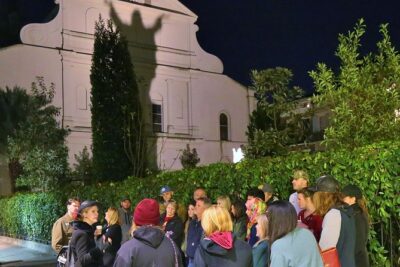
Meet at Bon’s New Orleans Street Food, 620 Decatur Street, Unit 1B. The walk begins in the heart of the French Quarter, with St. Louis Cathedral among the landmarks you pass. The cathedral is the oldest in the United States in continuous use, a useful reminder that this is also a tour of the city’s long religious history.
The route is subject to change for parades, construction, or other conditions, so treat the stops as a guide to the experience rather than a fixed sequence. The main focus remains the French Quarter and the history tied to it. The activity ends back at the starting point.
The tour starts at 11 a.m. and has a maximum group size of 28. That is large enough to bring a bit of group energy, but small enough for a guide to invite questions and make sure people can hear. Guides including Gomez, Orion, Scott, Wes, DJ, John, and Carlos have led tours. The particular guide on your date can vary.
More voodoo tours in New Orleans:
- New Orleans Premier Ghost, Voodoo and Vampire Walking Tour
★ 4.5 · 12,856 reviews - Adults-Only New Orleans Ghost, Crime, Voodoo, and Vampire Tour
★ 5.0 · 6,545 reviews - New Orleans Adults-Only Ghost, Voodoo and Vampire Tour
★ 5.0 · 3,291 reviews
Understanding voodoo beyond the movie version
Your guide provides the historical foundation as you walk. The tour describes voodoo as a folk religion shaped by African and Haitian influences and Catholic rites. It also traces its arrival in Louisiana through enslaved West Africans and the influence of Haitian immigrants after the 1791 revolution.
That context helps correct a familiar misconception: voodoo is a living religious practice, not just a prop for horror stories. Several guides are praised for making this distinction clear and treating the subject with respect. Gomez, Orion, and Wes are among the guides whose storytelling has been noted for balancing humor with care for the culture.
Expect the guide to weave in broader New Orleans history, including the slave trade and its brutality. That is important context, but it may be a heavy subject for some children. The tour is described as suitable for all ages, though parents should decide what their own children are ready to hear.
Voodoo shops and the Quarter’s working history
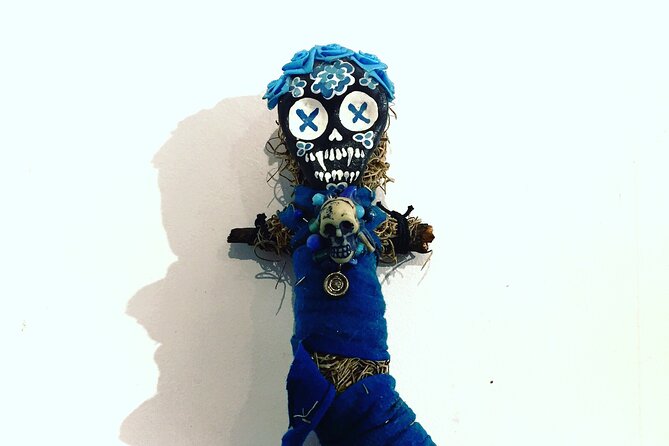
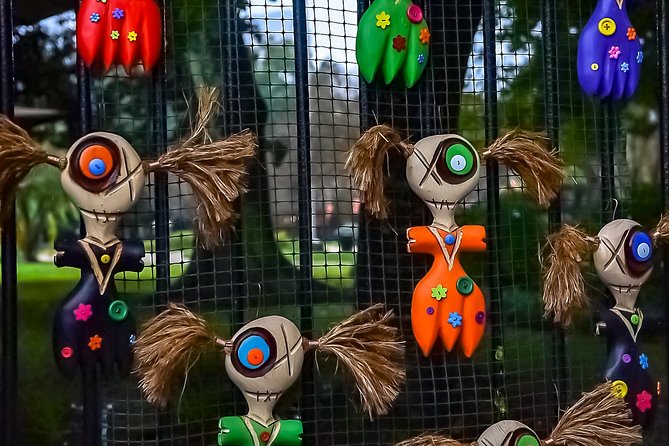
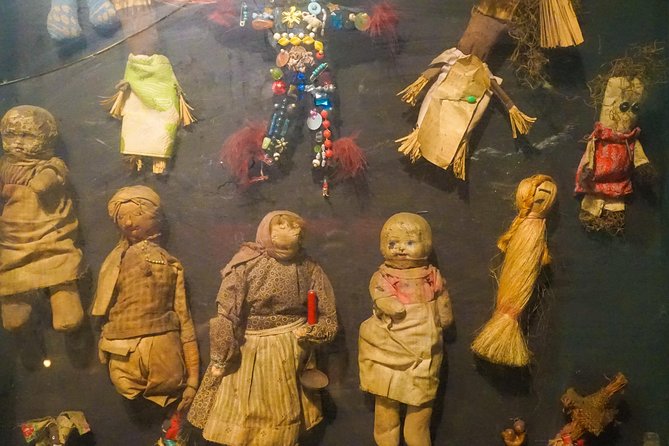
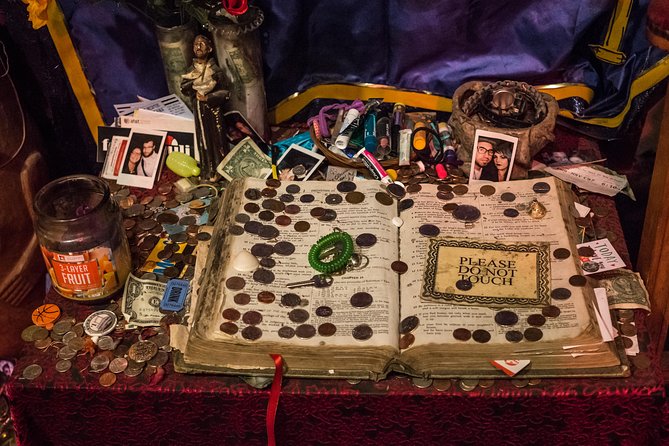
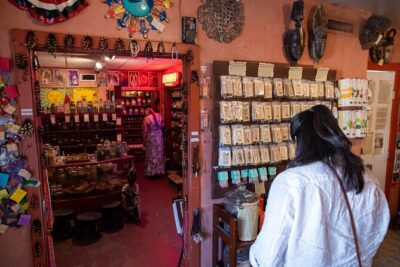
The route includes a stop at Voodoo Authentica, described as an authentic voodoo shop, with time to look around. You may also pass or visit Marie Laveau’s House of Voodoo and the New Orleans Historic Voodoo Museum, depending on the route. These places give you a view of how voodoo is presented and practiced in the city today, alongside the stories your guide shares.
A shop visit is not the same as a formal lesson in religious practice, so use it as one piece of the picture rather than the whole story. The guide’s explanation is what helps you put the objects and displays in context. You may hear about potions and protection spells, but this is not a shopping tour, and purchases are not included in the price.
The tour also stops at a voodoo temple, according to the experience description. Exact access and timing can depend on the route, so avoid counting on a long visit inside any one site. The broader value comes from connecting places, traditions, and people as you move through the neighborhood.
Congo Square, where music and memory meet
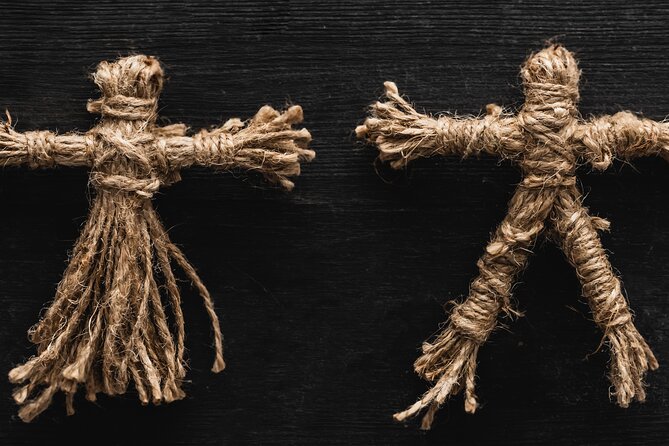
Congo Square is one of the most meaningful stops. Your guide spends about 10 minutes discussing its role in voodoo history and jazz traditions. The site gives the tour a physical anchor: instead of hearing about culture in the abstract, you stand in a place central to the story being told.
The guide connects the Square’s history with the development of New Orleans music. That connection is one of the tour’s strongest threads, and some guides bring music into the experience through singing or playing. Gomez, for example, has used music to underline how nature, music, and connection feature in voodoo traditions. The tour may also end with a second line, a lively local-style procession that can be a memorable surprise.
This is not a concert or a music-history walk, so the focus stays on context rather than performance. Still, if you are interested in how New Orleans culture formed, Congo Square helps link the tour’s religious history to the city’s musical identity.
More walking tours in New Orleans:
- New Orleans Food Walking Tour of the French Quarter with Small-Group Option
★ 5.0 · 6,118 reviews - St. Louis Cemetery No. 1 Official Walking Tour
★ 4.5 · 3,941 reviews - New Orleans French Quarter, Voodoo and Culture Walking Tour
★ 4.5 · 2,961 reviews - New Orleans Garden District History Walking Tour
★ 5.0 · 2,879 reviews
Marie Laveau and the stories that last
The Laveau family is at the heart of the tour. You stop for a photo at the original location associated with Marie Laveau’s home and hear about her influence on voodoo and New Orleans. Her daughter, also named Marie Laveau, is part of the story too. The family’s impact is presented as more than legend: their place in the city’s history helps explain why the Voodoo Queen remains such a powerful figure.
The tour also passes Rampart Treehouse, associated with the site of Marie Laveau’s last reported ghost sighting. Take that story in the spirit it is offered: as local lore attached to a historic figure, not a promise of a supernatural encounter. The tour may mention New Orleans cemeteries, including St. Louis Cemetery No. 1 and Marie Laveau’s tomb, but cemetery entry is not included.
If visiting her tomb is important to you, keep in mind that this walk does not enter the cemetery. It offers background and points out relevant sites as you pass, rather than serving as a cemetery tour.
What the pace, weather, and access mean for you
The tour covers a fair amount of ground on foot. Comfortable shoes are a sensible choice, and layered clothing helps you adapt to the day. It operates in all weather conditions, so bring weather-appropriate clothing; if the provider cancels because of poor weather, you can choose another date or receive a full refund.
The route is described as mostly flat and paved, and the tour is listed as wheelchair accessible. Still, the historic Quarter’s streets and sidewalks can pose challenges, especially for someone using a manual wheelchair. A guide has accommodated a wheelchair user and service dog, but that does not remove the bumps and difficult surfaces. If you have mobility concerns, contact the operator before booking and allow extra time on the route.
Service animals are allowed, and most people can participate. Food and drink are not included. Parking is limited and costs extra, so walking, public transportation, or a ride-share may be easier than driving. Arrive at least 15 minutes early, and check your confirmation for the precise meeting instructions.
Is $25.60 a fair price?
At $25.60, the tour is a modest-cost way to get a guided introduction to voodoo, Marie Laveau, and Congo Square without committing half a day. The licensed guide is included, as is the 90-minute walk. Parking, food, drinks, and cemetery admission are not.
The value depends on what you want from the subject. If you want a serious, approachable account of voodoo and its place in New Orleans, the price is fair. If you are mainly hoping to enter a cemetery, spend a long time in a museum, or shop for voodoo items, this walk may not cover enough of those things to meet your expectations.
The tour is often booked about 22 days in advance. That is useful to know if your dates are fixed, though it does not mean you need to plan every detail weeks ahead. Free cancellation is available until 24 hours before the start time; cancellations or changes within that window are not accepted, and late cancellations are not refunded.
Who should book this walk?
I would choose this tour if you want more than a list of haunted spots. It suits history-minded visitors, music fans, and anyone curious about how New Orleans’ traditions formed. Families can take part, but parents should weigh the discussion of enslavement and the sometimes-spooky subject matter against their children’s ages and interests.
The strongest part is the way good guides connect voodoo to the city’s broader history. Names such as Gomez, Orion, Scott, Wes, DJ, John, and Carlos come up in accounts of warm, lively guiding, but you cannot select a particular guide based on the information here. What you can expect is a walking tour designed to explain, not just entertain.
Book it if you want a thoughtful introduction to voodoo and its ties to Marie Laveau, Congo Square, and jazz. Skip it if you are after a theatrical ghost tour or guaranteed cemetery entry. For a short, reasonably priced walk that gives the French Quarter a deeper story, it earns its place in a New Orleans itinerary.
FAQ
How long is the Voodoo Queen of New Orleans tour?
It lasts about 90 minutes and ends back at the meeting point.
What is the price?
The listed price is $25.60 per person.
What time does the tour start?
The scheduled start time is 11 a.m.
Where does the tour meet?
The listed meeting point is Bon’s New Orleans Street Food, 620 Decatur Street, Unit 1B, New Orleans. Arrive at least 15 minutes early and check your confirmation for meeting instructions.
Is the tour offered in English?
Yes. The tour is offered in English, and it includes a mobile ticket.
Is parking available?
Parking near the departure location is limited, and fees apply. Walking, public transportation, or a ride-share may be more convenient.
Is the tour suitable for children?
The tour is described as appropriate for all ages. It includes history about the slave trade and its brutality, as well as voodoo-related material, so parents should decide what is right for their children.
Is the route wheelchair accessible?
The tour is listed as wheelchair accessible, and the route is mostly flat and paved. Historic streets and sidewalks may still be difficult to navigate.
Does the tour visit Marie Laveau’s tomb?
No cemetery entry is included. The guide may discuss her tomb at St. Louis Cemetery No. 1 and point out relevant sites while passing.
What happens if the tour is canceled because of bad weather?
If the provider cancels the experience because of poor weather, you will be offered another date or a full refund. The tour otherwise operates in all weather conditions, so dress appropriately.
Newest tours in New Orleans
- New Orleans : Garden District Architecture Walking tour★ 4.8 · 5 reviews
- Ultimate Denver Day Out: Red Rocks, City Views & Ice Cream★ 5.0 · 7 reviews
- True Voodoo History of NOLA’s Congo Square with Local Guide★ 4.9 · 16 reviews
- From New Orleans: Whitney and Laura Guided Plantation Tour★ 4.9 · 20 reviews
- Witches Coven Walking Tour in New Orleans★ 5.0 · 49 reviews
- Treme Bar Crawl & Seafood Experience★ 4.2 · 7 reviews
- New Orleans Self-Guided Kayak Bayou Swamp Tour★ 5.0 · 9 reviews
- Whitney Plantation and Soul of New Orleans City Tour Combo★ 5.0 · 13 reviews
New Orleans Voodoo Tours, compared.
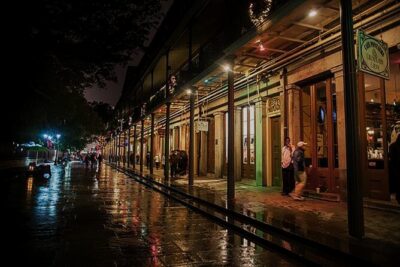
New Orleans Premier Ghost, Voodoo and Vampire Walking Tour
Read our review →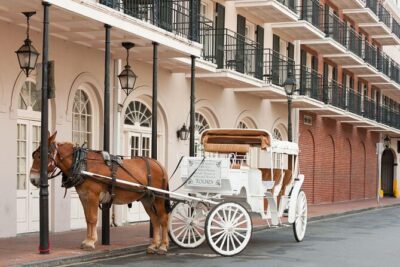
Adults-Only New Orleans Ghost, Crime, Voodoo, and Vampire Tour
Read our review →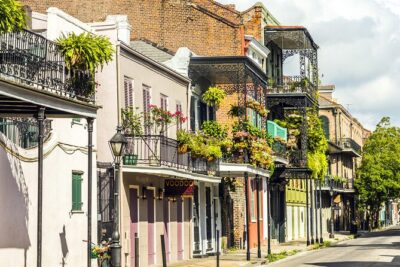
New Orleans French Quarter, Voodoo and Culture Walking Tour
Read our review →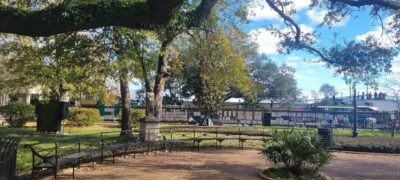
New Orleans Ghost, Vampire, Witch, Voodoo, and Mystery Tour
Read our review →
New Orleans Spirits & Spells: Witchcraft, Voodoo, and Ghost Tour
Read our review →
New Orleans Combo Tour: Voodoo, Vampire, and Ghost Tour
Read our review →Browse the lists this tour appears in