
Reviewed · NEW ORLEANS CITY TOURS
Soul of New Orleans City Tour: Enslavement to Modern Day Culture
New Orleans jazz, civil rights history, and the legacy of enslavement are not separate stories here. This tour links them across neighborhoods, with guides such as Jay and Dennis explaining how Black communities shaped the city and continue to shape it today.
I like two things in particular: the mix of neighborhood stops and historical context, and the chance to hear a guide speak from a local perspective. Videos and personal encounters have also been part of some tours, adding faces and voices to the history.
One consideration: the named stops at Treme, Congo Square, and Studio Be are brief, listed at five minutes each. Much of the experience relies on commentary from the air-conditioned vehicle, so this is better for learning and orientation than for long, independent visits at each site.
What to know before you go
- Treme connects jazz with civil rights history: The tour introduces one of the country’s oldest Black communities and its place in New Orleans music and activism.
- Congo Square is a cultural landmark: Hear about the African rhythms and Creole traditions that met here, and about enslaved people who gathered to share music, dance, and culture.
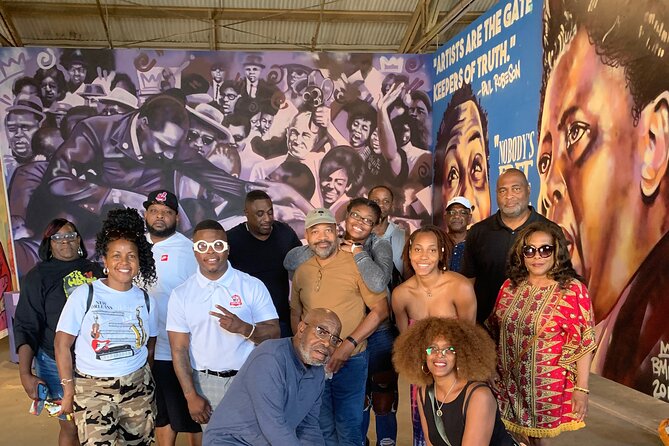
- Studio Be brings the present into view: The stop offers a look at striking New Orleans murals and the stories they carry.
- Guides Jay and Dennis have led tours: Their personal perspectives, storytelling, videos, and willingness to answer questions have been a major part of the experience.
- The bus makes a wide-ranging route practical: Air-conditioned transport covers unfamiliar neighborhoods without requiring you to navigate them yourself.
- Plan for a serious, sometimes emotional subject: The tour addresses enslavement, segregation, and Hurricane Katrina, as well as community resilience and cultural life.
A city story told through its neighborhoods
At about 2 hours and 45 minutes, Soul of New Orleans is designed to connect places that can feel far apart when you are on foot. The route moves beyond the familiar French Quarter and into neighborhoods whose histories are central to the city’s identity. A guide does the navigating while you listen, watch, and ask questions.
The tour’s subject is broad: enslavement to modern-day culture. That means it is not simply a music tour or a sightseeing loop. It gives you context for jazz and local art, while also addressing the people and forces behind the city’s cultural traditions. Expect serious history alongside an engaging, conversational approach.
Jay and Dennis are among the guides associated with the experience. Their styles are described as warm and lively, with local knowledge and a clear interest in getting the details right. Some tours have included video footage to support the commentary, and guides have made room for questions rather than rushing through their stories. The guide can make a substantial difference here: much of the value comes not just from seeing places, but from understanding why they matter.
The group is capped at 24 people, which helps keep the trip from becoming a large coach excursion. You still have a group, but it is small enough for questions and discussion to feel possible. If you prefer quiet, self-guided visits, the bus format may feel less personal than exploring on your own. If you want an informed introduction without managing the route, it is a useful trade.
More city tours in New Orleans:
- New Orleans City Sightseeing Hop-On Hop-Off Bus Tour
★ 4.5 · 4,943 reviews - New Orleans Sightseeing City Tour
★ 5.0 · 3,038 reviews - Cemetery and Ghost BYOB Bus Tour in New Orleans
★ 4.5 · 2,685 reviews
Treme, where jazz and civil rights meet
Treme is one of the tour’s key stops. The guide introduces its role in the civil rights movement and its importance as one of America’s oldest Black communities. The neighborhood is also closely tied to the birth of jazz, so the stop links the city’s musical identity with the experiences of the people who built and sustained it.
The listed stop is about five minutes, so think of it as a short orientation, not a long walk through the neighborhood. You may pass music venues and hear about jazz figures and local traditions, but the tour’s strength is the context delivered alongside the view. If you want to spend more time in Treme afterward, ask your guide for ideas while you are together.
This kind of introduction is especially useful early in a New Orleans visit. It gives you a frame for later encounters with local music and culture, and helps explain why the city’s story cannot be reduced to its best-known streets. The guide’s stories are the main event here, rather than a lengthy stop or a performance.
Congo Square and the roots of local culture
Congo Square carries a different weight. The tour describes it as a gathering place where enslaved people shared music, dance, and culture, and where African rhythms met Creole traditions. That history gives you a way to understand cultural exchange not as an abstract idea, but as something shaped by people living under harsh conditions.
The stop is also listed at five minutes. That is enough for a focused explanation, but not a deep exploration of every layer of the site’s history. Pay attention to the guide’s account and ask questions if you want to follow a particular thread. The tour is most effective when you treat each short stop as part of a wider story, rather than expecting a full lecture at every location.
Congo Square helps make the link between New Orleans’ past and its present more tangible. The music and traditions that define the city have histories, and this stop invites you to consider the people whose creativity persisted despite enslavement and oppression. The subject is difficult, but avoiding it would leave the city’s cultural story incomplete.
Studio Be, where history becomes art
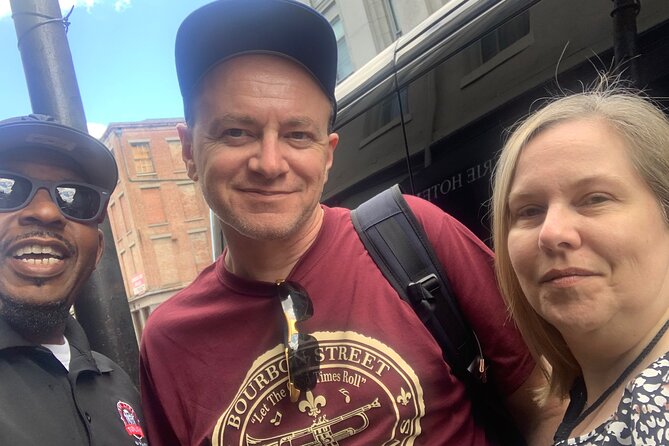
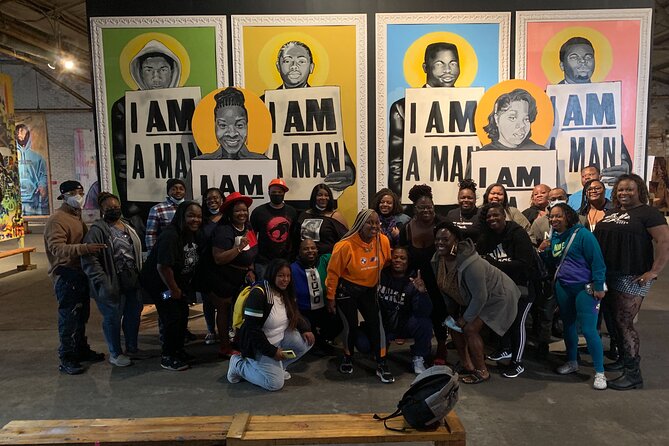
Studio Be offers a visual change of pace. The tour gives you an opportunity to see murals by New Orleans artist Brandan Odums, whose work has been singled out as a highlight. The art brings contemporary voices into a tour that also looks far back, making clear that the city’s story is still being told and challenged.
As with the other listed stops, the visit is brief, about five minutes. You may have time to take in some of the murals and hear why they matter, but do not expect an extended gallery visit. If art is a priority, ask whether there is time to return independently after the tour.
The stop works well in the sequence because it shifts the focus from historical accounts to present-day expression. The tour does not treat Black culture as something confined to the past. Instead, it shows how art can respond to history, place, and the lives of people in New Orleans now.
Same city, a different kind of day:
- New Orleans Premier Ghost, Voodoo and Vampire Walking Tour
★ 4.5 · 12,856 reviews - New Orleans Steamboat Natchez Jazz Cruise with Dinner Option
★ 4.0 · 7,533 reviews - Adults-Only New Orleans Ghost, Crime, Voodoo, and Vampire Tour
★ 5.0 · 6,545 reviews - New Orleans Food Walking Tour of the French Quarter with Small-Group Option
★ 5.0 · 6,118 reviews
Beyond the three named stops
The experience’s wider subject matter can include the Lower Ninth Ward, Hurricane Katrina, and the levees whose failure devastated parts of the city. The route and stops can vary, so do not assume that every outing will include every site. But the tour’s broader coverage has included the Ninth Ward and stories about the storm’s continuing effects.
This part of the tour can be emotional. It places the scale of Katrina’s impact alongside the realities of recovery and community resilience. A guide may use video footage to help explain what you are seeing, and some tours have included personal conversations or encounters that make the history feel close at hand. These moments are not something to count on as a scheduled feature, but they can add a powerful human dimension.
The tour has also covered school desegregation and the bravery of the McDonogh Three, including Dr. Leona Tate, and has touched on the TEP Center and local cultural figures. These subjects expand the focus beyond music and architecture to the people who fought for change and the institutions that preserve their stories. If these topics matter to you, ask your guide what the day’s route is likely to include.
What the price and format buy you
At $55 per person, the price buys nearly three hours of guided context and air-conditioned transport through several neighborhoods. That is worthwhile if you want a broad introduction without arranging separate rides or researching each area yourself. The guide is central to the value: the bus gets you around, but the commentary connects the places.
The format is practical in New Orleans heat or when you are short on time. You meet at Adventures in New Orleans, 414 Canal Street, and return to the same point. The tour is offered in English, uses a mobile ticket, and has a maximum group size of 24. It is also listed as suitable for most participants, and service animals are allowed.
The trade-off is limited time on the ground. The three named stops are short, and the tour is not built around meals, shopping, or long visits. One useful approach is to take notes on the places and food recommendations your guide shares, then choose a few to revisit on your own. The tour is booked an average of 19 days ahead, so it is sensible to plan early if your schedule is fixed.
Who will get the most from this tour
I would choose this experience if I wanted to understand how New Orleans became the city I was seeing, especially if I had limited time or did not want to navigate unfamiliar neighborhoods alone. It suits solo visitors, couples, and families interested in history and culture. Families with a wide range of ages have taken part, and the interactive guiding style can help keep younger visitors engaged.
It is also a strong fit for anyone who wants the Black history of New Orleans placed at the center of the story, not treated as a side note. The focus on enslavement, jazz, civil rights, Katrina, and current art makes this a thoughtful choice for visitors who want more than a scenic ride.
You may prefer another format if your priority is a long, quiet walk, detailed time inside each location, or a tour focused mainly on food and music venues. The itinerary’s short stops mean you will not have much time to explore independently. For the best balance, take this tour early in your stay, then use what you learn to decide where to return.
Should you book Soul of New Orleans?
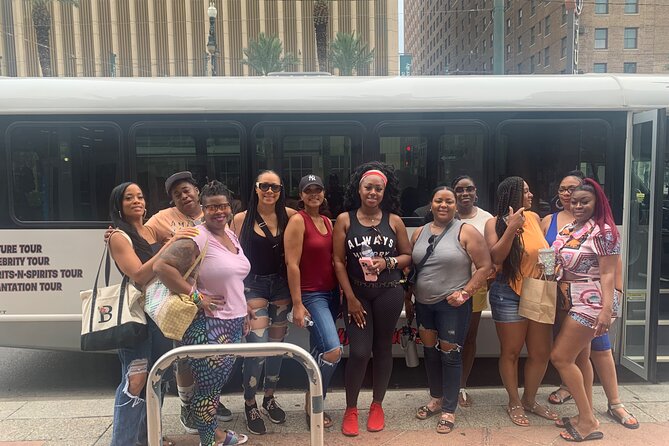
Book it if you want a guided, people-centered introduction to New Orleans, with serious history and a look at how that history shapes culture today. The strongest reasons to go are the local storytelling, the range of neighborhoods, and the chance to connect places such as Treme, Congo Square, and Studio Be to larger stories of music, resilience, and change.
Keep your expectations clear: this is a compact bus tour, not a series of lengthy site visits. At $55, it offers good value for a well-guided overview, particularly if Jay or Dennis is leading your outing. Be ready for some emotional subject matter, and leave time afterward to revisit any neighborhood or artwork that catches your attention.
FAQ
How long is the tour?
The tour lasts approximately 2 hours and 45 minutes.
How much does it cost?
The listed price is $55 per person.
Where does the tour start and end?
It starts at Adventures in New Orleans, 414 Canal Street, New Orleans, Louisiana 70130, and ends back at the same meeting point.
What places are included?
The named stops are Treme, Congo Square, and Studio Be. The tour’s wider subject matter can also include places and stories connected to the Lower Ninth Ward and Hurricane Katrina.
Is transportation included?
Yes. Air-conditioned transport is included, so you do not need to use public transport to reach the tour stops.
What language is the tour offered in?
The tour is offered in English.
What is the cancellation policy?
You can cancel at least 24 hours before the start time for a full refund. Cancellations made less than 24 hours before the start time are not refunded.
Newest tours in New Orleans
- New Orleans : Garden District Architecture Walking tour★ 4.8 · 5 reviews
- Ultimate Denver Day Out: Red Rocks, City Views & Ice Cream★ 5.0 · 7 reviews
- True Voodoo History of NOLA’s Congo Square with Local Guide★ 4.9 · 16 reviews
- From New Orleans: Whitney and Laura Guided Plantation Tour★ 4.9 · 20 reviews
- Witches Coven Walking Tour in New Orleans★ 5.0 · 49 reviews
- Treme Bar Crawl & Seafood Experience★ 4.2 · 7 reviews
- Craft brewery hopping through New Orleans | Uptown★ 5.0 · 31 reviews
- New Orleans Self-Guided Kayak Bayou Swamp Tour★ 5.0 · 9 reviews
New Orleans City Tours, compared.


Cemetery and Ghost BYOB Bus Tour in New Orleans
Read our review →
New Orleans City Tour: French Quarter, Garden District & Cemetery
Read our review →
New Orleans Dead of Night Ghosts and Cemetery Bus Tour
Read our review →
New Orleans City and Cemetery 2-Hour Bus Tour
Read our review →
New Orleans Cemetery Bus Tour with Exclusive Cemetery Access
Read our review →
Cemetery Bus Tour At Dark with Exclusive Access
Read our review →Browse the lists this tour appears in