
Reviewed · NEW ORLEANS JAZZ TOURS
New Orleans Music Tour
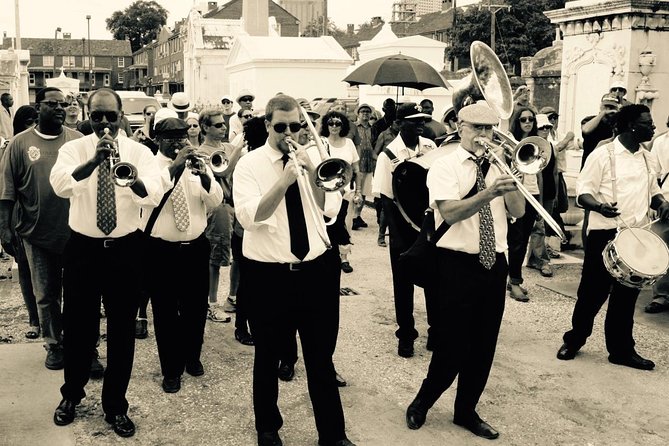
New Orleans music did not begin on a stage. This tour traces its roots to Congo Square, where enslaved Africans gathered and kept musical and religious traditions alive, then follows the sounds that shaped jazz, rhythm and blues, and rock ’n’ roll. The route links those early roots to the city’s music landmarks and street performers today.
I like two things in particular: the tour connects music to the history of slavery rather than treating jazz as a collection of famous names, and it includes places such as the former J&M recording studio, where local artists helped shape the New Orleans sound. You also get a look at the city’s street music, not just its past.
One consideration: two hours is a short time for a story that stretches across centuries and several neighborhoods. The route may not cover every listed stop in equal depth, and the experience depends heavily on your guide’s approach.
- Congo Square is the historical anchor: Learn how African musical and religious traditions took root in New Orleans.
- J&M Studio connects the city to rock ’n’ roll: See the former studio site tied to Fats Domino, Allen Toussaint, and other major artists.
- Storyville adds the early jazz chapter: Walk near remnants of the old red-light district and hear about musicians who played there.
- Guides bring different strengths: David Higgins is often praised for linking music to politics and culture; other named guides include Eva, Margie, and Rob.
- The tour ends near Preservation Hall: You finish at a celebrated music venue, but the tour does not include a show.
- It is a walking tour for $25: Wear comfortable shoes and bring water, sun protection, and rain gear.
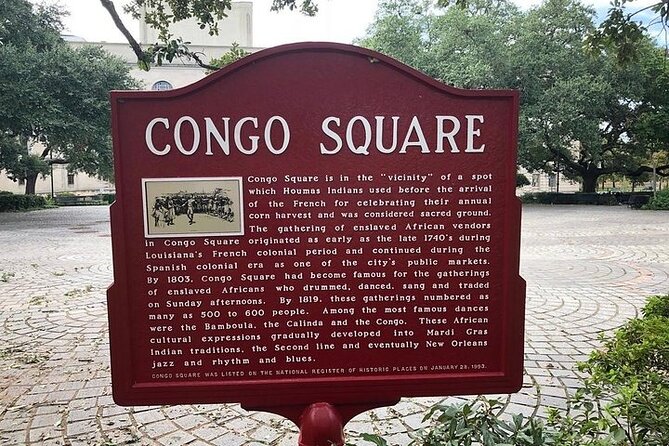
Music history begins at Congo Square
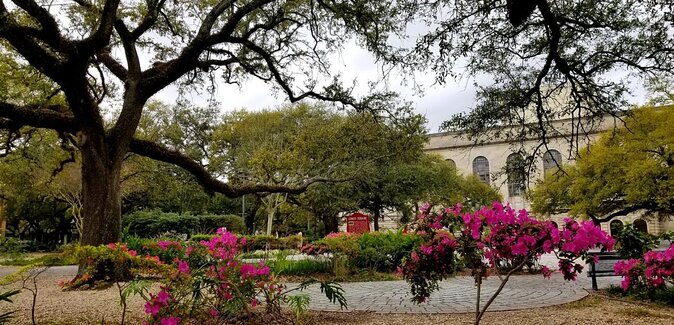
The tour starts at Rampart Treehouse, 740 North Rampart Street, at 2 pm. From there, the guide leads you toward Louis Armstrong Park and Congo Square, the place that gives the walk its historical weight.
Congo Square is presented as the wellspring of New Orleans music. Enslaved Africans gathered there and performed West African religious and musical traditions, practices that endured despite slavery and helped shape later musical forms. The important point is not simply that jazz came from New Orleans. It is that the city’s musical identity grew from African traditions, forced displacement, cultural survival, and the people who carried those traditions forward.
I value this part of the tour because it asks you to hear the music in context. A melody or rhythm becomes more than a sound to enjoy; it connects to the lives and histories of the people who made it. Guides also discuss how slavery shaped the music, making this a more thoughtful introduction than a simple roll call of famous performers.
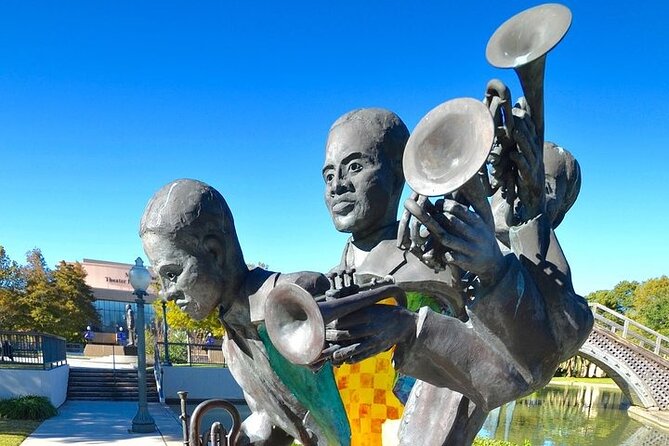
The tour allows about 30 minutes for the Armstrong Park area. That time includes the park’s musical references and the story of Congo Square, but it can feel brief if you want to linger over every sculpture or historical detail. The route returns to Congo Square as a separate stop in the published sequence, also allotted 30 minutes. The exact flow may feel less like a straight line than a set of connected stories, so listen for how the guide links the sites.
The J&M Studio building and the New Orleans sound
From Armstrong Park, the guide points out the building that housed Cosimo Matassa’s J&M Studios. The studio helped create what is often called the New Orleans sound, recording local musicians such as Professor Longhair, Dave Bartholomew, Fats Domino, Guitar Slim, Shirley & Lee, Lloyd Price, Ernie K-Doe, Allen Toussaint, and Clarence Frogman Henry. Visitors from elsewhere, including Little Richard, Ray Charles, and Jerry Lee Lewis, also recorded there.
The site gives the tour a useful shift in scale. Congo Square speaks to centuries of cultural history; J&M shows how a relatively small recording studio helped carry New Orleans music beyond the city. The walk connects local music to the national development of rhythm and blues and rock ’n’ roll, and guides often use photographs or audio to make the story more concrete.
Set your expectations for a historic site, not a working music attraction. The tour description says you view the building, and one account describes it as a former studio in a laundromat setting. There is no stated studio admission or performance included. The value is in understanding what happened there and recognizing how much musical influence can come from an unassuming address.
More jazz and music tours in New Orleans:
- New Orleans Steamboat Natchez Jazz Cruise with Dinner Option
★ 4.0 · 7,533 reviews - New Orleans Steamboat Natchez Jazz Cruise
★ 4.5 · 5,334 reviews - New Orleans: Evening Steamboat Jazz Cruise + Optional Dinner
★ 4.3 · 4,548 reviews
Storyville, Basin Street, and the early jazz scene
Next comes Basin Street Station and a walk along Basin Street, where you hear about Storyville, New Orleans’ turn-of-the-century red-light district. Its saloons and parlors hosted musicians including King Oliver, Buddy Bolden, Jelly Roll Morton, and Sidney Bechet during jazz’s early years.
This stop is strongest when your guide makes the link between place and sound clear. Storyville was not merely a backdrop. The district’s venues gave musicians places to work and audiences a chance to hear new music. The guide also points out the remains of the area and Frank Early’s My Place Saloon, associated with the song Pretty Baby.
Allow around 20 minutes here. You will not be touring a preserved entertainment district or stepping into the past; you are walking through a modern city while piecing together what stood here. That contrast can make the history feel less theatrical and more grounded, though it also means you should not expect a row of intact jazz-era buildings.
The Tango Belt and May Bailey’s Place
The route continues through the Tango Belt to May Bailey’s Place and the site of the Old French Opera House. These names help fill in the city’s music map beyond the best-known jazz landmarks, showing that New Orleans’ musical life unfolded across different neighborhoods and venues.
This section is allotted about 20 minutes. It is a brief passage, so the guide’s explanation matters more than any single building visit. You may find the stop most rewarding if you are curious about how nightlife and performance spaces changed over time. If you mainly want to hear live music, keep in mind that this is a history walk, not a concert tour.
The overall itinerary includes several short stops, and that pace has a trade-off. You get a broad overview rather than a long visit at each place. Bring questions, especially if you want to follow a particular musician or musical style; guides are often described as open to discussion.
Preservation Hall and the music happening now
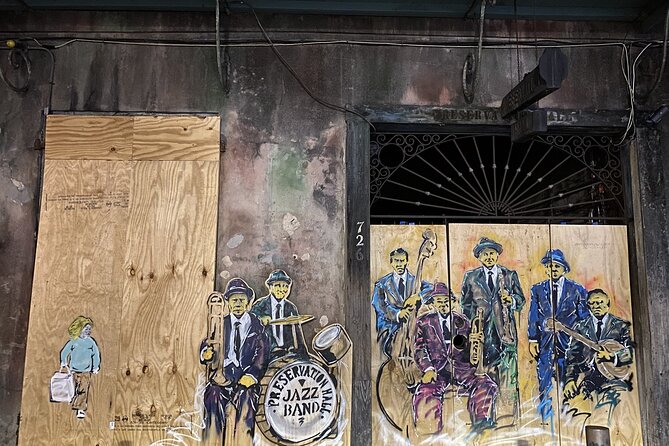
The walk ends at Preservation Hall, 726 St. Peter Street, a venue associated with the past, present, and future of New Orleans music. The tour’s planned finish is a useful place to pause: the city’s musical story is not frozen in the early jazz era, and the guide also introduces New Orleans bounce and the street musicians carrying local traditions forward.
The tour does not include admission to a Preservation Hall performance. Its stated end point is outside the venue, where people may already be lining up for the 5 pm show. If you want to attend, treat that as a separate plan and check the venue’s current schedule and ticket details yourself. The tour gives you context; it does not guarantee entry.
Street music is one of the experience’s more appealing present-day elements. You may see local musicians performing as you walk, though the tour does not promise a particular performer or set. That uncertainty is part of the nature of street music. You are looking at a living scene rather than a staged demonstration.
Same city, a different kind of day:
- New Orleans Premier Ghost, Voodoo and Vampire Walking Tour
★ 4.5 · 12,856 reviews - Adults-Only New Orleans Ghost, Crime, Voodoo, and Vampire Tour
★ 5.0 · 6,545 reviews - New Orleans Food Walking Tour of the French Quarter with Small-Group Option
★ 5.0 · 6,118 reviews - New Orleans Swamp and Bayou Boat Tour with Transportation
★ 5.0 · 5,399 reviews
What the guide adds to the walk
This tour is built around a guide’s storytelling. David Higgins is named often, and descriptions of his approach point to an animated, personal style that connects New Orleans music with wider cultural and political history. He is also described as a musician from a musical family, which can add a practical perspective to the stories. Other guides named include Eva, Margie, Rob, and Anna.
Guides may use a tablet to show images or play music samples. That can help you connect a name to a face or hear a sound the guide is discussing. It can also interrupt the flow if you prefer to listen to live surroundings or keep moving. One account found the tablet clips excessive, while others valued the extra context, so this is a matter of taste.
The small group limit of 20 should help keep the walk conversational, and groups can be smaller. A very small group may give you more room to ask questions and follow a topic. Still, the guide makes a big difference: some visitors have described a focused, engaging walk, while others found the route uneven or the commentary off track. If your time is limited, ask at the start how the guide plans to cover the stops.
What $25 gets you
At $25 per person, you are paying for a two-hour guided walk, visits to music-related landmarks, and an introduction to current street music. There is no listed admission fee for the main stops, and the price does not include a concert. The value is in the guide’s interpretation: a good storyteller can make a former studio, an ordinary street corner, or a park sculpture tell a much bigger story.
For a first visit, this is a reasonable price for a focused introduction to New Orleans music history. It is especially useful if you want to understand how African traditions, slavery, early jazz, recording studios, and modern street music relate to one another. If you already know the city’s musical history well, or want a full live performance, you may prefer to spend the same time and money on a more specialized experience.
The tour is about two hours on foot. Wear comfortable shoes and bring water, sunscreen, a hat, and protection from rain or sun. It starts at 740 North Rampart Street and ends at Preservation Hall, so you finish at a different address. It is near public transportation, service animals are allowed, and most people can take part.
The experience requires good weather. If poor weather cancels it, you are offered another date or a full refund. You can cancel for a full refund up to 24 hours before the start; cancellations or changes within 24 hours are not accepted for a refund. It is typically booked about 20 days ahead, so plan early if your travel dates are fixed.
Should you book the New Orleans Music Tour?
Book it if you want a compact, guided introduction to the people and places behind New Orleans music, and you are happy to spend most of the time listening and walking rather than going inside venues. The strongest reasons to go are Congo Square, the J&M Studio story, and the chance to connect music with the history of slavery and cultural survival.
I would be more cautious if you need a tightly scripted route or expect a live show. The planned stops are ambitious for two hours, and the guide’s style shapes the day. At $25, it is a fair way to get your bearings and learn the city’s musical connections, especially with an engaging guide. If a concert is your priority, make separate plans for one after the walk.
FAQ
How long is the New Orleans Music Tour?
The tour lasts approximately two hours.
What time does the tour start?
It starts at 2 pm.
Where does the tour begin and end?
It begins at Rampart Treehouse, 740 North Rampart Street, and ends at Preservation Hall, 726 St. Peter Street.
What is the price?
The listed price is $25 per person.
Is a Preservation Hall show included?
No. The tour ends at Preservation Hall, but admission to a performance is not included.
How large can the group be?
The maximum group size is 20 travelers.
What should I bring?
Wear comfortable shoes and bring water, sunscreen, a hat, and protection from rain or sun.
Newest tours in New Orleans
- New Orleans : Garden District Architecture Walking tour★ 4.8 · 5 reviews
- Ultimate Denver Day Out: Red Rocks, City Views & Ice Cream★ 5.0 · 7 reviews
- True Voodoo History of NOLA’s Congo Square with Local Guide★ 4.9 · 16 reviews
- From New Orleans: Whitney and Laura Guided Plantation Tour★ 4.9 · 20 reviews
- Witches Coven Walking Tour in New Orleans★ 5.0 · 49 reviews
- Treme Bar Crawl & Seafood Experience★ 4.2 · 7 reviews
- New Orleans Self-Guided Kayak Bayou Swamp Tour★ 5.0 · 9 reviews
- Whitney Plantation and Soul of New Orleans City Tour Combo★ 5.0 · 13 reviews
New Orleans Jazz Tours, compared.
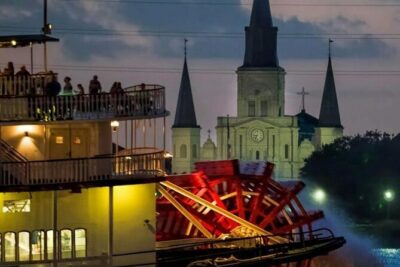
New Orleans Steamboat Natchez Jazz Cruise with Dinner Option
Read our review →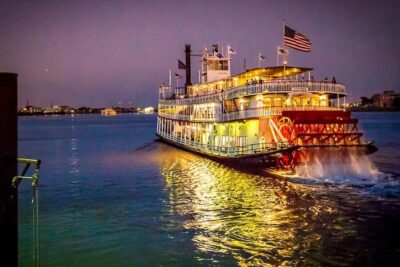
Evening Steamboat Jazz Cruise + Optional Dinner
Read our review →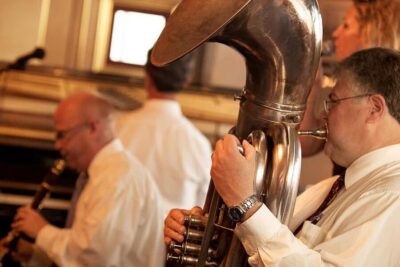
Daytime Steamboat Jazz Cruise + Optional Lunch
Read our review →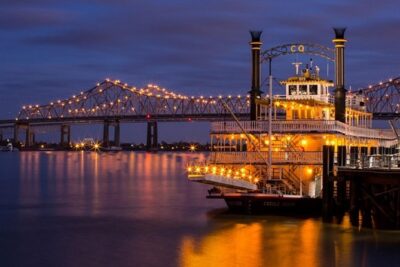
Paddlewheeler Creole Queen Jazz Dinner Cruise in New Orleans
Read our review →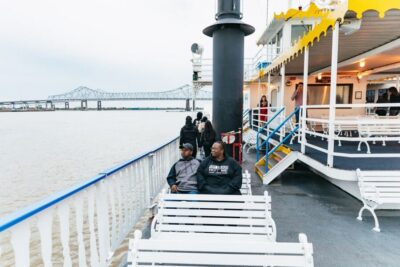
Evening Jazz Boat Cruise with Optional Dinner
Read our review →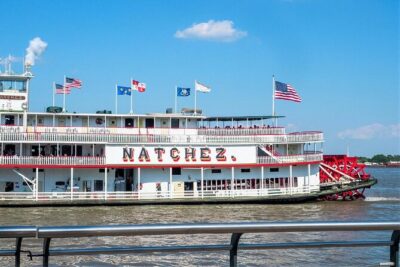
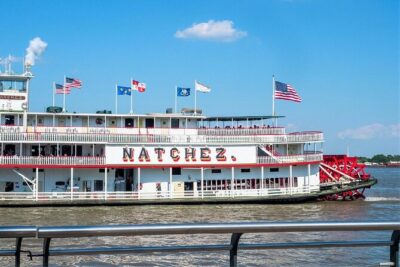
VIP Jazz Dinner Cruise with Private Tour and Open Bar Option
Read our review →
Frenchmen Street VIP Live Music Pub Crawl in New Orleans
Read our review →Browse the lists this tour appears in