
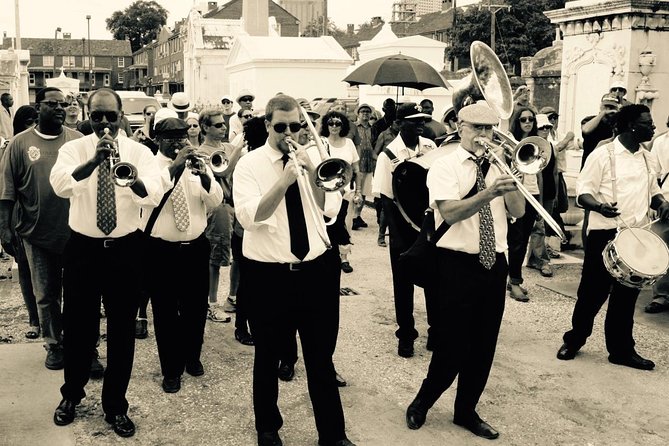
Reviewed · NEW ORLEANS JAZZ TOURS
New Orleans Music Tour
New Orleans music did not begin on a stage. Its roots reach into Congo Square, where enslaved Africans gathered and kept musical and religious traditions alive. This two-hour walk connects that history to jazz, the Storyville district, and the musicians who helped shape the sound of the city.
I like two things in particular: the route ties music to the places where it developed, and guides such as David have a knack for linking music with local culture, politics, and architecture. At $25, it is a low-cost way to get your bearings before exploring the city on your own.
One caveat: this is a history walk, not a promise of live jazz. The planned route covers several sites, but it may not always unfold as a series of distinct stops, so go for the stories and locations rather than a set musical performance.
- Congo Square connects the city’s music to its African roots, with stories about gatherings that preserved West African traditions.
- Storyville puts jazz in its early setting, among the saloons and parlors where musicians including Buddy Bolden and Jelly Roll Morton played.
- The J&M Studios stop reaches into the recording era, with names such as Fats Domino, Allen Toussaint, and Professor Longhair.
- Guide quality is a major part of the value, especially if you get David, whose storytelling and enthusiasm have drawn strong praise.
- The walk is two hours and capped at 15 people, a manageable size for listening and asking questions.
- Live music is not guaranteed, so treat this as a cultural history tour, not a concert crawl.
From a musicians’ tomb to the roots of jazz
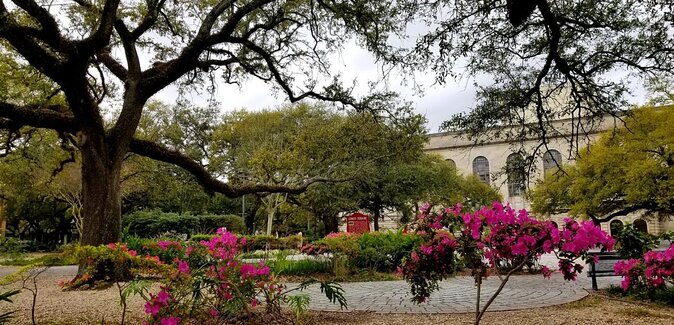
The walk begins at 806 N Rampart Street at 2:00 pm, then heads toward St. Louis Cemetery No. 1 and the Tango Belt. The first stop is the New Orleans Musicians Tomb, a burial site donated by the Barbarin family for musicians. The first burial there was Lloyd Washington of the Ink Spots, in October 2004.
That detail gives the tour an immediate human scale. Music history can turn into a roll call of famous names; a musicians’ tomb brings the focus back to the people who made a living playing, singing, and shaping the city’s sound. You also get a useful reminder that New Orleans’ music tradition is not just a story about long-dead jazz pioneers. It is a living culture with families and communities still tied to it.
The cemetery stop is scheduled for about 30 minutes, and admission is free. The tour’s value here is chiefly the guide’s explanation of the site and its place in local musical life. You should not expect a long cemetery visit or a performance. The guide’s stories are what connect the tomb to the larger history.
Storyville and jazz before the recording era
From the cemetery, the route continues to the remains of Storyville, New Orleans’ early twentieth-century red-light district. Its parlors and saloons hosted musicians who became central to jazz history, including King Oliver, Buddy Bolden, Jelly Roll Morton, and Sidney Bechet.
The stop also brings in Frank Early’s My Place Saloon, associated with the writing of Pretty Baby. That connection makes Storyville more than a list of musicians and old buildings. It shows how places of work, entertainment, and nightlife helped create an audience for new music.
You will spend about 30 minutes here. Much of Storyville is gone, so this is a stop where imagination and context matter. Look for the surviving traces, but do not expect an intact historic district. A good guide helps you picture the vanished streets and understand why musicians gathered there.
This is also where the tour’s format matters. The experience is built around walking, listening, and learning, not hopping between clubs. If you want to hear a band, plan a separate evening at a live-music venue. If you want to understand why jazz took root in New Orleans, Storyville gives the story a physical setting.
More jazz and music tours in New Orleans:
- New Orleans Steamboat Natchez Jazz Cruise with Dinner Option
★ 4.0 · 7,533 reviews - New Orleans Steamboat Natchez Jazz Cruise
★ 4.5 · 5,334 reviews - New Orleans: Evening Steamboat Jazz Cruise + Optional Dinner
★ 4.3 · 4,548 reviews
Louis Armstrong Park and the Congo Square story
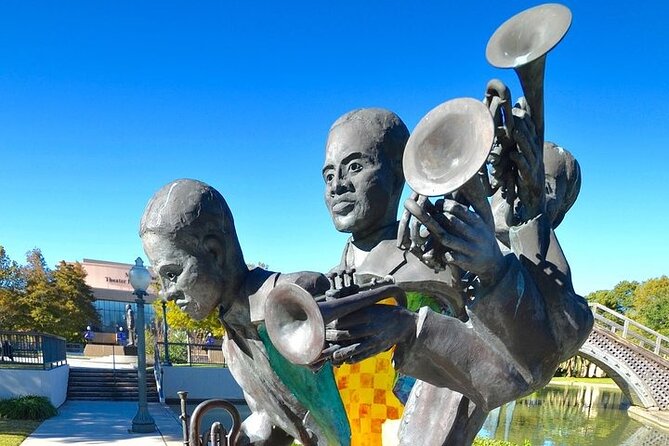
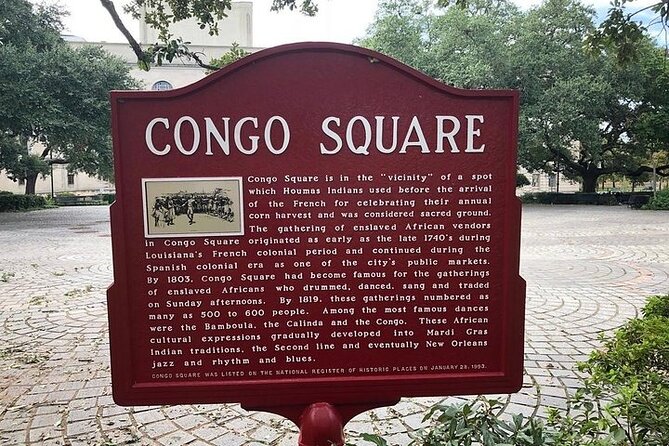
The route continues past Basin Street Station to Louis Armstrong Park, where the walk turns toward Congo Square. The park is a major historical anchor for the tour, and the planned itinerary gives it about 30 minutes before another half-hour focused on Congo Square and the music that followed.
Congo Square is presented as a wellspring of New Orleans music. Enslaved Africans gathered there and performed West African religious and musical traditions, creating a powerful link between African cultural practices and the city’s later musical forms. The place is also tied to the first New Orleans Jazz and Heritage Festival in 1970 and to the Municipal Auditorium.
This is the stop that makes the tour more than a jazz biography. The guide’s account can connect music with the history of slavery, religion, public space, and the way culture survives under pressure. If you are interested in the roots behind the sound, this part may be the most meaningful hour of the walk.
There is one practical uncertainty: the route does not always seem to function as four sharply separated stops. Some accounts of the experience describe spending most or all of the time in Armstrong Park rather than visiting every listed location as a distinct stop. Go in expecting a guided walk shaped by the guide and conditions, not a stopwatch-perfect itinerary. If visiting each site is essential to you, confirm the current route with the operator before booking.
J&M Studios and the sound of modern New Orleans
The final section turns from early jazz to the recording era. The tour includes the building that housed J&M Studios, a key place in the development of what became known as the New Orleans Sound. The list of musicians associated with the studio and its musical world is impressive: Professor Longhair, Dave Bartholomew, Fats Domino, Guitar Slim, Shirley & Lee, Lloyd Price, Ernie K-Doe, Allen Toussaint, and Clarence Henry. Visiting artists included Little Richard, Ray Charles, and Jerry Lee Lewis.
That range helps explain why this stop is valuable. New Orleans music did not stop with jazz. Rhythm and blues, piano-driven styles, and later forms all grew from a city where musical influences crossed paths. The tour also covers the origins of Bounce music and points to the street musicians who keep local traditions in motion.
The experience includes entering the building that housed the legendary studio, though access and the exact form of that stop can depend on how the tour runs. It is worth listening for how the guide connects the names and styles rather than treating them as a checklist. If you know only the best-known artists, this part can fill in some of the links between them.
Do not assume that music will be played live during the walk. One of the tour’s strongest appeals is the history behind the music, but the format is not described as a live performance. If you want both context and a band, pair the walk with a separate music night.
What the guide brings to the walk
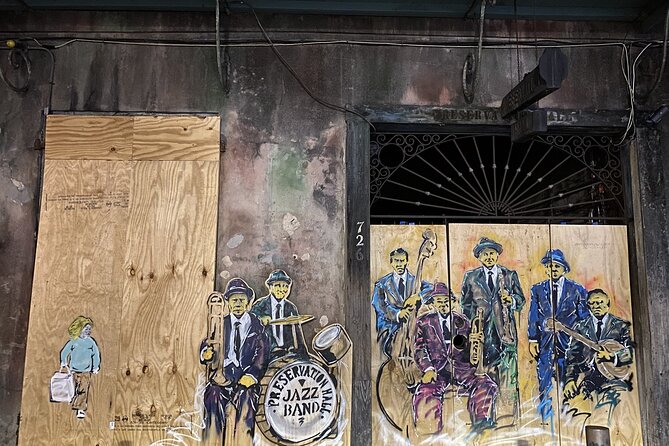
The guide can make or break a history-heavy walking tour. David is the name most often associated with this experience, and visitors have described him as funny, energetic, passionate, and full of detail. His strongest asset appears to be the ability to connect music with the wider city, including culture, politics, religion, and architecture.
That wider lens is useful. A tour about music can become a string of dates and famous names, but the better moments come when a guide explains why music mattered in a particular place and how one tradition led to another. One family account even noted that a child got to play piano with the guide, though you should not count on that happening on your tour.
Guides can vary. Cindy has also led the walk, and one account described a shortened tour in hot weather. The scheduled length is about two hours, but it is sensible to arrive ready for an outdoor walk and to be flexible about pace and conditions. If the guide is engaging, the time may feel short; if you expect a tightly scripted route with music at every stop, you may come away disappointed.
Same city, a different kind of day:
- New Orleans Premier Ghost, Voodoo and Vampire Walking Tour
★ 4.5 · 12,856 reviews - Adults-Only New Orleans Ghost, Crime, Voodoo, and Vampire Tour
★ 5.0 · 6,545 reviews - New Orleans Food Walking Tour of the French Quarter with Small-Group Option
★ 5.0 · 6,118 reviews - New Orleans Swamp and Bayou Boat Tour with Transportation
★ 5.0 · 5,399 reviews
Is $25 good value?
At $25 per person, the tour is reasonably priced for a two-hour guided introduction to several important music sites. The listed stops have free admission, so most of the cost goes toward the local guide and the interpretation that joins the locations into one story. Hotel pickup, food, and drinks are not included.
The value depends on what you want. If you are keen to learn how Congo Square, Storyville, jazz, recording studios, and Bounce fit into the city’s musical identity, a guide can save you time and give you context that is hard to assemble from a quick walk alone. The small maximum group size of 15 should also make it easier to hear the guide and ask questions.
If your main goal is to hear live jazz, $25 may be better spent elsewhere. The tour is not presented as a performance, and some people have left wishing they had heard music along the way. Think of it as a compact history lesson outdoors, with the option to follow up later at a club or on your own.
The tour averages about 27 days of advance booking, so popular dates may need planning. It is offered in English, uses a mobile ticket, and starts and finishes at the same address. Free cancellation is available up to 24 hours before the start time; cancellations made later are not refunded.
Who should take this walk?
I would recommend this tour to music fans who want a structured introduction to New Orleans history, especially if they are curious about jazz’s roots and the city’s later recording traditions. It also suits families: the subject can make local history engaging for younger visitors, and the group size is limited.
It is less suitable if you want a music crawl, a guaranteed live performance, or a fixed itinerary with every listed location visited in exactly the same way each time. The route is on foot and includes outdoor sites, so consider the weather when choosing a 2:00 pm start. A past tour was described as uncomfortable in summer heat, while another went ahead in cold, wet weather. Dress for the day and keep your expectations focused on stories and places.
Should you book the New Orleans Music Tour?
Book it if you want an affordable, guide-led way to connect Congo Square, Storyville, Armstrong Park, and the city’s recording history. David’s storytelling has been a particular strength, and the best payoff is seeing how New Orleans music reflects the city’s broader culture.
Skip it if live music is your main priority or if you need every planned stop guaranteed. For $25, it is a strong orientation walk for curious listeners, provided you value context as much as the sound itself.
FAQ
How long is the New Orleans Music Tour?
The tour lasts about two hours.
How much does the tour cost?
The listed price is $25 per person.
Where does the tour start?
It starts at 806 N Rampart Street, New Orleans, LA 70116.
What time does the tour begin?
The scheduled start time is 2:00 pm.
Where does the tour end?
It ends back at the meeting point at 806 N Rampart Street.
What language is the tour offered in?
The tour is offered in English.
How many people can join the tour?
The maximum group size is 15 people.
What is included, and can I cancel for a refund?
A local guide is included. Hotel pickup and drop-off, food, and drinks are not included. You can cancel at least 24 hours before the start time for a full refund.
Newest tours in New Orleans
- New Orleans : Garden District Architecture Walking tour★ 4.8 · 5 reviews
- From New Orleans: Whitney and Laura Guided Plantation Tour★ 4.9 · 20 reviews
- Ultimate Denver Day Out: Red Rocks, City Views & Ice Cream★ 5.0 · 7 reviews
- True Voodoo History of NOLA’s Congo Square with Local Guide★ 4.9 · 16 reviews
- Witches Coven Walking Tour in New Orleans★ 5.0 · 49 reviews
- Treme Bar Crawl & Seafood Experience★ 4.2 · 7 reviews
- New Orleans Self-Guided Kayak Bayou Swamp Tour★ 5.0 · 9 reviews
- Whitney Plantation and Soul of New Orleans City Tour Combo★ 5.0 · 13 reviews
New Orleans Jazz Tours, compared.
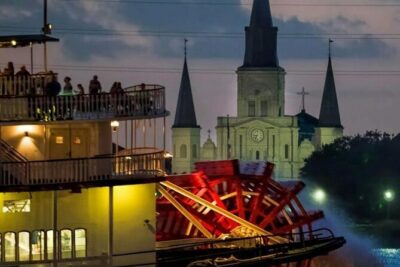
New Orleans Steamboat Natchez Jazz Cruise with Dinner Option
Read our review →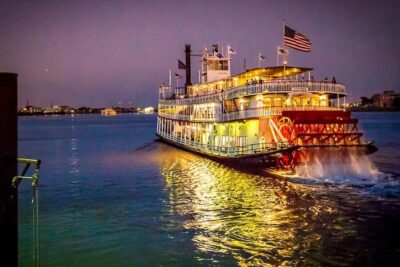
Evening Steamboat Jazz Cruise + Optional Dinner
Read our review →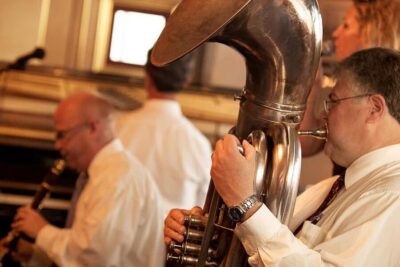
Daytime Steamboat Jazz Cruise + Optional Lunch
Read our review →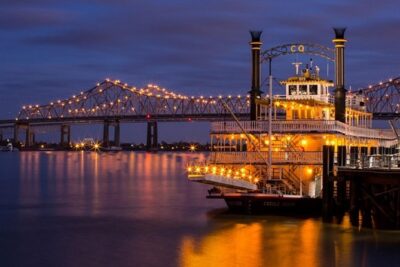
Paddlewheeler Creole Queen Jazz Dinner Cruise in New Orleans
Read our review →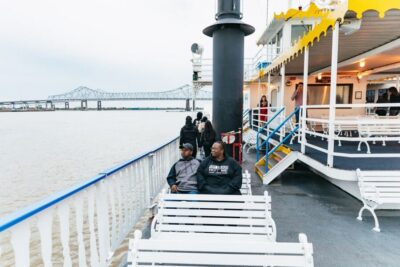
Evening Jazz Boat Cruise with Optional Dinner
Read our review →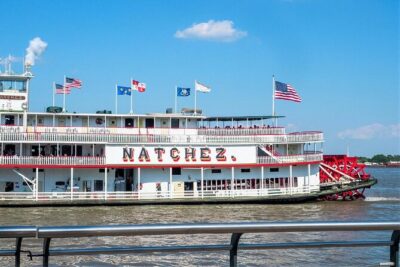
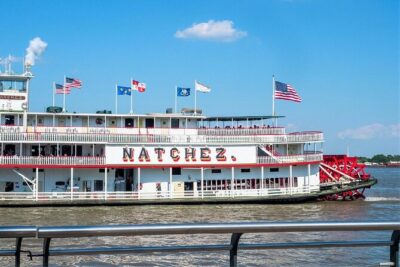
VIP Jazz Dinner Cruise with Private Tour and Open Bar Option
Read our review →
Frenchmen Street VIP Live Music Pub Crawl in New Orleans
Read our review →Browse the lists this tour appears in