
Reviewed · LAFAYETTE TOURS
Downtown Lafayette Cajun History & Folklore Walking Tour
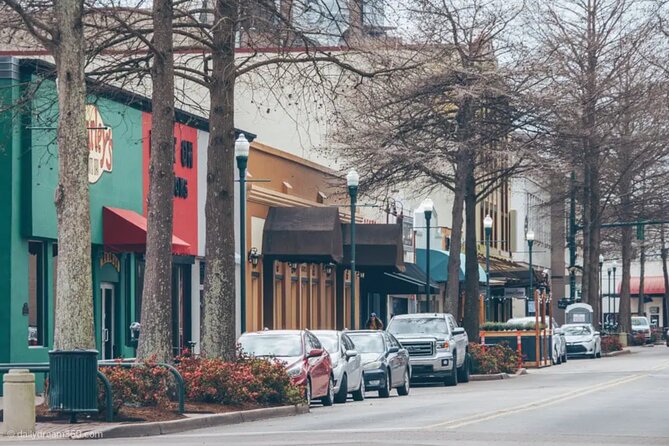
Lafayette’s Cajun story comes alive in the places where it still matters: beneath a centuries-old oak, in a cemetery, at a smokehouse, and around downtown’s music and festival venues. This two-hour walk links history and folklore with the food, language, and everyday life of the city.
I like two things especially: the mix of serious history and Cajun folklore, which keeps the walk from feeling like a lecture, and the practical food and shop recommendations along the way. Guide Cassie is named for her enthusiasm and the clear, engaging pace she brings to the tour.
One consideration: this is a walking introduction, not a full visit to every landmark. The Lafayette Museum and Acadiana Center for the Arts have admission charges that are not included, and food, drinks, and purchases are extra.
What makes this Lafayette walk useful

- Acadian history begins at the Cathedral of St. John the Evangelist, with a discussion of how Acadians came to Louisiana and how the word Cajun developed.
- The Rougarou appears alongside Louisiana burial customs at Saint John Cemetery, pairing a real local tradition with a famous Cajun folk creature.
- Food advice comes from the route itself, including a stop at Johnson’s Boucanière and recommendations for nearby restaurants.
- Music, language, and festivals get their own chapters, from Cajun and zydeco music to Festival International de Louisiane and Cajun Mardi Gras.
- The tour ends at Wild Child Wines, after a photo stop at Parc Sans Souci and a short browse at Cocodrie Collective.
- The walk is about two hours and costs $20 per person, with a maximum group size of 20.
Start with Acadians, Cajuns, and the cathedral
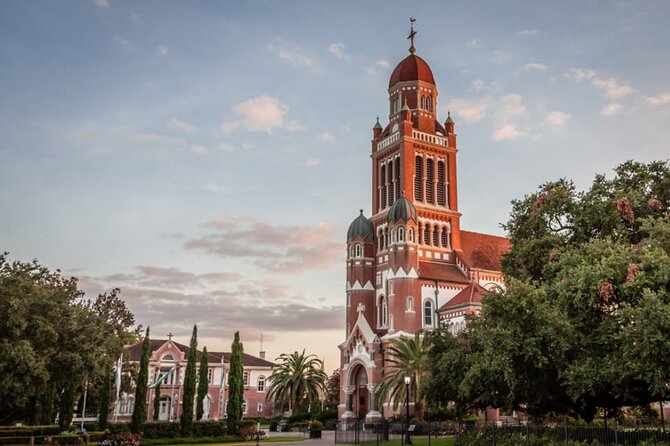
Meet at 515 Cathedral Street at 2:00 pm, outside the Cathedral of St. John the Evangelist. The first stop sets up a central question for the walk: how did Acadians arrive in Louisiana, and how did their story lead to the modern identity known as Cajun?
The guide also raises Lafayette’s claim to being the most Catholic city in America. That gives you a local lens on the city, rather than a string of dates and names. The cathedral is the meeting point and the backdrop for the opening discussion; the listed stop is about ten minutes, so expect an introduction rather than a long indoor visit.
This is a useful place to begin because the tour’s later topics make more sense once you have some context. Cajun food, French language, music, and folklore are not treated as separate curiosities. They are pieces of a history that the guide traces from the Acadian story into present-day Lafayette.
More history tours in New Orleans:
- New Orleans Garden District History Walking Tour
★ 5.0 · 2,879 reviews - French Quarter Historical Sights and Stories Walking Tour
★ 5.0 · 2,724 reviews - New Orleans Small-Group Haunted History Carriage Tour
★ 4.5 · 2,289 reviews
The live oak and the tale of Evangeline and Gabriel
Just beside the cathedral, the St. John Cathedral Live Oak provides a second stop and a change of mood. The tree is described as 500 years old, and the guide uses it to tell the story of Evangeline and Gabriel, framed as a Cajun Romeo and Juliet.
At about ten minutes, this is a concise storytelling stop, not a full lesson in literature or botany. Its value is the way a recognizable local tale gives the city’s past a human scale. You get a moment under the tree, then move on with a story to connect to the Acadian history discussed at the cathedral.
Cemetery customs and the Rougarou
At Saint John Cemetery, the guide turns to Louisiana burial customs and the Rougarou, a mythical creature from Cajun folklore. The pairing is apt: one subject concerns how people remember and bury the dead, while the other belongs to the stories used to explain what might lurk beyond familiar boundaries.
The stop lasts around ten minutes, so it offers an introduction rather than a detailed tour of the cemetery. If folklore interests you, this may be one of the walk’s most distinctive moments. The Rougarou is a memorable thread through Cajun culture, and hearing about it in a cemetery gives the story a fitting setting without turning the stop into a haunted attraction.
Johnson’s Boucanière and Cajun food
At Johnson’s Boucanière, a historic Cajun smokehouse and grocery, the guide explains the importance of Cajun cuisine and suggests what to buy. This is one of the tour’s most practical stops. Instead of talking about food only in broad terms, you can connect the discussion to a working local food business.
The visit is listed at about ten minutes, and any food or purchases are at your own expense. I would treat it as a chance to ask for advice and get oriented, not as a scheduled meal. The tour also passes several restaurants and offers personal recommendations, which can help you decide where to eat after the walk.
More walking tours in New Orleans:
- New Orleans Premier Ghost, Voodoo and Vampire Walking Tour
★ 4.5 · 12,856 reviews - New Orleans Food Walking Tour of the French Quarter with Small-Group Option
★ 5.0 · 6,118 reviews - St. Louis Cemetery No. 1 Official Walking Tour
★ 4.5 · 3,941 reviews - New Orleans French Quarter, Voodoo and Culture Walking Tour
★ 4.5 · 2,961 reviews
The Mouton House and Lafayette’s founder
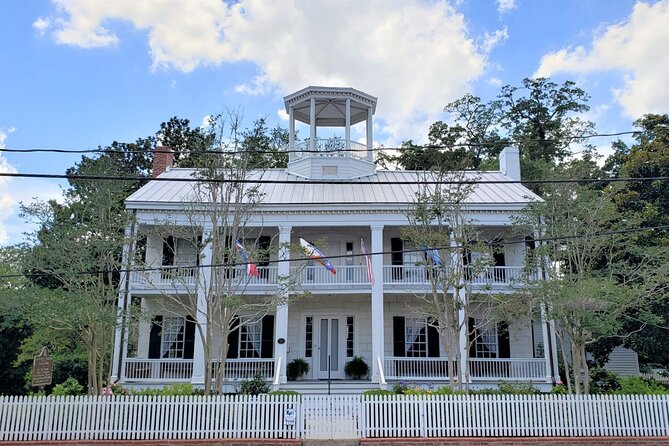
The Lafayette Museum occupies the historic Mouton House, where the guide discusses the man who founded Lafayette and aspects of his pre-Civil War history. The subject adds a less polished side to the city’s origin story, a welcome counterweight to the romance of the oak tree and the fun of the folklore.
Admission to the museum is not included. The stop is listed at about ten minutes, so don’t assume you will have time for a full museum visit as part of the walk. If you want to explore the house and its exhibits, plan to check the museum’s separate admission and visiting arrangements.
A short break at Carpe Diem
Carpe Diem Cafe & Wine Bar is a locally owned stop for about 15 minutes. You can choose coffee, ice cream, or cocktails, but the cost is not included in the tour price.
This pause gives your feet a break and lets you enjoy a small slice of downtown life between history stops. Keep the short time frame in mind: it is a brief refreshment break, not a long café visit. You can also save your appetite for the restaurants the guide points out along the route, including Pop’s Poboys and Pamplona.
Cajun and zydeco at Acadiana Center for the Arts
At the Acadiana Center for the Arts, the conversation turns to Cajun and zydeco music and their place in local culture. The center is both an art gallery and a music venue, so it makes a fitting stop for discussing traditions that are heard and performed, not simply preserved as history.
The stop is about ten minutes, and admission is not included. You should think of it as a talk about the music rather than a concert or a full gallery visit. If you want to return to see an exhibit or attend a performance, the guide’s introduction can give you a helpful starting point.
The route also passes Vestal and Sarrica’s, with the guide offering personal dining recommendations. Those quick pointers are a small but useful part of the tour: downtown can be easier to navigate when someone helps you sort the options before you sit down to eat.
Cajun French at Cocodrie Collective
Cocodrie Collective, a local gift and art shop, is the setting for a discussion of Cajun French, including its decline and resurgence. Language gives the tour another way to talk about cultural change. It is not only a question of what people ate or played, but also what they spoke and what communities are working to keep alive.
The stop lasts about 15 minutes, including five minutes to browse the shop. That is enough for a look around, but not a leisurely shopping session. Purchases are extra, so treat the stop as an opportunity to see local art and gifts while hearing the story behind the language.
The tour also passes The Flats, Central, and Tsunami. The guide offers personal restaurant recommendations, making this a good time to ask about places that suit your plans for later.
Festivals at Parc International
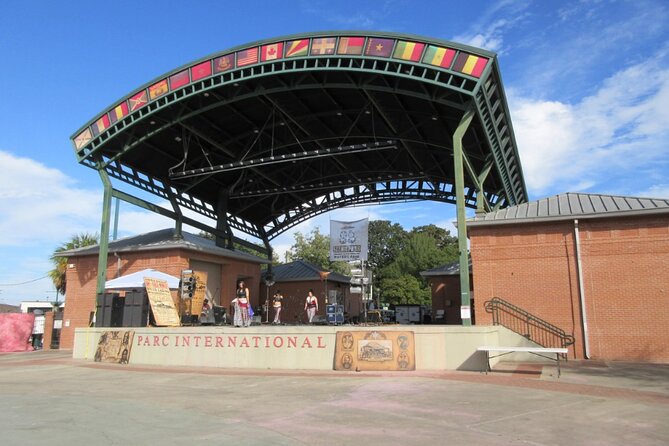
At Parc International, the guide discusses Festival International de Louisiane and other major local celebrations, including Cajun Mardi Gras, also known as the Chicken Run. The park provides a setting for talking about festivals as part of Lafayette’s public life, not just as dates on an events calendar.
The stop is around ten minutes. If you are in town during a festival, this context can help you understand what you are seeing; if not, you still get a clearer sense of the traditions that shape the city’s calendar. The tour does not include a festival event, so think of this as background and local perspective.
Parc Sans Souci and a Lafayette photo
At Parc Sans Souci, you can take a picture with the Lafayette sign while the guide talks about the city’s challenges and triumphs. It is a lighter stop after several history and culture discussions, though the topic keeps the focus on the city itself rather than making this only a photo break.
The listed visit lasts about ten minutes. The sign makes an easy landmark for a group picture, and the conversation gives you a final chance to connect the earlier subjects: Cajun identity, language, food, music, and the way Lafayette presents itself today.
Finish at Wild Child Wines
The walk ends at Wild Child Wines, a venue for food, wine, art, and gifts that the guide particularly likes. The end point is useful because it leaves you downtown with options for continuing your afternoon or evening. It is not part of the $20 tour price, so budget separately if you plan to eat, drink, or shop.
The endpoint also makes the walk feel practical. By the time you arrive, you have heard about local food and restaurants, seen key downtown landmarks, and picked up suggestions for places to explore on your own. The tour begins at the cathedral and ends at 210 E. Vermilion Street, so it is not a loop back to the starting point.
Is two hours for $20 good value?
At $20 per person, this tour offers a compact introduction to several sides of Lafayette: Acadian history, Cajun identity, cemetery traditions, folklore, cuisine, music, language, and festivals. You are paying for a guided walk and local interpretation, not entry to the museum or arts center, a meal, or shopping.
That distinction matters when you compare the price with your plans. If you want a guide to connect the city’s landmarks and point you toward local food, the price is reasonable for two hours. If your main goal is to spend time inside museums or galleries, or to sample several dishes, you will need to add separate costs and time.
The tour is capped at 20 people, which keeps the group size limited but does not guarantee a private or tiny-group outing. It is conducted in English, uses a mobile ticket, and is described as easy walking and not physically challenging. Service animals are allowed, and the activity is near public transportation.
It runs in good weather and requires a minimum number of participants. If poor weather or a shortfall in bookings cancels the tour, you are offered another date or a refund. You can cancel for a full refund up to 24 hours before the start; cancellations or changes made inside that window are not accepted.
Should you book the Lafayette Cajun history walk?
Book it if you want a broad, lively introduction to downtown Lafayette and value a guide who can connect landmarks to food, music, language, and local folklore. It is especially suited to first-time visitors, curious eaters, and anyone who wants practical restaurant suggestions alongside a bit of history. The reported 4.7 rating and 94 percent recommendation rate fit the tour’s clear strengths: engaging guides, useful detail, and an easy pace.
Choose another plan if you want extensive museum time, a seated meal, or a deep study of one subject. This walk touches many topics in about two hours, and several stops are brief. For $20, that breadth is its appeal, as long as you treat it as an orientation and leave room to follow up on the places that catch your interest.
FAQ
Where does the tour start?
Meet at 515 Cathedral Street, Lafayette, Louisiana 70501.
What time does the tour start?
The stated start time is 2:00 pm.
Where does the tour end?
It ends at Wild Child Wines, 210 E. Vermilion Street, Lafayette, Louisiana 70501.
How long is the walking tour?
It lasts about two hours.
How much does it cost?
The tour costs $20 per person. Food and purchases are not included.
Is admission to the Lafayette Museum included?
No. Admission to the Lafayette Museum is not included.
Is admission to the Acadiana Center for the Arts included?
No. Admission is not included.
How large can the group be?
The maximum group size is 20 people.
Can I cancel for a refund?
You can cancel at least 24 hours before the start time for a full refund. Cancellations made less than 24 hours before the start are not refunded.
Newest tours in New Orleans
- New Orleans : Garden District Architecture Walking tour★ 4.8 · 5 reviews
- Ultimate Denver Day Out: Red Rocks, City Views & Ice Cream★ 5.0 · 7 reviews
- True Voodoo History of NOLA’s Congo Square with Local Guide★ 4.9 · 16 reviews
- From New Orleans: Whitney and Laura Guided Plantation Tour★ 4.9 · 20 reviews
- Treme Bar Crawl & Seafood Experience★ 4.2 · 7 reviews
- Witches Coven Walking Tour in New Orleans★ 5.0 · 49 reviews
- New Orleans Self-Guided Kayak Bayou Swamp Tour★ 5.0 · 9 reviews
- Whitney Plantation and Soul of New Orleans City Tour Combo★ 5.0 · 13 reviews
Lafayette Tours, compared.
Baton Rouge Historic Downtown Self-Guided Audio Walking Tour
Read our review →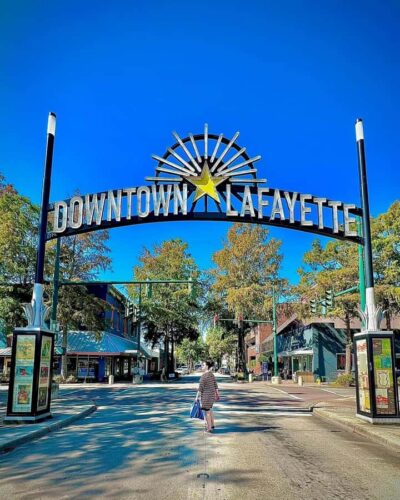
Browse the lists this tour appears in