
Reviewed · NEW ORLEANS FRENCH QUARTER TOURS
Creole Louisiana: A French Quarter Walking Tour (English)
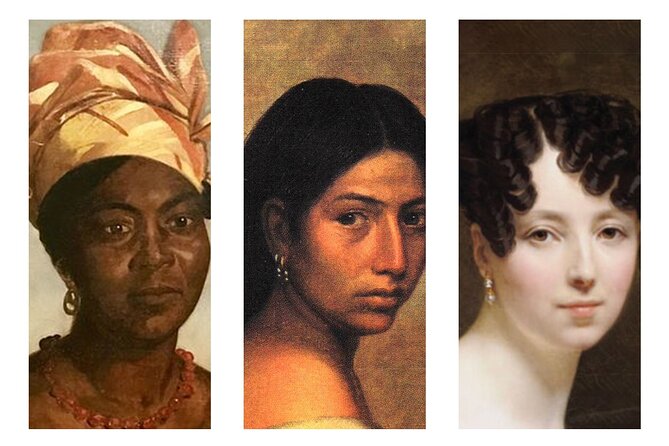
New Orleans is easier to read when you understand who shaped it. On this two-hour walk through the French Quarter, a guide connects landmarks such as Jackson Square and St. Louis Cathedral with the people and traditions behind Creole Louisiana, from Congo Square to the origins of jazz, gumbo, and jambalaya.
I like two things in particular: the route gives you a quick orientation to the Quarter, and the visit to the Hermann-Grima House courtyard offers a change of pace from the busy streets. The tour also tackles the often-confused terms Creole and Cajun, a useful starting point for understanding local history.
One consideration: the stops are brief, and a lot depends on the guide’s command of the subject. Some guides named by past participants include Lawson, also spelled Lawton in one account, and Laurent. Guide assignments are not guaranteed, so treat the experience as a guided overview rather than a deep visit to every landmark.
- Jackson Square and St. Louis Cathedral open the walk with two of the Quarter’s best-known landmarks.
- Congo Square brings the tour’s cultural story into focus at Louis Armstrong Park.
- The Hermann-Grima House courtyard is included, with its entry fee covered.
- Creole, Cajun, jazz, gumbo, and jambalaya provide the themes that tie the stops together.
- The two-hour route ends at the historic Hermann-Grima House on St. Louis Street.
- Groups are capped at 28, and the $35 price includes the courtyard fee.
A guided walk through Creole Louisiana
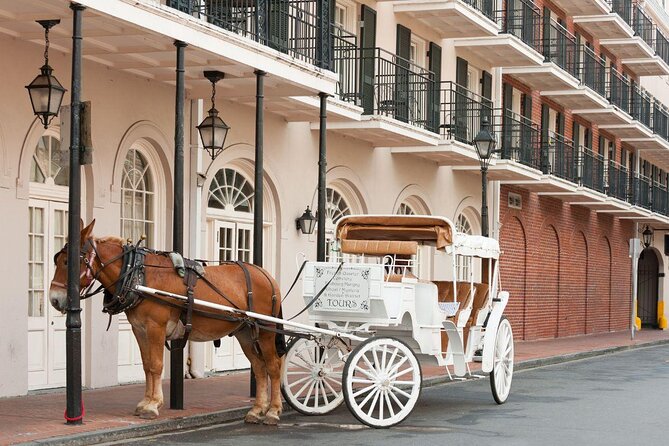
The French Quarter rewards wandering, but its buildings and street names do not explain themselves. A guide can connect what you see to the people who lived here and the customs that grew out of Louisiana’s layered past. That is the point of this tour: not simply to pass familiar sights, but to hear a story that links place, culture, and food.
The route lasts about two hours and begins at 2951502 Royal Street. It ends at the Hermann-Grima House, at 820 St. Louis Street. Because the tour is on foot, you get a close view of the neighborhood and a sense of its layout that can be hard to gain from a vehicle tour.
The group can include up to 28 people. That is large enough that you may not have much time for individual questions, especially if the group is full, but it is still a manageable size for a walking tour. The listed language is English, and the experience is described as suitable for most participants. Service animals are allowed, and the meeting area is near public transportation.
Jackson Square: a quick start in the Vieux Carré
The walk begins with Jackson Square, the historic center of the Vieux Carré, another name for the French Quarter. The stop is listed at about five minutes, so think of it as an introduction rather than a long, detailed exploration. Your guide explains the square’s history and gives you a reference point for the streets and landmarks that follow.
This is a useful first stop because it sets the scene before the tour moves into broader questions about Louisiana’s past. If you are new to the Quarter, you can get your bearings and learn why this square matters within the neighborhood. If you have already visited, the guide’s framing may help you see it as more than a photogenic public space.
The short visit also means you should not expect a full account of every building or event associated with Jackson Square. The tour has several stops to fit into two hours, so the guide needs to keep moving. Take in the setting, listen for the historical outline, and save detailed questions for moments when the group has a little more time.
More French Quarter tours in New Orleans:
- New Orleans Food Walking Tour of the French Quarter with Small-Group Option
★ 5.0 · 6,118 reviews - New Orleans French Quarter, Voodoo and Culture Walking Tour
★ 4.5 · 2,961 reviews - French Quarter Historical Sights and Stories Walking Tour
★ 5.0 · 2,724 reviews
St. Louis Cathedral: history in a five-minute stop
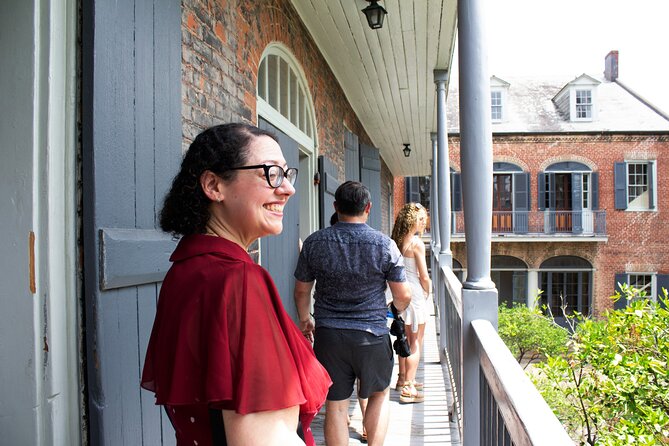
Next comes St. Louis Cathedral, described as New Orleans’ most historic church. The scheduled stop is also about five minutes, with the focus on its history. This is an exterior-oriented pause in the walking route, not a promise of a lengthy church visit or an interior tour.
The cathedral is a natural companion to Jackson Square: together, the two stops give you an immediate sense of the Quarter’s civic and religious landmarks. A guide can place the church within the wider story of the city rather than leaving you to guess at its significance from its façade alone.
Keep your expectations in proportion to the timing. Five minutes is enough for a concise explanation and a look around, but not a comprehensive account of the cathedral. The value is in the context, especially if this is your first day in New Orleans and you want a guide to point out what deserves your attention.
Congo Square: the tour’s cultural turning point
At Louis Armstrong Park, the tour turns to Congo Square, a place with deep cultural significance. The stop is scheduled for about 10 minutes, giving the guide more room to explain its role than at the earlier landmarks. The subject also links naturally to the tour’s attention to music and the people who helped shape New Orleans culture.
This is one of the most meaningful parts of the route because it moves beyond the Quarter’s architecture. The tour is not only about famous buildings; it also asks you to consider the cultural forces that made the city distinctive. If you want to understand why jazz belongs in a conversation about New Orleans history, this stop helps set up that discussion.
The tour description connects the city’s story to jazz, gumbo, and jambalaya, but it does not promise a food tasting or a music performance. Expect explanations and stories, not a meal or concert. That distinction matters if you are choosing between this walk and a food-focused or music-focused outing.
Creole and Cajun: useful distinctions, handled with care
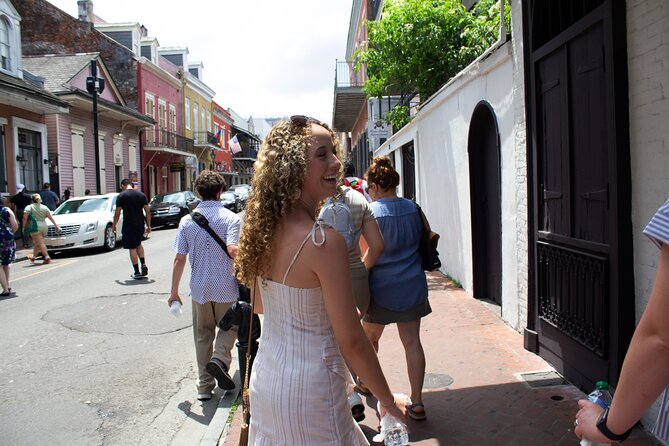
The tour aims to clarify the words Creole and Cajun, which are often used loosely by people unfamiliar with Louisiana. That conversation is central to the experience, not a small side note. You will hear about the different people and traditions behind the state’s cultural identity, with New Orleans serving as the setting for the discussion.
The guide’s skill matters here. Strong guides have been praised for making the distinction understandable and giving the history nuance and humor. One name to know is Lawson, though one account spells it Lawton; Laurent is another guide associated with an especially engaging tour. These names are useful clues if you are asking about a particular departure, but there is no guarantee that a specific guide will lead your walk.
There is also a reason to listen critically. One participant felt that a guide gave inaccurate information about Cajuns, a reminder that a confident delivery is not the same as careful history. If this topic matters to you, ask questions respectfully and pay attention to how the guide handles distinctions and uncertainty. A good tour should make complex identities clearer without reducing them to a slogan.
More walking tours in New Orleans:
- New Orleans Premier Ghost, Voodoo and Vampire Walking Tour
★ 4.5 · 12,856 reviews - St. Louis Cemetery No. 1 Official Walking Tour
★ 4.5 · 3,941 reviews - New Orleans Garden District History Walking Tour
★ 5.0 · 2,879 reviews - New Orleans Haunted Ghost, Voodoo & Vampire Walking Tour
★ 4.5 · 2,731 reviews
Hermann-Grima House: a quieter finish in the courtyard
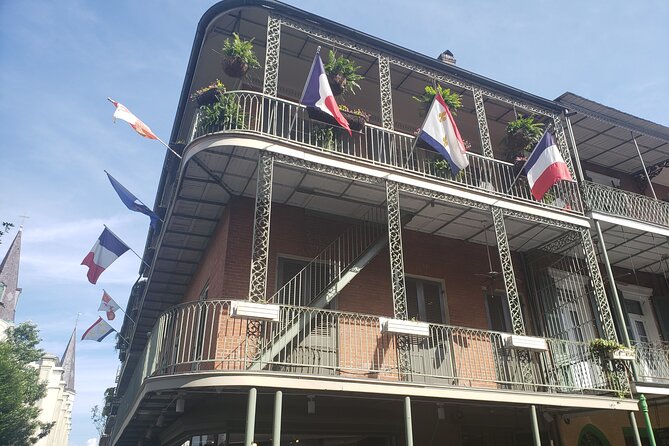
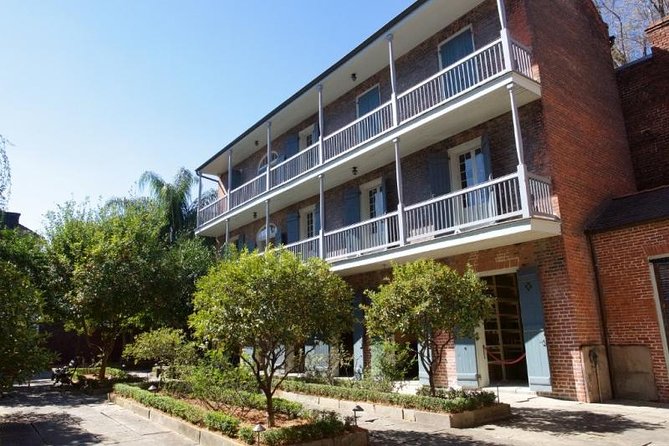
The walk ends at the Hermann-Grima House, where you get access to the historic home’s courtyard. The visit is listed at about 20 minutes, and the courtyard entry fee is included in the tour price. This is the longest scheduled stop, giving you time to look around rather than simply pause for a brief explanation.
The courtyard offers a different kind of experience from the public streets and squares. It is described as typical of the 19th century, and the setting helps bring the tour’s historical themes down to a human scale. Instead of only hearing about the past, you finish in a space associated with the way people lived.
Be clear about what is included: the stated inclusion is the courtyard entry fee, not an interior tour of the entire house. If you want a full visit inside the home, check separately rather than assuming it is part of this walk. The tour’s endpoint is also convenient in one practical sense: you finish at a specific historic address on St. Louis Street, rather than returning to the Royal Street starting point.
What the $35 price buys you
At $35 per person, this tour is priced as a guided introduction to the French Quarter, with the courtyard fee included. You are paying for a guide to handle the route and make connections among the landmarks, not for transportation, a meal, or a long indoor visit. That makes the value strongest if you want orientation and historical context early in your stay.
The walk can help you decide where to return later. A quick explanation at Jackson Square or Congo Square may give you a reason to explore further on your own, while the guide can point out details you might otherwise pass without noticing. The tour’s themes also help you connect the city’s food and music to its broader history.
There are limits. The listed time at several stops is brief, and the experience does not include a meal despite its discussion of gumbo and jambalaya. If you prefer to spend a long time inside museums, focus on one landmark in depth, or follow a food itinerary, this may not be the best use of two hours. If you want a broad, guided introduction, the price is easier to justify.
Practical details before you go
The tour uses a mobile ticket, and confirmation is provided at booking. It meets at 2951502 Royal Street and ends at 820 St. Louis Street, so plan for the walk to finish somewhere different from where it began. The tour is near public transportation, and most people can participate.
Tours are booked about a week ahead on average, so reserving roughly that far in advance is a sensible plan if your schedule is fixed. The group limit is 28. A smaller group may allow more room for questions, but group size can vary.
The experience depends on good weather and a minimum number of participants. If poor weather cancels the tour, you are offered another date or a full refund; the same options apply if the minimum is not met. You can cancel for a full refund up to 24 hours before the start time. Within 24 hours, the amount paid is not refunded, and changes made during that period are not accepted.
Who will get the most from this walk?
This is a good fit if you are new to New Orleans and want a compact introduction before setting off on your own. The route combines well-known landmarks with a cultural stop at Congo Square and a quieter courtyard visit. That mix gives you more than a checklist of photo stops, while keeping the outing short enough to fit into a busy first day.
It also suits anyone curious about how Creole and Cajun histories relate to the city’s food and music. The guide’s storytelling is a key part of the value, so consider asking who is leading your departure if a particular guide has been recommended to you. Lawson, also written as Lawton in one account, and Laurent are names worth asking about, though no assignment is assured.
You may want a different tour if you need guaranteed access to the cathedral interior, the full Hermann-Grima House, or a cemetery visit. St. Louis Cemetery No. 1 is mentioned among the sights associated with the tour, but the listed itinerary does not give it a dedicated stop or promise entry. Likewise, food and jazz are discussed as part of New Orleans’ story, but no tasting or performance is included.
Should you book this French Quarter tour?
Book it if you want a two-hour orientation that ties the Quarter’s landmarks to Creole culture, Congo Square, and the origins of local food and music. The included Hermann-Grima House courtyard visit adds a distinctive finish, and a strong guide can make the city’s history feel connected rather than scattered.
Skip it if you are looking for long visits inside historic buildings, a food tour, or a guaranteed deep examination of every stop. At $35, it offers useful context and a practical route, but its value depends heavily on the guide and on your interest in a brisk overview. If that is what you want, it is a sensible way to begin getting to know New Orleans.
FAQ
How long is the tour?
The walking tour lasts approximately two hours.
Where does the tour start and end?
It starts at 2951502 Royal Street in New Orleans and ends at the Hermann-Grima House, 820 St. Louis Street.
Is the Hermann-Grima House courtyard fee included?
Yes. The fee to enter the courtyard is included in the tour price.
How many people can join the tour?
The maximum group size is 28 people.
Is the tour offered in English?
Yes. This experience is listed as an English-language tour.
Can I cancel for a refund?
You can cancel at least 24 hours before the start time for a full refund. Cancellations made less than 24 hours before the start time are not refunded.
Newest tours in New Orleans
- New Orleans : Garden District Architecture Walking tour★ 4.8 · 5 reviews
- Ultimate Denver Day Out: Red Rocks, City Views & Ice Cream★ 5.0 · 7 reviews
- True Voodoo History of NOLA’s Congo Square with Local Guide★ 4.9 · 16 reviews
- From New Orleans: Whitney and Laura Guided Plantation Tour★ 4.9 · 20 reviews
- Witches Coven Walking Tour in New Orleans★ 5.0 · 49 reviews
- Treme Bar Crawl & Seafood Experience★ 4.2 · 7 reviews
- Craft brewery hopping through New Orleans | Uptown★ 5.0 · 31 reviews
- New Orleans Self-Guided Kayak Bayou Swamp Tour★ 5.0 · 9 reviews
New Orleans French Quarter Tours, compared.

New Orleans Food Walking Tour of the French Quarter with Small-Group Option
Read our review →
New Orleans French Quarter, Voodoo and Culture Walking Tour
Read our review →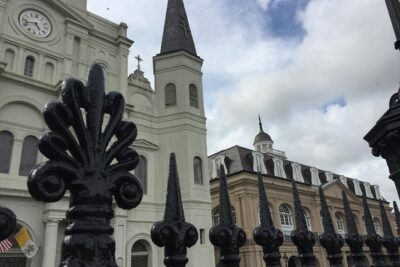
French Quarter Historical Sights and Stories Walking Tour
Read our review →
Ghost and Vampire Walking Tour Of The French Quarter
Read our review →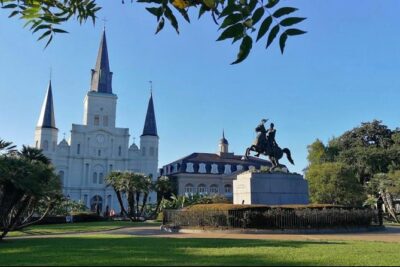
New Orleans City Tour: French Quarter, Garden District & Cemetery
Read our review →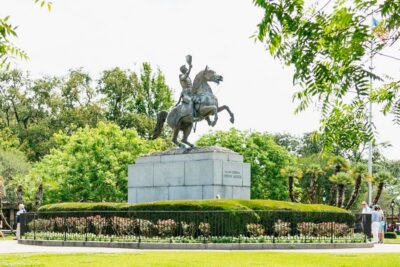

New Orleans French Quarter Food Tour: Cajun, Creole and Culture
Read our review →
New Orleans French Quarter and More Carriage Ride
Read our review →Browse the lists this tour appears in