
Reviewed · NEW ORLEANS HISTORY TOURS
New Orleans African American Heritage Walking Tour
New Orleans’s African American story is not a sidebar to the city’s past. It is woven into its music, food, faith, and streets. This two-hour walk connects that story to places you can see, including Congo Square, where enslaved Africans and free laborers gathered to trade, play music, dance, and socialize.
I like two things about this route: it gives Congo Square a place in the story rather than treating it as a quick photo stop, and it carries the conversation into the French Quarter, where African American culture shaped traditions that still define New Orleans. Guides named Keynin and Mika are associated with the tour, and the strongest praise centers on their local perspective and ability to handle difficult history with care.
One consideration: the experience is a walking tour, not a museum visit, and the two-hour format can only introduce a large subject. The route also has a group limit of 30, so you may not get a private, one-on-one lesson.
At a glance
- Congo Square is the anchor: Spend about 45 minutes at this historic gathering place in Armstrong Park, on the edge of the French Quarter.
- The French Quarter gets a new frame: The remaining hour and 15 minutes looks at African American influence on voodoo, dance, jazz, Creole food, and architecture.
- The history begins in 1719: The tour covers the forced arrival of Africans from the Senegambia region and later arrivals from the Benin and Congo regions.
- Local guides are central: Keynin and Mika are among the names associated with the tour, though the guide for your date is not specified.
- Plan on two hours outdoors: The tour starts at 4:00 pm at 401 Decatur Street and ends back there.
- The price is $29: A guide is included; food, drinks, and tips are not.
Start with the people who built New Orleans
The tour places African American history near the center of New Orleans’s origins. In 1719, just a year after the city was established, people of African ancestry were forcibly brought from Senegambia in West Africa. Roughly 5,000 Africans survived the Middle Passage to French Louisiana during the 1720s. In the 1780s, Spanish authorities brought a similarly sized group from the Benin and Congo regions.
Those numbers are not just background figures. They help explain the scale of the forced migration that shaped the region and the labor that built it. Enslaved Africans cleared forests, raised crops, and constructed city infrastructure. A tour that makes this labor visible gives you a better way to understand New Orleans than a walk focused only on grand buildings and famous names.
The tour also follows what persisted despite slavery and displacement. African culture influenced local food, music, religion, dance, and architecture. Those connections are the point of the walk: you are not simply hearing a timeline, but considering how people carried, adapted, and passed on traditions in a city built through their labor.
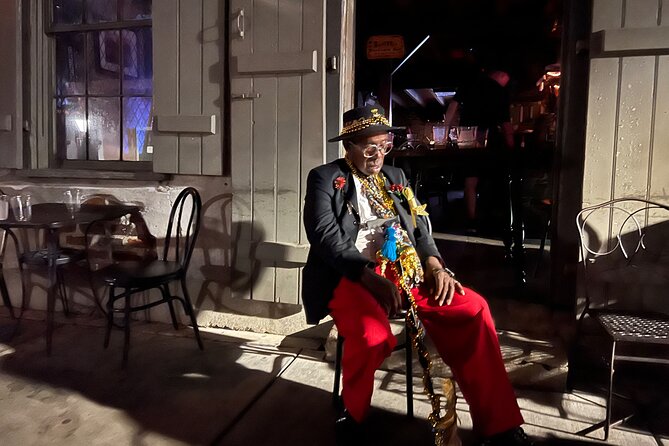
The subject deserves care and context. The tour’s strength, as described by its most highly praised guides, is its human delivery: Keynin and Mika are singled out for local insight, lively conversation, and respectful treatment of hard history. You can ask questions as you go, and the guide-led format lets the discussion respond to the group rather than leaving you to piece together plaques on your own.
More history tours in New Orleans:
- New Orleans Garden District History Walking Tour
★ 5.0 · 2,879 reviews - French Quarter Historical Sights and Stories Walking Tour
★ 5.0 · 2,724 reviews - New Orleans Small-Group Haunted History Carriage Tour
★ 4.5 · 2,289 reviews
Congo Square: a place to gather and keep culture alive
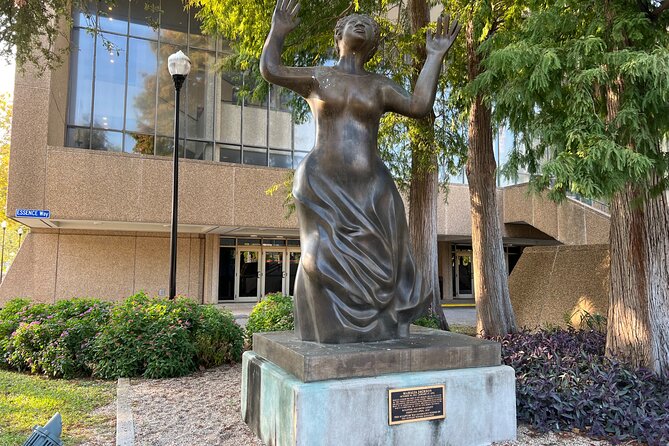
The first stop is Congo Square, now part of Armstrong Park in Faubourg Tremé, at the edge of the French Quarter. You spend about 45 minutes here, with no separate admission charge. The time matters: this is the route’s clearest link between a specific place and the histories the guide is explaining.
During the colonial era, hundreds of African slaves and laborers gathered here to trade goods, play music, dance, and socialize. That detail gives the square a meaning beyond its name or location. It was a place where people could meet and sustain communal practices under conditions designed to deny them freedom and control over their lives.
I would give this stop your full attention. The physical setting may not tell the whole story on its own, so the guide’s explanation is what connects the place to the people who used it. One guide, Keynin, has been associated with pointing out offerings beneath an old tree in Louis Armstrong Park, an observation that links past and present in a way a general account of the square might miss. The exact details you encounter can depend on your guide and the day.
Congo Square also puts the scale of cultural influence in perspective. Music and dance here were not decorative extras. They were part of social life and cultural continuity. When the walk later turns to jazz and other traditions, you have a place-based starting point for thinking about how culture was formed and carried forward.
The stop is not a performance or a staged reenactment. It is a chance to listen, look around, and understand why this ground matters. If you expect a long list of visible monuments, you may find the site understated. Its value is in the story and in the guide’s ability to make you notice what you might otherwise pass by.
The French Quarter through an African American lens
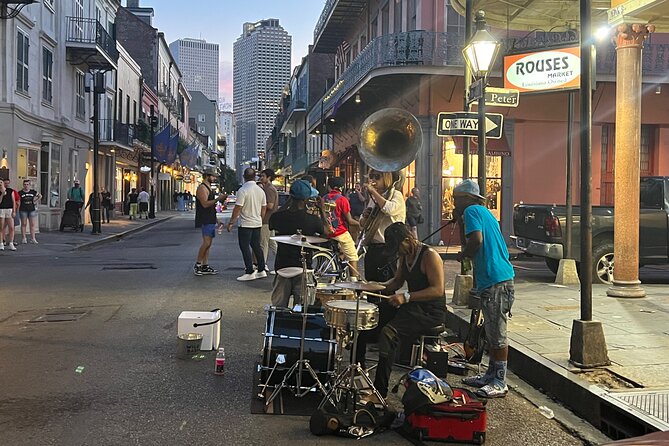
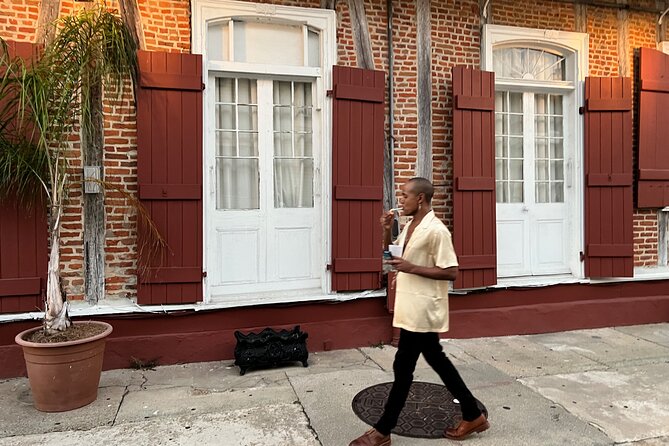
For the remaining hour and 15 minutes, the tour moves through the French Quarter, interpreting African American influence on traditions associated with New Orleans. The topics include voodoo, dance, jazz music, Creole food, and architecture. The point is not that every tradition has a single origin, but that African American culture is essential to understanding how the city’s identity took shape.
This perspective can change the way you look at familiar streets. The French Quarter is often presented through its buildings and colonial-era image. Here, the guide adds the labor, cultural exchange, and African American presence that are just as important to its story. That added context is useful even if you have already walked the area on your own.
The subjects are broad, and a single tour cannot give each one a full history. Treat this section as an introduction, not a final word on the origins of jazz, Creole cooking, or religious practice. A good guide can show you how the topics connect and point out where the city’s public story leaves people out. The time also gives you a chance to ask questions and follow the parts that matter most to you.
The tone appears to be conversational without making the difficult parts disappear. The guides most often praised by name, Keynin and Mika, are described as balancing serious subject matter with warmth and easy conversation. That balance matters: the history should be clear and direct, but the walk need not feel like a lecture.
What the two-hour format can and cannot do
At two hours, this tour works well as an introduction. It links a key gathering place with a broader discussion of African American influence in the French Quarter, giving you a basic framework for the rest of your visit. You are likely to leave with questions, which is a good outcome for a subject this large.
The route is divided into about 45 minutes at Congo Square and an hour and 15 minutes in the French Quarter. That split gives the square meaningful time while leaving most of the walk for the cultural history threaded through the Quarter. The tour begins at 4:00 pm, so it can fit into an afternoon plan, though you should allow the full two hours and avoid scheduling something immediately afterward.
Expect to walk. The experience is described as suitable for most participants, and one person who rented a wheelchair for a family member reported that the guide was accommodating. That is encouraging, but it does not establish that every part of the route is fully accessible. If you have specific mobility needs, contact the operator before booking to ask about the route and surfaces.
The maximum group size is 30. That is small enough to keep the tour from becoming a large crowd, but it is not a private experience. If you want extra time for questions, ask them when you have the chance rather than saving everything for the final minutes.
More walking tours in New Orleans:
- New Orleans Premier Ghost, Voodoo and Vampire Walking Tour
★ 4.5 · 12,856 reviews - New Orleans Food Walking Tour of the French Quarter with Small-Group Option
★ 5.0 · 6,118 reviews - St. Louis Cemetery No. 1 Official Walking Tour
★ 4.5 · 3,941 reviews - New Orleans French Quarter, Voodoo and Culture Walking Tour
★ 4.5 · 2,961 reviews
Is $29 a fair price?
At $29 per person, the value depends mainly on what you want from a guide. You are paying for a two-hour, locally guided walk through two significant areas, not for admission to attractions, a meal, or transportation. The listed stops have no separate admission charge, and food and drinks are not included.
I think the price makes sense if you want historical interpretation rather than simply a route to follow. Congo Square can be easy to see without understanding its role, and the French Quarter’s African American history is not always the first story presented on a standard stroll. A guide can connect those places and traditions in a way that plaques or independent wandering may not.
The value is also tied to who leads the walk. Keynin and Mika are names associated with this tour, and the praise directed at them focuses on local knowledge, clear explanations, and an engaging manner. Your assigned guide may differ, so do not book on the assumption that a particular person will lead unless the operator confirms it.
Tips are not included. One serious account describes pressure to tip more, while the broader tone around tipping is that it should be your choice. Keep any tip within your comfort level; it is separate from the $29 ticket price.
The tour is booked, on average, 12 days ahead. That is a useful planning signal, not a guarantee that every date will sell out. If your schedule is fixed, booking ahead is sensible. Confirmation is provided at booking, and free cancellation is available up to 24 hours before the start time. If the minimum number of participants is not met and the tour is canceled, you are offered another date or experience, or a full refund.
Who should take this walk?
This tour is a strong fit if you want a clearer account of how African American people and culture shaped New Orleans. It suits first-time visitors who want context for the French Quarter, as well as returning visitors who have seen the familiar sights and want to understand more of the city’s foundations.
It is especially worthwhile if you value a local guide and are comfortable discussing slavery, cultural survival, and the ongoing effects of history. The tour does not shy away from the struggle behind the traditions, and the most praised guides are noted for treating that complexity with respect.
You may want a different kind of outing if you prefer a self-guided walk, need a fully specified accessible route, or expect an in-depth treatment of every topic named. Two hours is enough to establish connections, not to settle every question. You will get the most from it if you arrive curious and ready to listen.
FAQ
How long is the New Orleans African American Heritage Walking Tour?
The tour lasts about two hours. It spends roughly 45 minutes at Congo Square and 1 hour 15 minutes walking through the French Quarter.
Where does the tour start and end?
It starts at 401 Decatur Street, New Orleans, Louisiana 70130, at 4:00 pm. The tour ends back at the same meeting point.
What is included in the $29 price?
A tour guide is included. Food, drinks, and tips are not included.
Which places does the tour visit?
The tour visits Congo Square, now part of Armstrong Park in Faubourg Tremé, and the French Quarter. It returns to the starting point.
How many people can join the tour?
The maximum group size is 30 people.
Is the tour suitable for someone using a wheelchair?
The tour is described as suitable for most participants, and an account of a group using a rented wheelchair describes the guide as accommodating. Specific route accessibility is not provided, so contact the operator if you need details.
What is the cancellation policy?
You can cancel up to 24 hours before the experience for a full refund. Cancellations or changes made less than 24 hours before the start time are not accepted. If the tour is canceled because it does not meet its minimum number of participants, you are offered another date or experience, or a full refund.
Should you book it?
Book this walk if you want more than a quick look at the French Quarter and want a guide to connect African American history with the city’s music, food, faith, and architecture. Congo Square gives the tour a powerful focal point, while the Quarter section broadens the picture.
At $29 for two hours, it is a fair buy for a thoughtful introduction, especially if you value local interpretation. Go in knowing that it is a starting point, not a complete history, and that the guide can make a real difference.
Newest tours in New Orleans
- New Orleans : Garden District Architecture Walking tour★ 4.8 · 5 reviews
- Ultimate Denver Day Out: Red Rocks, City Views & Ice Cream★ 5.0 · 7 reviews
- True Voodoo History of NOLA’s Congo Square with Local Guide★ 4.9 · 16 reviews
- From New Orleans: Whitney and Laura Guided Plantation Tour★ 4.9 · 20 reviews
- Witches Coven Walking Tour in New Orleans★ 5.0 · 49 reviews
- Treme Bar Crawl & Seafood Experience★ 4.2 · 7 reviews
- New Orleans Self-Guided Kayak Bayou Swamp Tour★ 5.0 · 9 reviews
- Whitney Plantation and Soul of New Orleans City Tour Combo★ 5.0 · 13 reviews
New Orleans History Tours, compared.
New Orleans Garden District History Walking Tour
Read our review →
French Quarter Historical Sights and Stories Walking Tour
Read our review →
New Orleans Small-Group Haunted History Carriage Tour
Read our review →
Paddlewheeler Creole Queen Historic Mississippi River Cruise
Read our review →
Creole Queen History Cruise with Optional Lunch
Read our review →
Browse the lists this tour appears in