
Reviewed · NEW ORLEANS MARDI GRAS TOURS
More Than Mardi Gras: French Quarter Tour (Small Group)
The French Quarter makes more sense when you know what you’re looking at: a cathedral tied to colonial Louisiana, apartments born from a daughter’s inheritance, and streets shaped by religion, trade and nightlife. This 90-minute walk connects those threads without making Bourbon Street the whole story.
I like two things in particular: the mix of landmark history and street-level detail, from the Old Ursuline Convent to the music and architecture along the way, and the finish at the Presbytère, where Mardi Gras and Hurricane Katrina exhibits add context beyond the walking route. Guides Andrew and Daniel have been praised for making the city’s past clear and engaging.
One consideration: the pace is brisk by nature. You cover several places in an hour and a half, and the Presbytère visit is self-guided rather than part of the guided walk. The museum admission is listed as not included, so check the ticket cost before you go.
At a glance
- Jackson Square start: Meet at the heart of the French Quarter for a 10:30 am departure.
- A short, focused route: The walk lasts about 90 minutes and takes in major landmarks, streets and stories.
- Small group, with a limit of 27: A more manageable size than a large coach group, though not an intimate private tour.
- History beyond Bourbon Street: Hear about Catholic influence, privateers, colonial government and the Quarter’s architecture.
- Presbytère finish: The walk ends beside Jackson Square, with time to visit the museum’s Mardi Gras and Hurricane Katrina exhibits.
- $39 per person: A reasonable price for a guided introduction, especially if you want help making sense of the Quarter before exploring on your own.
A smart first walk through the French Quarter
This tour is built for the visitor who wants more than a string of photo stops. The route gives you a framework for understanding the French Quarter, known in French as the Vieux Carré, while you walk through it. You’ll hear how its religious, political and commercial past shaped the streets you see today.
At 90 minutes, it’s a useful orientation rather than an exhaustive history lesson. You’ll pass several landmarks and hear their stories, but you won’t have time to linger at every building or go inside each one. Think of it as a guided introduction that helps you decide where to spend your own time afterward.
The group can include up to 27 people. That’s small compared with a big bus tour, but large enough that you may need to keep close to the guide and listen carefully when the streets are busy. The 10:30 am start is convenient if you want a morning activity and a free afternoon for a meal, a museum or another stroll.
More French Quarter tours in New Orleans:
- New Orleans Food Walking Tour of the French Quarter with Small-Group Option
★ 5.0 · 6,118 reviews - New Orleans French Quarter, Voodoo and Culture Walking Tour
★ 4.5 · 2,961 reviews - French Quarter Historical Sights and Stories Walking Tour
★ 5.0 · 2,724 reviews
Jackson Square and St. Louis Cathedral
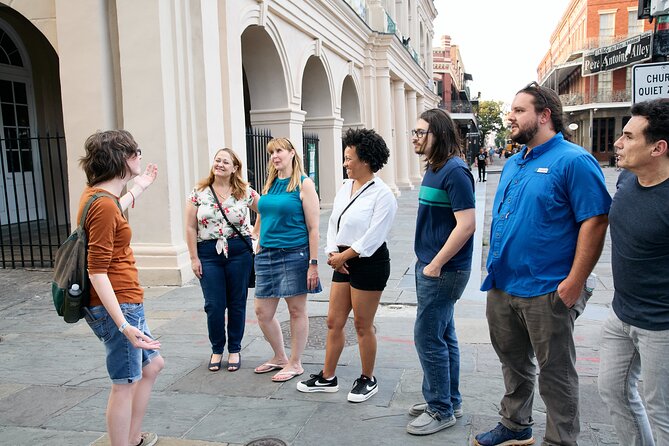
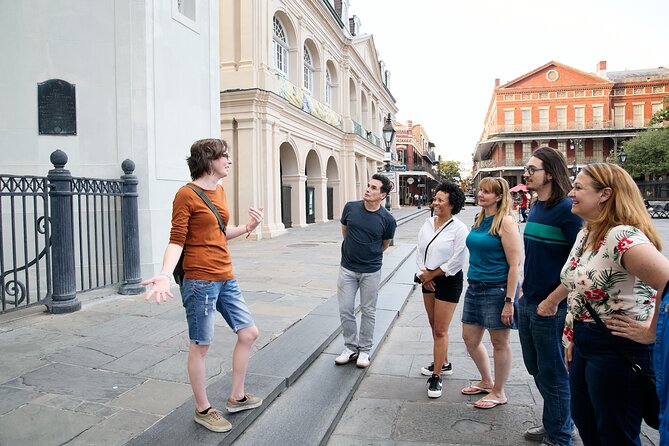
The walk begins at Jackson Square, an easy-to-recognize meeting point in the French Quarter. From there, the cathedral is one of the first major landmarks in the story. St. Louis Cathedral is described as the oldest continuously used cathedral in the United States, and its colonial Louisiana architecture gives the guide a natural way to introduce the city’s early history.
The value here is not just the view of the building. A good explanation helps connect the cathedral to the role Catholic faith has played in Louisiana, a theme that comes up again at the tour’s finish. If you’ve already admired the façade on your own, the historical context gives you a reason to look again.
You’ll hear about the cathedral and its importance to the region, but this is a walking tour, not a dedicated interior visit. Keep your expectations set accordingly. The guide’s job is to explain the site and the Quarter around it, not to provide a long stop inside every landmark.
The Pontalba buildings and the women behind them
The route also takes in the Pontalba buildings, often described as some of the earliest apartment buildings in the United States. Their story centers on Michaela Pontalba and her struggle to have them created as part of her father’s legacy.
That personal angle is a welcome change from a parade of dates and architectural labels. It lets you see how family, inheritance and ambition shaped the built environment of the Quarter. As you look at the buildings, the guide can point out why they matter, rather than leaving you with only a handsome façade and a name to remember.
The stop is also a reminder that the French Quarter is not just a preserved old town. It has been a lived-in neighborhood, shaped by people who had to negotiate power and money as well as style. You’ll hear the story from the street, so the detail you get depends on the guide and the group’s pace.
The Cabildo and the changing seat of power
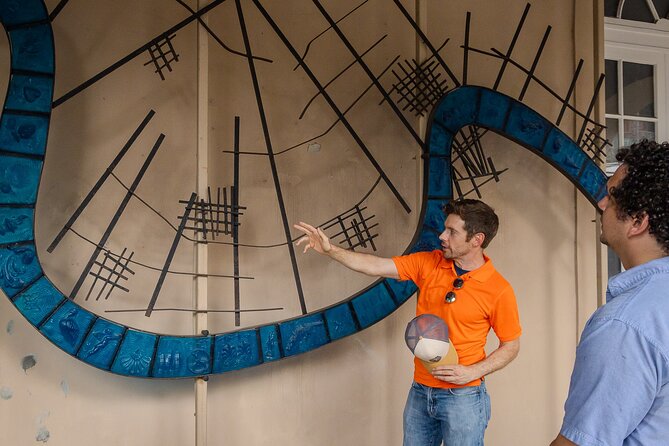
Near the square, the Cabildo gives the walk a political turn. The building served as a seat of government under French, Spanish and American rule. It now houses the Louisiana State Museum, making it a useful place to understand how control of New Orleans shifted over time.
Your guide will point out what is worth seeing inside and offer practical do’s and don’ts for a visit. That advice matters if you plan to return or go in after the walk. The tour itself does not promise a full museum visit, so treat this as an introduction to the building and a chance to get your bearings.
For a short tour, this is a lot of history packed into one stop. You don’t need to memorize every change of flag to get something from it. The main takeaway is that New Orleans has passed through several political eras, and the buildings around Jackson Square still carry traces of them.
More Mardi Gras experiences in New Orleans:
- New Orleans Mardi Gras World Behind-the-Scenes Tour
★ 4.5 · 538 reviews - New Orleans Mardi Gras 2026 Experience
★ 3.5 · 9 reviews - Mardi Gras Mambo Tours: Mambo Nights
★ 5.0 · 3 reviews
Pirate Alley and the business of privateering
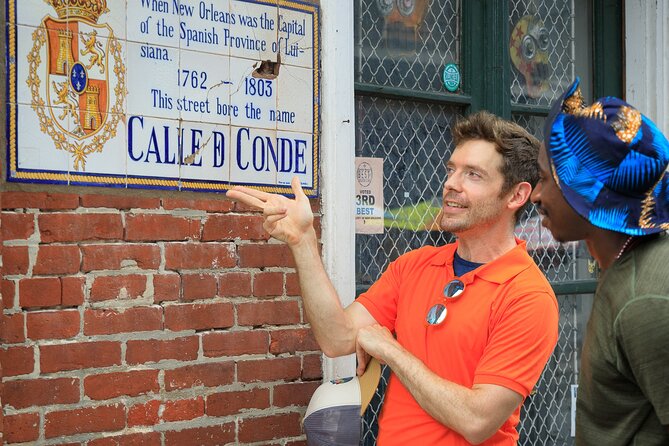
Pirate Alley brings the stories of privateers and pirates into the route. The guide explains how privateers mattered to the region and how pirates played a part in New Orleans’s creation. That’s a lively subject, but the useful point is broader than the romance of a pirate tale: trade, conflict and the movement of goods helped shape the city.
The stop gives the tour a bit of drama, but don’t expect a themed pirate show. It’s a historical explanation within a city walk. If you like stories that connect famous characters and local legends to the practical business of a port city, this section should be a highlight.
The Old Ursuline Convent and Catholic Louisiana
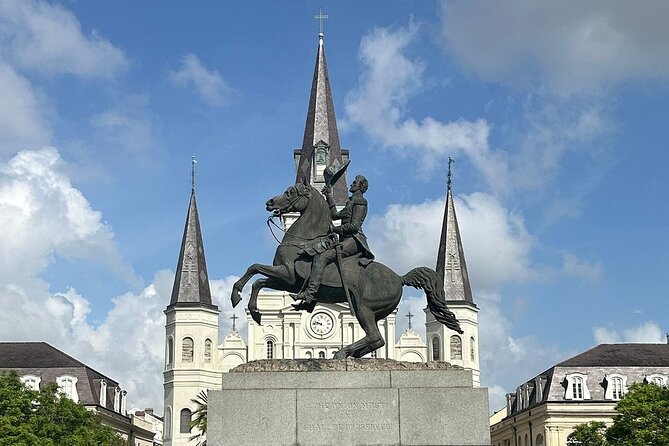
The Old Ursuline Convent is described as the first religious order to come to New Orleans and as a fine example of colonial religious architecture. Its importance makes the building more than a photogenic pause. It helps explain why Catholic institutions have had such a strong place in Louisiana’s public and cultural life.
The tour’s attention to the Catholic faith gives the route a thread that runs from the cathedral to the convent and finally to the Presbytère. You’ll hear about the building’s religious role and its architecture, though the walk does not indicate a separate interior visit. If seeing the inside is a priority, check opening arrangements on your own.
For visitors who know the Quarter mainly through its bars and music, this stop helps restore some balance. New Orleans nightlife is part of the city, but so are its religious traditions and institutions. The tour makes room for both.
Royal Street, Bourbon Street and the Quarter’s changing character
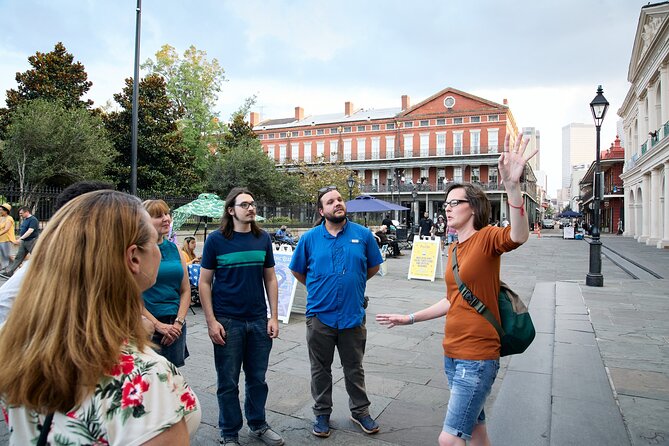
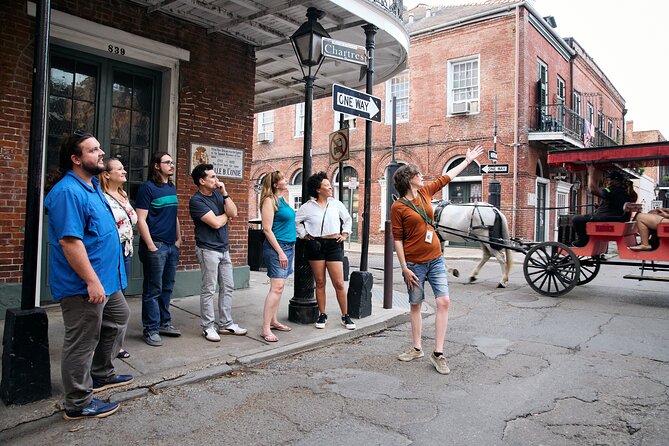
As you walk along the Royal Streets, the guide points out the Quarter’s distinctive architecture and the live music played along the street. This is where a walking tour can be especially useful: the buildings are right in front of you, but their styles and details can blur together without someone explaining what to notice.
Bourbon Street gets a more direct treatment. The guide discusses its sordid history and gives a quick how-to for approaching it. That practical advice is welcome because Bourbon Street can mean different things to different people. You can take a look, understand its place in the city and decide for yourself how much time you want to spend there.
The route includes both the Quarter’s celebrated architecture and its nightlife, without suggesting that one tells the whole story. That balance is one of the tour’s strengths. You get the famous street, but also the quieter cultural and historical context around it.
Finishing at the Presbytère
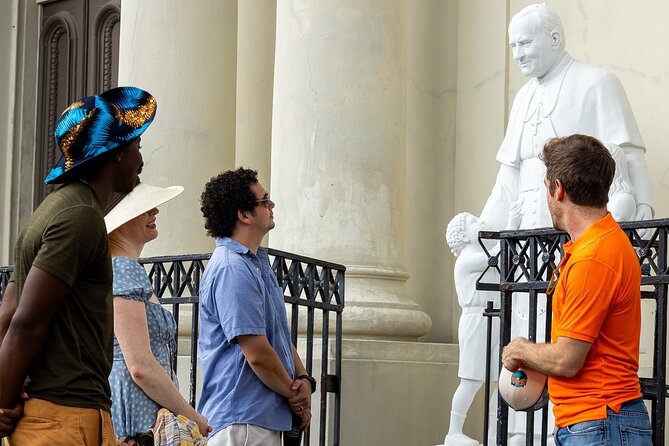
The walk ends at the Presbytère, a building that once served as a home for local priests. The guide discusses the importance of Catholic faith in Louisiana and connects the building to the Quarter’s wider religious history.
After the guided portion, you can visit the Presbytère for its exhibits on Mardi Gras and Hurricane Katrina. The Mardi Gras displays help put the city’s best-known celebration into context, while the Katrina exhibits address how New Orleans was rebuilt after the storm. That pairing gives the finish a wider view of the city, moving from tradition to a recent event that reshaped it.
The museum visit is self-guided, so you can spend your time where you’re most interested. Allow extra time if you want to see both exhibits properly. The tour information says the guide will have tickets for entry, while the Presbytère stop also notes that admission is not included. Confirm whether museum entry costs extra before booking, so the $39 tour price doesn’t come as a surprise.
What the $39 price gets you
At $39 per person, you’re paying for a guided walk, not transport or a long list of included admissions. The value lies in having someone explain the buildings, streets and stories as you go, then point you toward what to explore next. If you’re visiting New Orleans for the first time, that context can make the rest of your time in the Quarter more rewarding.
The praise for guides Andrew and Daniel points to the tour’s most important variable: the person leading it. Andrew was credited with giving a strong account of the city’s origins, and Daniel was described as a history major who could keep the group interested. These names are useful signs of the tour’s style, not a promise that either guide will lead your departure.
One participant on a fifth trip to New Orleans still found the walk useful, and teenagers in that group enjoyed it too. That’s a good indication that this isn’t only for first-time visitors or history specialists. The stories can add something even if you’ve seen the main sights before, and the short format makes it easier to bring along family members who may not want a long museum tour.
You’ll get less value if you want an in-depth visit inside each landmark or a slow, private walk with plenty of time for questions. The group may reach 27, and the route covers several stops in 90 minutes. For a first look at the Quarter, though, the price is fair, especially if you use the guide’s pointers to plan your own return visits.
Who should book this walk?
I’d choose this tour if you want a clear introduction to the French Quarter, care about the stories behind its buildings, or want to put Bourbon Street in a broader setting. It also suits repeat visitors who have seen the main sights but want to connect them through local history, and families with teenagers who can manage a brisk walking tour.
If your main goal is to spend a long time inside museums, explore at your own pace or focus on food and nightlife, this may not be the best fit. The guided portion is short, and the Presbytère visit comes afterward on your own. Book it for the framework and the guide’s storytelling, then leave time to follow your own interests through the Quarter.
FAQ
Where does the tour start and end?
It starts at Jackson Square in New Orleans and ends at the Presbytère at 751 Chartres Street.
What time does the tour start?
The stated start time is 10:30 am.
How long does the walking tour last?
It lasts about 1 hour and 30 minutes.
How large can the group be?
The maximum group size is 27 people.
What places are covered on the walk?
Stops and sights include St. Louis Cathedral, the Pontalba buildings, the Cabildo, Pirate Alley, the Old Ursuline Convent, Royal Street and Bourbon Street. The tour ends at the Presbytère.
Is Presbytère admission included in the $39 price?
Admission is marked as not included, although the tour information also says the guide has tickets for entry. Check whether there is an additional admission charge before booking.
What exhibits can I see at the Presbytère?
You can visit self-guided exhibits about Mardi Gras and Hurricane Katrina, including how New Orleans was rebuilt after the storm.
Newest tours in New Orleans
- New Orleans : Garden District Architecture Walking tour★ 4.8 · 5 reviews
- Ultimate Denver Day Out: Red Rocks, City Views & Ice Cream★ 5.0 · 7 reviews
- True Voodoo History of NOLA’s Congo Square with Local Guide★ 4.9 · 16 reviews
- From New Orleans: Whitney and Laura Guided Plantation Tour★ 4.9 · 20 reviews
- Witches Coven Walking Tour in New Orleans★ 5.0 · 49 reviews
- Treme Bar Crawl & Seafood Experience★ 4.2 · 7 reviews
- New Orleans Self-Guided Kayak Bayou Swamp Tour★ 5.0 · 9 reviews
- Whitney Plantation and Soul of New Orleans City Tour Combo★ 5.0 · 13 reviews
New Orleans Mardi Gras Tours, compared.

New Orleans Mardi Gras World Behind-the-Scenes Tour
Read our review →

Browse the lists this tour appears in