
Reviewed · NEW ORLEANS HISTORY TOURS
Black History & Tremè Neighborhood Walking Tour
Congo Square is more than a stop on this walk: it is the place where your guide connects the story of West African gatherings to New Orleans music and Black life. The route also visits the Tomb of the Unknown Slave and Louis Armstrong Park, giving you a thoughtful look at the city beyond its familiar tourist center.
I like two things in particular: the focus on Black history as part of the city’s living culture, and the guides’ storytelling. LaToya Papillion and Malika are among the guides named by people who took the tour, and their accounts describe warm, lively teaching that makes room for questions.
One consideration: this is a compact walking tour, not a full neighborhood exploration. You get about 1 hour 45 minutes, with roughly 30 minutes at the main stops, so the stories come quickly and you may want to make time for a return visit to places that catch your interest.
Key points
- Congo Square is the centerpiece: Learn how the site’s West African gatherings connect to New Orleans music and community life.
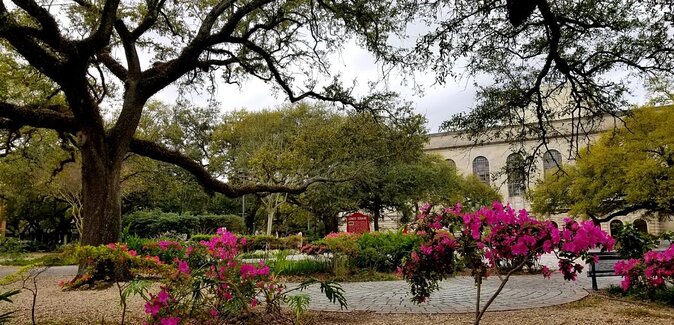
- The route puts Black history first: Stops include the National Historical Park, St. Augustine Church, and Louis Armstrong Park.
- The guides shape the experience: LaToya Papillion and Malika are praised for lively storytelling, personal investment, and welcoming questions.
- Expect a brisk 1-hour-45-minute walk: The tour starts at 10:30 am and returns to the meeting point.
- The price is $40 per person: Entry to the listed stops is free, so the value rests mainly on the guide’s context and storytelling.
- Groups can reach 28 people: Book around three weeks ahead on average, especially if you have a particular date in mind.
A different way into New Orleans history
This walk looks at New Orleans through the people and places that shaped its Black culture. Rather than treating music as a soundtrack to the city, the guide connects it to history: the lives of enslaved and free Black people, community gatherings, and the musicians whose work became part of New Orleans’ identity.
That approach gives the tour a clear purpose. You are not simply passing a statue or crossing a park; you are hearing why the place matters and how its past relates to the city today. Guides also bring in present-day Tremé, including Black-owned homes and businesses that remain part of the neighborhood.
The experience is run by Anansi’s Daughters. The guides named in accounts of the tour include LaToya Papillion and Malika. Their styles may differ, but the common thread is engaging storytelling, a willingness to answer questions, and an emphasis on telling the history plainly rather than sanding down its harder parts.
More history tours in New Orleans:
- New Orleans Garden District History Walking Tour
★ 5.0 · 2,879 reviews - French Quarter Historical Sights and Stories Walking Tour
★ 5.0 · 2,724 reviews - New Orleans Small-Group Haunted History Carriage Tour
★ 4.5 · 2,289 reviews
Starting on North Rampart Street
The walk begins at 801 N Rampart St at 10:30 am and ends back at the same point. That makes it easy to plan around: you can book it for a morning, then decide what to explore next based on the places and stories that stay with you.
The tour lasts about 1 hour 45 minutes. The four listed stops add up to about 90 minutes, leaving roughly 15 minutes for moving between places and transitions. It is a short tour, but the subject matter is broad, so expect a steady flow of information rather than long stretches of unstructured time.
The group limit is 28. That is large enough to create a shared walk, but still manageable for a guide-led conversation. If you like asking questions, the guides are described as approachable and open to them. Since the tour is booked an average of 22 days ahead, plan early if your schedule is fixed.
New Orleans Jazz National Historical Park
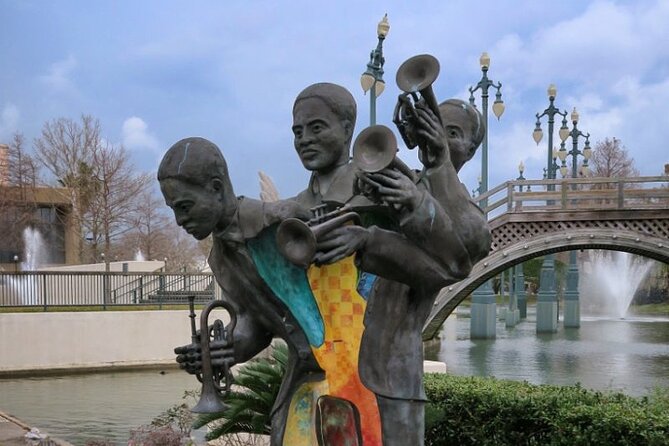
The first stop is the New Orleans Jazz National Historical Park, with about 30 minutes devoted to the stories of musicians such as Moses Hogan, Mahalia Jackson, Louis Armstrong, and Buddy Bolden. The point is not just to collect famous names. Your guide places music within the wider history of Black New Orleans and helps explain the people and traditions behind the sound.
That context can be useful even if you already know the city’s headline musicians. The tour’s strength is its focus on connections: music, community, and the experience of Black residents across different periods. The guide’s stories also give you names and themes to follow up on later in your trip.
The stop is listed as free admission. The trade-off is time: half an hour gives the guide room to establish a frame, but not to cover every musician or musical tradition in detail. If a particular artist or subject grabs you, note it down and ask the guide for a suggestion on what to explore next.
Congo Square and the roots of local music
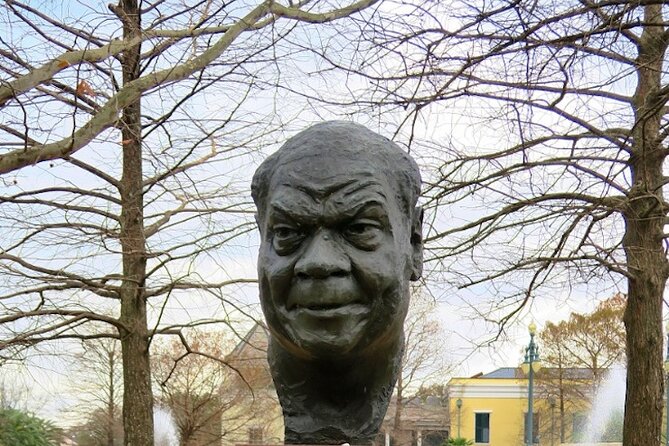
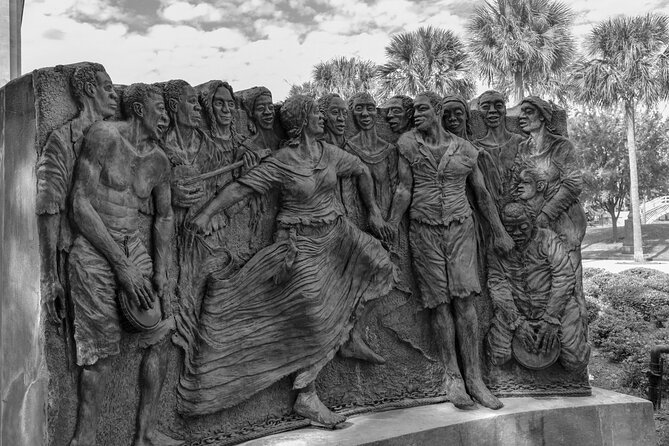
The next half hour is spent at Congo Square, the tour’s most important stop for understanding how New Orleans’ music connects to Black history. The guide explains the site as a gathering place where West African drum circles took place, with gatherings traced back to 1724.
You also hear about the lives and activities associated with the square. Enslaved people were allowed to gather there, and the tour discusses how people met, worshipped, married, and traded. That makes the location more than a music landmark. It was a place of community and cultural life under conditions shaped by enslavement.
The site’s significance can be hard to grasp from a quick look alone. A guide’s explanation helps connect the physical place to the people who used it and the traditions that carried forward. At the same time, this is only one part of a short walk. The history is wide-ranging, so listen for the details you want to explore in greater depth later.
More walking tours in New Orleans:
- New Orleans Premier Ghost, Voodoo and Vampire Walking Tour
★ 4.5 · 12,856 reviews - New Orleans Food Walking Tour of the French Quarter with Small-Group Option
★ 5.0 · 6,118 reviews - St. Louis Cemetery No. 1 Official Walking Tour
★ 4.5 · 3,941 reviews - New Orleans French Quarter, Voodoo and Culture Walking Tour
★ 4.5 · 2,961 reviews
The Tomb of the Unknown Slave at St. Augustine Church
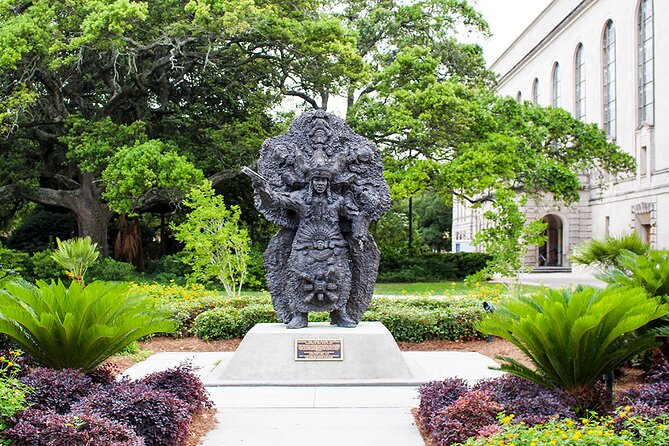
At St. Augustine Catholic Church, the group spends about 15 minutes at the Tomb of the Unknown Slave, located on the church grounds. This stop shifts the mood from the musical stories to remembrance. It gives the walk a moment to acknowledge the people whose lives and names were lost or left unrecorded.
The church is in Tremé, described as the oldest Black neighborhood in the nation. The guide’s role here is important: the site is a place of respect, and its meaning is not captured by a quick photo or a passing glance. You have a chance to hear why the tomb matters and what it represents within the tour’s larger account of Black New Orleans.
The time allotted is brief. Treat this as a focused stop rather than a full visit to the church or a longer historical discussion. The tour information identifies the tomb as being on the grounds; it does not promise an interior visit.
Louis Armstrong Park and Tremé today
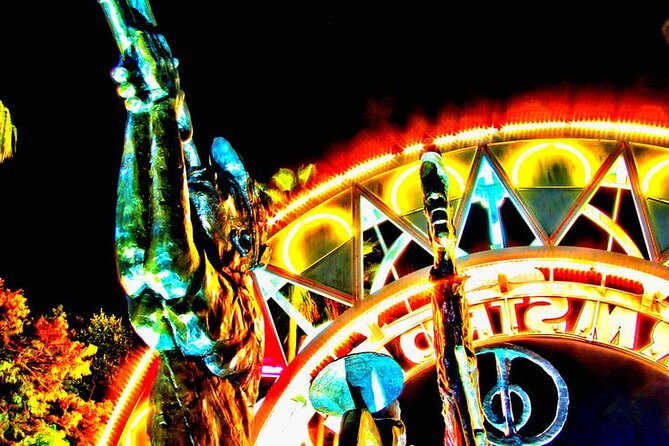
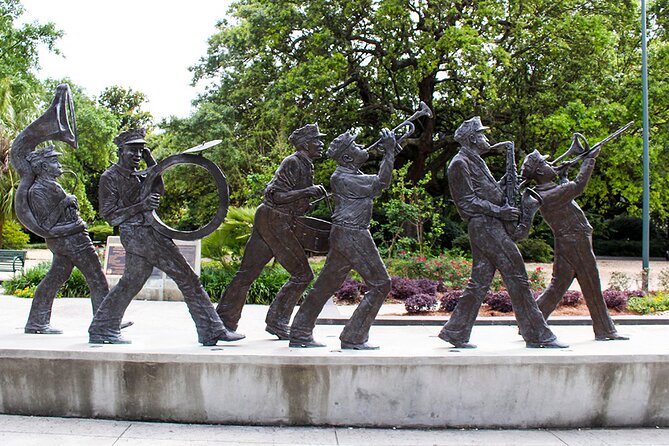
The final listed stop is Louis Armstrong Park, where the guide spends about 15 minutes discussing the foundations of New Orleans music, cuisine, architecture, and culture. The park’s name points to one of the city’s best-known musicians, but the discussion reaches beyond one person to the broader cultural forces that shaped New Orleans.
The tour also gives you a chance to hear about the neighborhood around the park. Accounts of the walk describe guides pointing out Black-owned homes and businesses that remain prominent in Tremé. That present-day perspective matters: history here is not presented as something sealed off in the past, but as part of a neighborhood where people still live and work.
A short park stop will not explain every landmark or settle every historical question. It does, however, offer a useful frame for looking around. The tour can also be a good starting point if you want to return to the area on your own. One person who took the walk later went back to the Backstreet Cultural Museum, but that museum is not a listed stop, so don’t assume it is included.
What the guides bring to the walk
The most consistently praised part of this experience is the guide’s ability to make a lot of history feel human and accessible. LaToya Papillion is described as energetic, funny, approachable, and deeply invested in Tremé. Malika is also praised for strong storytelling and for connecting local history with music and culture.
That matters on a tour covering difficult subjects. The guides are described as candid about slavery and Black life, while keeping the walk engaging and open to questions. One account also notes that a guide handled an awkward encounter with another tour group and a closed coffee stop without losing her composure. Small moments like that suggest a flexible approach, though the coffee stop is not part of the listed itinerary.
You may hear a lot in a short time. One person described retaining only a portion of the fast-moving information, while still leaving with more questions and a desire to learn. That is a fair expectation: bring your attention, ask questions, and jot down names or places you want to revisit. This walk is a starting point for understanding, not a substitute for a longer study of the subject.
Is $40 a good value?
At $40 per person, the ticket is not paying for admission to the listed stops, which are free. You are paying for a guided route, the interpretation of the places you see, and access to stories that can be easy to miss if you walk through Tremé on your own.
The value depends on what you want from a tour. If you mainly want a long, leisurely stroll or entry to several attractions, this is not that. If you want a concise, guided introduction to Black New Orleans history, with links between music, community, and neighborhood life, the price is more persuasive.
The 1-hour-45-minute length also makes it a manageable choice in a busy New Orleans itinerary. You can fit it into a morning without giving up an entire day. But the pace and breadth mean you may leave with a list of places to revisit rather than a complete picture of each subject.
Practical details before you book
The tour is offered in English, with a mobile ticket, and begins at 10:30 am at 801 N Rampart St. It returns to the same meeting point. The maximum group size is 28, and most people can participate; service animals are allowed.
The tour requires good weather. If poor weather cancels it, you are offered another date or a full refund. A minimum number of participants is also required, and if that minimum is not met, you are offered another date or experience, or a full refund. You can cancel for a full refund up to 24 hours before the start time. Changes or cancellations made later than that are not accepted for a refund.
Wear comfortable walking shoes and bring what you need for the weather. Those are sensible basics for any outdoor neighborhood walk, though the tour information does not specify the route’s walking distance or surface.
Who should take this tour?
I’d choose this walk if you want to understand New Orleans beyond its familiar music venues and visitor districts. It suits first-time visitors who want a clear introduction to Tremé, as well as repeat visitors who have seen the city before but want a more grounded account of its Black history.
It also works for people who like learning through conversation rather than a long indoor presentation. The guides are described as welcoming to questions, and the route offers a mix of parks, a church site, and neighborhood context. Families with older children or teens may find the range of music and history engaging, though the tour information does not set a minimum age.
You may want a different experience if you prefer a slow pace, extensive time at each site, or a tour focused narrowly on music history. This walk covers several connected subjects in under two hours. Its strength is the way the guide links them, not the amount of time spent at any one place.
Should you book it?
Book the Black History & Tremé Neighborhood Walking Tour if you want an honest, guided introduction to the people and places behind New Orleans’ Black cultural history. The strongest reason to go is the guide: LaToya Papillion, Malika, and the other named storytellers are praised for making the history clear, lively, and personal.
At $40, it is a good-value primer if you plan to listen closely and follow up on what interests you. Just keep your expectations in scale. You will visit four significant places, hear a great deal in a short time, and likely come away with more to learn. That is a worthwhile trade if you want your New Orleans visit to reach beyond the postcard version of the city.
FAQ
How long is the Black History & Tremé Neighborhood Walking Tour?
It lasts about 1 hour 45 minutes.
What time does the tour start?
The tour starts at 10:30 am.
Where does the walk begin and end?
It begins at 801 N Rampart St, New Orleans, Louisiana, and ends back at the same meeting point.
How much does the tour cost?
The price is $40 per person.
Which places are included on the route?
The listed stops are New Orleans Jazz National Historical Park, Congo Square, St. Augustine Catholic Church, and Louis Armstrong Park.
What language is the tour offered in?
The tour is offered in English.
Can I cancel for a refund?
Yes. You can cancel at least 24 hours before the start time for a full refund. Cancellations made less than 24 hours before the start time are not refunded.
Newest tours in New Orleans
- New Orleans : Garden District Architecture Walking tour★ 4.8 · 5 reviews
- True Voodoo History of NOLA’s Congo Square with Local Guide★ 4.9 · 16 reviews
- From New Orleans: Whitney and Laura Guided Plantation Tour★ 4.9 · 20 reviews
- Ultimate Denver Day Out: Red Rocks, City Views & Ice Cream★ 5.0 · 7 reviews
- Witches Coven Walking Tour in New Orleans★ 5.0 · 49 reviews
- Treme Bar Crawl & Seafood Experience★ 4.2 · 7 reviews
- New Orleans Self-Guided Kayak Bayou Swamp Tour★ 5.0 · 9 reviews
- Whitney Plantation and Soul of New Orleans City Tour Combo★ 5.0 · 13 reviews
New Orleans History Tours, compared.

New Orleans Garden District History Walking Tour
Read our review →
French Quarter Historical Sights and Stories Walking Tour
Read our review →
New Orleans Small-Group Haunted History Carriage Tour
Read our review →

Paddlewheeler Creole Queen Historic Mississippi River Cruise
Read our review →

Creole Queen History Cruise with Optional Lunch
Read our review →
Browse the lists this tour appears in