
Reviewed · NEW ORLEANS VOODOO TOURS
New Orleans: Voodoo History Guided Walking Tour
Marie Laveau’s story is a way into a part of New Orleans history that is often flattened into spooky shop décor. On this two-hour walk, you visit Congo Square and Laveau’s former home while learning how African and Caribbean traditions, local history, and outside propaganda shaped what people call New Orleans Voodoo.
I like two things about the route: it starts by sorting out the terms people often mix up, and it treats Voodoo as a living religious tradition rather than a prop for ghost stories. Doug, one guide named by name, has been praised for clear historical detail and a good storyteller’s touch.
The main consideration is the subject itself. A short walk can introduce complex beliefs and painful history, but it cannot explain every tradition in depth. Come curious, and be ready to question familiar tales rather than expect a scare tour.
What matters on this walk
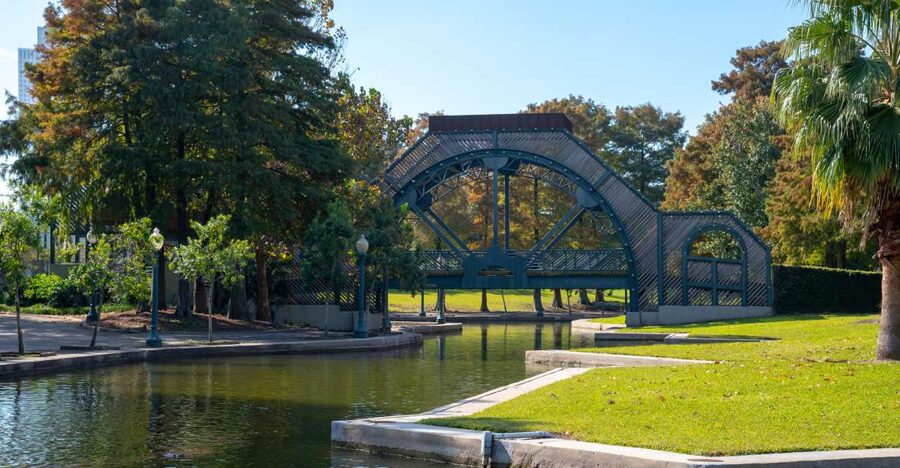
- Congo Square is a central stop: The tour places this historic gathering ground within the story of New Orleans Voodoo and Marie Laveau.
- Marie Laveau’s former home gives the history an address: You see the place where she raised her children and carried out spiritual work.
- The guide separates traditions: Expect an opening explanation of New Orleans Voodoo, Haitian Voodoo, Santeria, and Hoodoo.
- Myths get examined, not served as fact: Voodoo dolls, zombies, and claims about traditional medicine are part of the conversation.
- The route includes Sanite Dede: You learn about the woman described as an important predecessor to Laveau.
- It is a two-hour, English-language walk: The meeting point is outside Basin Street Station Visitors’ Center, on its St. Louis side.
Start on Basin Street, not inside the station
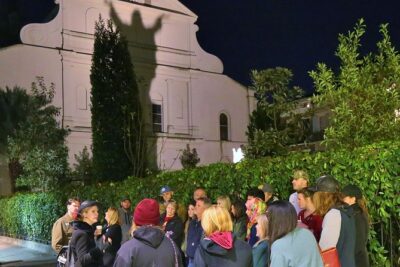
The tour meets on the St. Louis side of Basin Street Station Visitors’ Center. Look for the group outside, rather than going into the building to find your guide. The starting point is also close to the tomb said to hold Marie Laveau’s remains, an immediate reminder that local history and legend often share the same ground here.
That uncertainty is part of the subject. The tour description calls the tomb’s connection to Laveau alleged, not settled fact. It is a useful distinction to keep in mind as you hear stories about her life, spiritual practice, and reputation. In New Orleans, a vivid tale can survive for generations without becoming a documented fact.
At the outset, your guide gives a short explanation of the terms that shape the walk: Haitian Voodoo, New Orleans Voodoo, Santeria, and Hoodoo. That is a practical first step. These traditions are frequently lumped together in popular accounts, even though the tour presents them as distinct practices and histories.
A little vocabulary makes the rest of the route easier to follow. It also helps you notice when a story is describing a specific religious tradition and when it is repeating a stereotype. If you have encountered Voodoo mainly through horror stories or novelty souvenirs, this opening context is likely to be one of the most useful parts of the tour.
More voodoo tours in New Orleans:
- New Orleans Premier Ghost, Voodoo and Vampire Walking Tour
★ 4.5 · 12,856 reviews - Adults-Only New Orleans Ghost, Crime, Voodoo, and Vampire Tour
★ 5.0 · 6,545 reviews - New Orleans Adults-Only Ghost, Voodoo and Vampire Tour
★ 5.0 · 3,291 reviews
Congo Square and the history behind the rituals
From Basin Street, the route heads to Congo Square, a site the tour treats as sacred ground and a key setting in the history of New Orleans Voodoo. Marie Laveau is associated with ceremonies and rituals there, and the square offers a way to connect spiritual practice with the city’s wider past.
The tour’s value here is not simply that you stand in a place linked to a famous figure. It is that the guide can explain why a particular place matters within the story of ancestor worship, African and Caribbean traditions, and the development of a distinct New Orleans practice. The experience frames Voodoo as religion and cultural history, not as a collection of spooky effects.
That approach matters because the tradition has long been described through the suspicions of outsiders. The tour directly addresses how Christian and colonial voices portrayed Voodoo as demonic, and how those accounts helped shape the image that still circulates today. You get a chance to hear the difference between a religious practice and the hostile stories told about it.
The square is also a good point to slow down and listen. This is a walking tour, so you are moving between locations rather than settling in for a lecture. Comfortable shoes and weather-appropriate clothing will make it easier to focus on the guide instead of your feet or the forecast.
Marie Laveau’s home and a life beyond legend
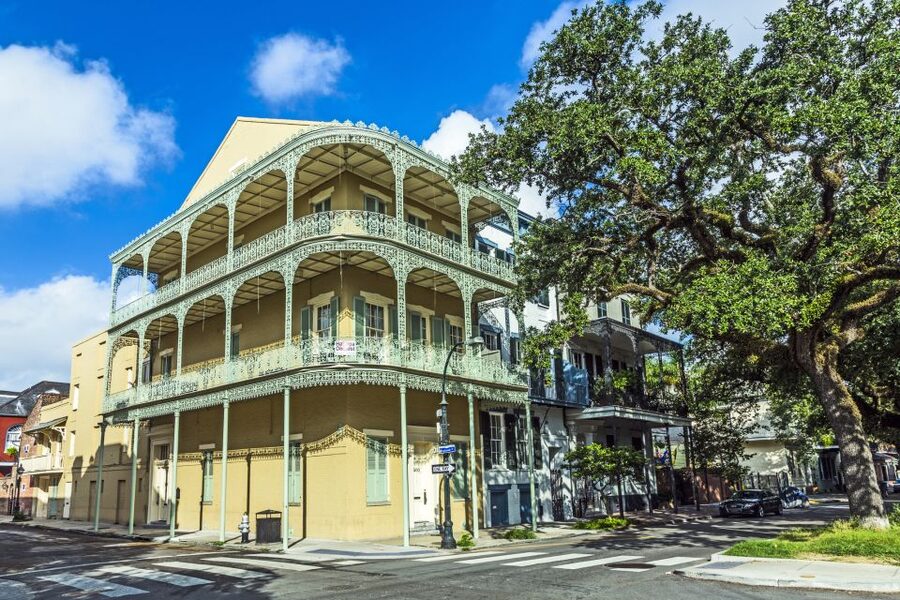
The next major stop is the former home of Marie Laveau, where she raised her children and carried out spiritual work. The tour’s account draws a deliberate contrast between her family life by day and her religious practice by night. That contrast helps make her more than a famous name or a character in a ghost story.
Laveau’s place in New Orleans history is a major reason to choose this walk. The tour connects her to ritual, healing, and the social world around her, while also asking you to consider how her reputation grew. The material includes secret love affairs, reported miracles, spirit summoning, and accounts of radical healing. These subjects can be compelling, but they are best heard with the tour’s broader context in mind, rather than treated as proof that every dramatic story is literal fact.
The guide also introduces Sanite Dede, described as the woman who paved the way for Laveau. Her role helps move the story beyond one celebrated figure. You learn that Voodoo had a public presence in the city before Laveau became its most famous practitioner, and that this visibility eventually brought restrictions. The tour notes that Voodoo was banned from the French Quarter, an example of how religious practice could become a target of official control.
For visitors who arrive knowing only Marie Laveau’s name, this is a useful corrective. You get a more layered picture: a woman with children, a spiritual practitioner, a public figure, and someone whose legacy sits at the intersection of history and folklore. Two hours will not resolve every dispute over her life, but the walk gives you better questions to take away.
Dauphine Street, dolls, zombies, and medicine
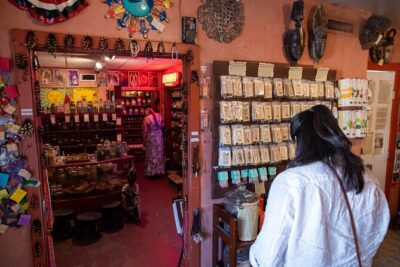
On Dauphine Street, the conversation turns to zombie lore, pandemic history, traditional Afro-Caribbean medicine, and the familiar image of the Voodoo doll. The tour promises to separate fact from popular fiction, a welcome change if you have seen Voodoo reduced to pin-studded dolls and horror-film shorthand.
The subject of dolls is especially useful for understanding how a religious tradition gets misrepresented. Rather than assuming that a familiar image tells the whole story, the guide addresses what the tour calls the truth about Voodoo dolls. The exact explanation will depend on the guide’s presentation, but the larger point is clear: popular imagery has often been shaped by sensational stories rather than by the beliefs and practices themselves.
The discussion of traditional medicine adds another dimension. The tour points out that Afro-Caribbean remedies could be more effective than Western medicine in some historical circumstances. That is a striking claim, and it is worth hearing as part of a conversation about what kinds of knowledge were valued or dismissed. The tour links medicine to pandemic history and to the broader treatment of Voodoo, rather than presenting it as a novelty.
Zombie stories fit the same pattern. They have become a staple of popular culture, but the walk places them alongside history and propaganda. You should expect explanation and interpretation, not a chain of jump scares. One guide, Doug, has been described as a strong storyteller whose tour is historical rather than spooky. If that is the style you want, this experience is a better match than a ghost walk built around frights.
More history tours in New Orleans:
- New Orleans Garden District History Walking Tour
★ 5.0 · 2,879 reviews - French Quarter Historical Sights and Stories Walking Tour
★ 5.0 · 2,724 reviews - New Orleans Small-Group Haunted History Carriage Tour
★ 4.5 · 2,289 reviews - New Orleans Haunted History Ghost Tour
★ 4.5 · 2,084 reviews
A wider story of religion, race, and resistance
The tour’s subjects reach beyond individual practitioners. It connects ancestor worship and spiritual work to racial crimes, abolition, and the broader struggle over who could practise openly and whose beliefs were treated as legitimate. That scope gives the walk more weight than a simple biography of Marie Laveau.
You will hear about the early abolition movement through the lens of spirituality and magic in America. The tour does not present Voodoo as a side note to the city’s past. Instead, it uses religious life to examine the forces that shaped New Orleans: slavery and trade, colonial rule, racial prejudice, and the blending of religious traditions.
This is also where the tour’s stated purpose becomes most valuable. The history of Voodoo has been distorted by outsiders who cast it as sinister, and the tour aims to challenge those accounts. A good guide can help you see how a stereotype is built: a practice gets stripped of context, described in frightening terms, and repeated until the caricature feels like fact.
The walk’s subject matter is serious, even when the storytelling is lively. Expect entertaining anecdotes alongside uncomfortable material. The available details do not promise a set balance between the two, so go in prepared for a mix of legend, documented history, and interpretation. When a story sounds especially dramatic, listen for how the guide distinguishes what is known from what is claimed.
What two hours and $37 buy you
At $37 per person for two hours, the cost works out to $18.50 an hour. You are paying for a live guide and a route that links several important places with explanations of religious terms, local history, and persistent myths. The price makes the most sense if you want context you are unlikely to get from simply walking past the sites.
The tour is a stronger value for someone who wants the history explained than for someone looking mainly for a photograph at a famous address. Congo Square and Laveau’s former home matter here because the guide connects them to a wider account of practice and persecution. Without that context, the stops could be easy to see and hard to understand.
The tour is two hours long, runs in English, and is described as wheelchair accessible. Starting times depend on availability. Comfortable shoes, a camera, cash, and clothing suited to the weather are suggested; the walk is outdoors, so conditions can affect how comfortable you feel. The operator is licensed, insured, and bonded.
You can reserve without paying at the time of booking, and cancellation up to 24 hours ahead is eligible for a full refund. Those terms offer some flexibility if your plans are unsettled. They do not change the basic decision: this is a guided history walk, not a general tour of every corner of the French Quarter.
The available feedback is small in number, so do not treat it as a guarantee of every guide’s style. Still, the recurring strengths are useful clues: the tour has been called informative, and Doug has been singled out for lively storytelling and researched history. The distinction that it is not a spooky ghost tour is especially helpful when deciding if the subject and tone suit you.
Who should take this tour
I would put this walk near the top of the list if you want to understand how New Orleans Voodoo differs from the version sold in popular culture. It also suits you if you are interested in Marie Laveau, the history of religion and race, or the ways that spiritual traditions survive despite official pressure and hostile stereotypes.
It is a good fit for curious first-time visitors who want a focused, two-hour introduction. You do not need prior knowledge, since the guide begins with the basic distinctions among several traditions. If you already know a great deal about Voodoo or want a detailed academic account, the short format may feel introductory rather than exhaustive.
Choose another kind of tour if your main goal is a scare, a parade of ghost stories, or a broad overview of New Orleans landmarks. This route has a particular subject and takes it seriously. Its strongest appeal is the chance to leave with a clearer sense of what Voodoo is not, as well as a better grasp of the history behind the name.
Should you book it?
Book this tour if you want an accessible, history-led introduction to Voodoo, Marie Laveau, and the forces that shaped their place in New Orleans. The route’s most useful feature is its effort to untangle religious practice from myths about dolls, zombies, and demonic rites.
Skip it if you want a purely spooky outing or a full treatment of every tradition mentioned. For $37, the two-hour walk offers a focused guide-led perspective, with meaningful stops at Congo Square and Laveau’s former home. If those subjects interest you, it is a worthwhile way to make sense of a history that is often told badly.
FAQ
How long is the New Orleans Voodoo history tour?
The walking tour lasts two hours.
How much does the tour cost?
The listed price is $37 per person.
Where is the meeting point?
Meet outside Basin Street Station Visitors’ Center, on the St. Louis side. The group does not meet inside the building.
What language is the tour in?
The live tour guide speaks English.
Which places does the tour visit?
The route includes Congo Square and Marie Laveau’s former home. It also begins near the tomb said to hold her remains and includes a stop on Dauphine Street.
Is the tour wheelchair accessible?
Yes. The activity is described as wheelchair accessible.
What should I bring?
Wear comfortable shoes and weather-appropriate clothing. You may also want a camera and cash.
More walking tours in New Orleans
- New Orleans Food Walking Tour of the French Quarter with Small-Group Option
★ 5.0 · 6,118 reviews - St. Louis Cemetery No. 1 Official Walking Tour
★ 4.5 · 3,941 reviews - New Orleans French Quarter, Voodoo and Culture Walking Tour
★ 4.5 · 2,961 reviews - New Orleans Haunted Ghost, Voodoo & Vampire Walking Tour
★ 4.5 · 2,731 reviews
Newest tours in New Orleans
- New Orleans : Garden District Architecture Walking tour★ 4.8 · 5 reviews
- Ultimate Denver Day Out: Red Rocks, City Views & Ice Cream★ 5.0 · 7 reviews
- True Voodoo History of NOLA’s Congo Square with Local Guide★ 4.9 · 16 reviews
- From New Orleans: Whitney and Laura Guided Plantation Tour★ 4.9 · 20 reviews
- Witches Coven Walking Tour in New Orleans★ 5.0 · 49 reviews
- Treme Bar Crawl & Seafood Experience★ 4.2 · 7 reviews
- Whitney Plantation and Soul of New Orleans City Tour Combo★ 5.0 · 13 reviews
- Craft brewery hopping through New Orleans | Uptown★ 5.0 · 31 reviews
New Orleans Voodoo Tours, compared.
New Orleans Premier Ghost, Voodoo and Vampire Walking Tour
Read our review →
Adults-Only New Orleans Ghost, Crime, Voodoo, and Vampire Tour
Read our review →
New Orleans French Quarter, Voodoo and Culture Walking Tour
Read our review →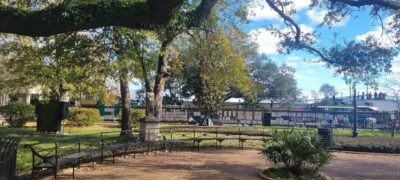
New Orleans Ghost, Vampire, Witch, Voodoo, and Mystery Tour
Read our review →
New Orleans Spirits & Spells: Witchcraft, Voodoo, and Ghost Tour
Read our review →
New Orleans Combo Tour: Voodoo, Vampire, and Ghost Tour
Read our review →Browse the lists this tour appears in