
Reviewed · NEW ORLEANS FRENCH QUARTER TOURS
French Quarter History: Walking Tour
New Orleans history feels different when it comes through the people whose families lived it. This two-hour French Quarter walk pairs familiar sights with stories passed down through a guide’s own ancestors, covering a city shaped by Native communities, enslavement, French and Spanish rule, Creole culture, jazz, and Mardi Gras.
I like two things in particular: the family-history perspective, which can put a human voice to the past, and the wide range of subjects, from architecture and river trade to cocktails and legalized prostitution. One practical caution: the meeting details give two different starting addresses, so confirm the exact spot before setting out.
Key points to know
- The guide’s family connection matters: Your licensed guide is described as a descendant of founding families in the area and shares recent history firsthand, alongside older family stories.
- The subject matter goes beyond buildings: Expect discussion of the many communities that made New Orleans home, as well as jazz, Mardi Gras, cuisine, cocktails, floods, and hurricanes.
- The Mississippi River is part of the story: You’ll walk to the river that helped make New Orleans a city.
- It’s a two-hour walking tour: Wear comfortable shoes and bring water.
- The meeting point needs clarification: One set of details gives 768 Decatur Street, at the bottom of the concrete steps; another names 400 Esplanade Avenue.
- The price is $30 per person: That buys a guide-led introduction to the Quarter, not food or drinks.
A two-hour introduction to the Quarter
This walk is built around conversation. Rather than treating the French Quarter as a row of handsome facades, the guide connects its streets and buildings to the people who lived here and the cultures that met, clashed, and mixed in the city.
That approach suits New Orleans. A building’s appearance alone can’t tell you who built it, who lived or worked inside, or how French and Spanish rule shaped the city. The tour promises to connect those visible details to the histories of Native Americans, enslaved people, French and Spanish settlers, Creole communities, and people of mixed heritage.
The two-hour length is useful if you want an orientation before exploring on your own. It gives you more context than a quick stroll, while leaving time in your day for a meal, a museum, or a wander through streets you’ll recognize from the walk. The trade-off is that three centuries of history can only be sampled in that time. The guide can open doors to topics; you shouldn’t expect every story to be told in full.
More French Quarter tours in New Orleans:
- New Orleans Food Walking Tour of the French Quarter with Small-Group Option
★ 5.0 · 6,118 reviews - New Orleans French Quarter, Voodoo and Culture Walking Tour
★ 4.5 · 2,961 reviews - French Quarter Historical Sights and Stories Walking Tour
★ 5.0 · 2,724 reviews
Check the meeting point before you leave
The tour information names two possible starting locations. The itinerary and meeting instructions say 768 Decatur Street, with the group meeting at the bottom of the concrete steps. The longer description instead says the walk begins at 400 Esplanade Avenue, in front of the US Mint.
Those are distinct instructions, so don’t guess based on whichever address is easiest to find. Confirm the exact meeting point with the tour provider before you head out. That’s especially wise if you’re walking over from another part of the Quarter or trying to fit the tour between timed plans.
There is a similar small mismatch about the finish. The itinerary says the walk returns to 768 Decatur Street, while the description says it ends near 848 Decatur Street, close to Café Du Monde. Both point you to the Decatur Street area, but it’s worth confirming where the guide expects to wrap up.
Architecture with history behind it
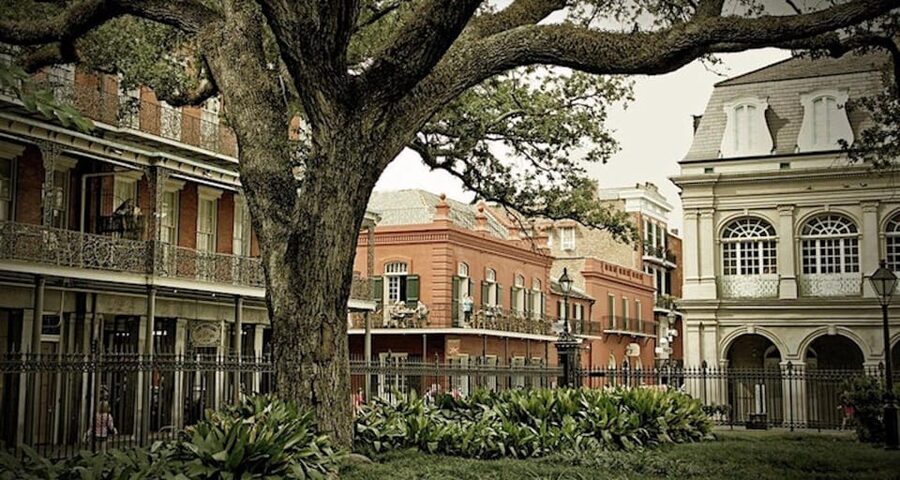
The tour includes Spanish and French architecture and visits to sites described as hundreds of years old. That makes the walk appealing if you want to look beyond the Quarter’s prettiest fronts. The guide can help you connect the built environment to the city’s changing influences and to the people who made this place home.
You’re also promised a look at the oldest building in the Mississippi Valley. The details provided don’t identify it by name, so ask your guide to point it out and explain what makes it significant. That’s a good example of where a live tour can add more than a photo stop: the guide can give you context while you’re standing in front of the place.
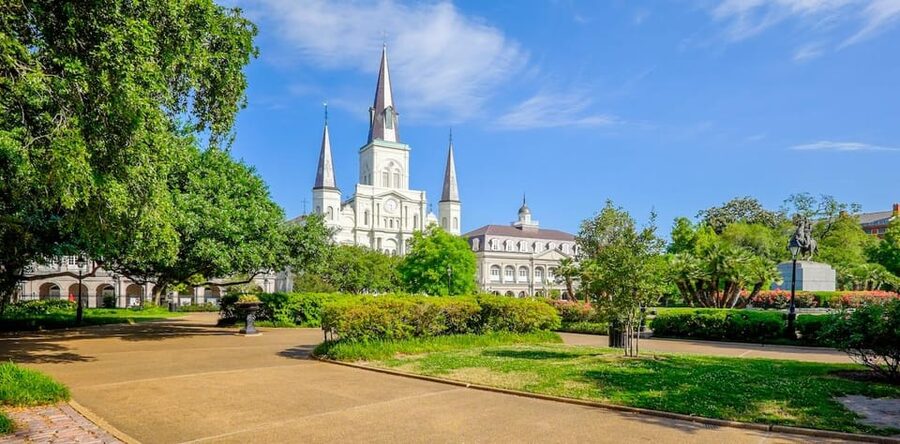
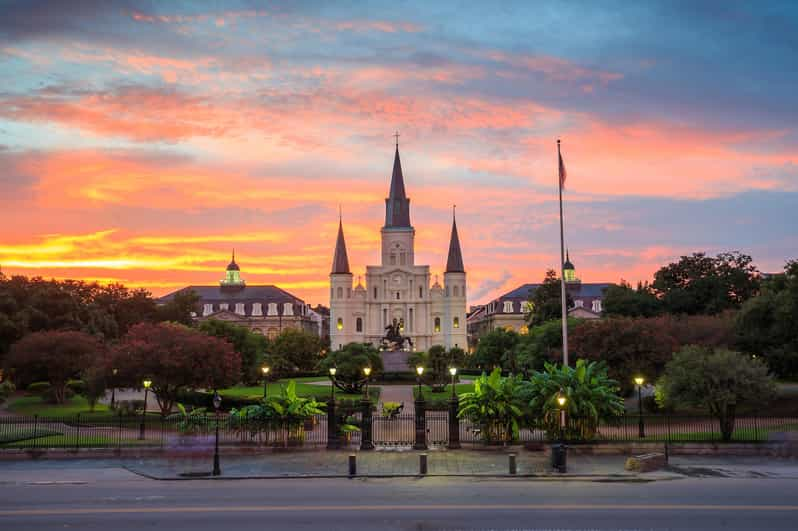
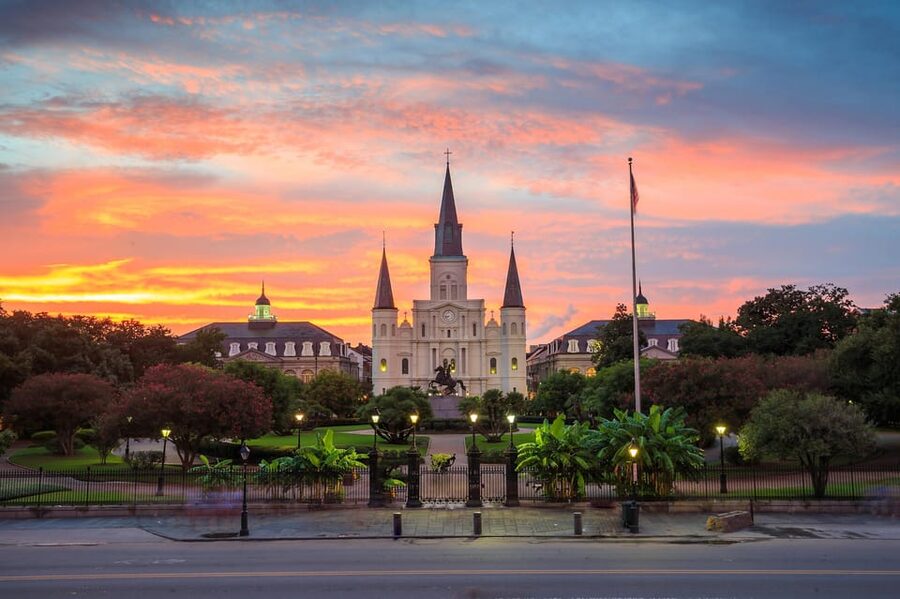
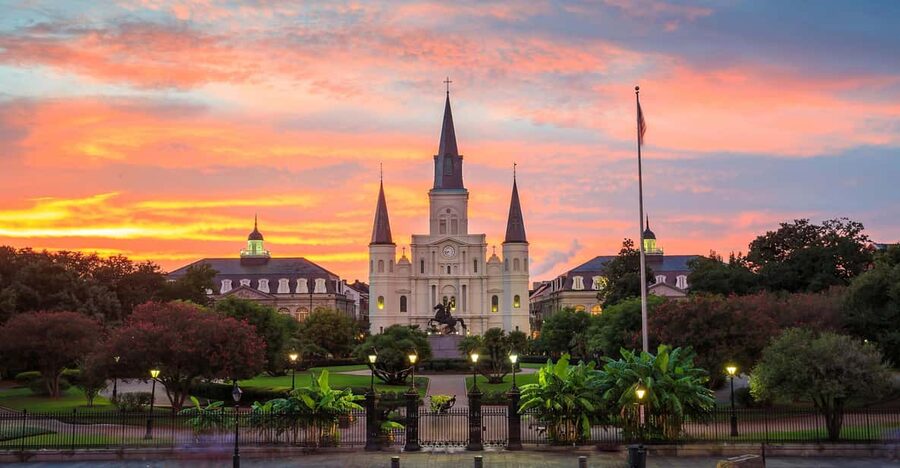
St. Louis Cathedral is another landmark on the route. Often described as the most photographed church in the South, it gives the walk a recognizable focal point. The value here isn’t just seeing a famous church. It’s hearing how a major building fits into the Quarter’s broader history and how the city’s architectural story reflects French and Spanish influence.
The Mississippi is more than a view
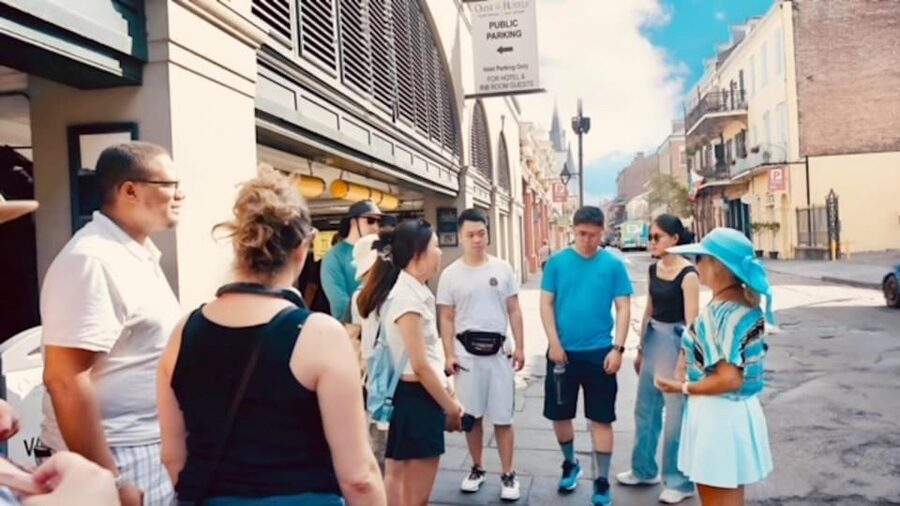
The route also takes you to the Mississippi River, identified as the reason New Orleans exists. That’s a useful idea to carry through the rest of your visit. The river is not an optional scenic extra in this account of the city; it helps explain why this place grew where it did.
The tour description also includes floods and hurricanes among the subjects. That context matters in a city whose relationship with water is central to its history. The river visit gives the guide a natural place to connect geography with the wider story of settlement and the forces that have shaped the city.
Don’t expect a boat ride or a long riverfront excursion. This is a walking tour, and the river is one stop within a broader exploration of the Quarter. If river views are a priority, the walk gives you a chance to see the water, but its main purpose is historical interpretation.
More history tours in New Orleans:
- New Orleans Garden District History Walking Tour
★ 5.0 · 2,879 reviews - New Orleans Small-Group Haunted History Carriage Tour
★ 4.5 · 2,289 reviews - New Orleans Haunted History Ghost Tour
★ 4.5 · 2,084 reviews - Paddlewheeler Creole Queen Historic Mississippi River Cruise
★ 4.5 · 1,948 reviews
From jazz and Mardi Gras to legalized prostitution
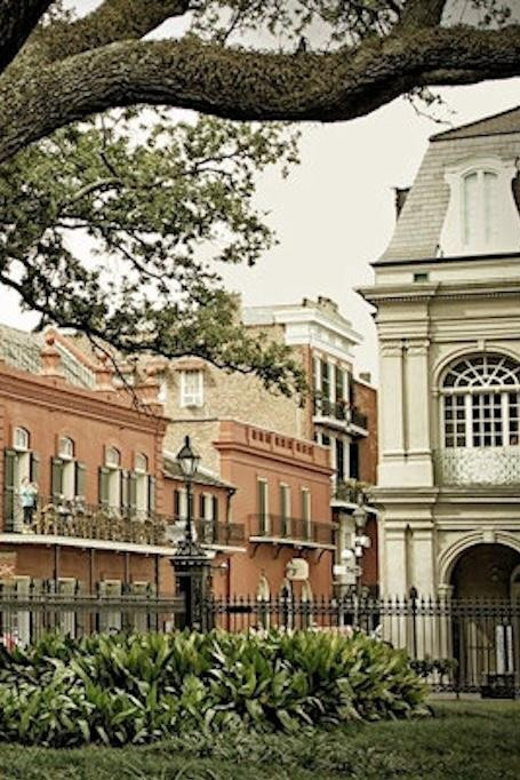
The advertised topics are unusually broad. Alongside architecture and the city’s early communities, the guide discusses legalized prostitution, the creation of jazz, Mardi Gras parades, original cuisine, America’s first cocktails, floods, and hurricanes. These subjects give the tour a more rounded feel than a walk that focuses only on grand buildings and famous names.
The mention of legalized prostitution signals that the stories may include parts of the city’s past that aren’t polished for a postcard. Jazz and Mardi Gras, meanwhile, connect the Quarter to cultural traditions that still shape how people think about New Orleans. Cuisine and cocktails add another layer: the city’s history is also told through what people made, ate, drank, and celebrated.
The description says these topics only scratch the surface. That’s a fair expectation for a two-hour tour. If one subject catches your interest, ask the guide for a recommendation on where to learn more or what to see next. The guide is also meant to suggest places to eat and drink, which can help turn a history walk into a practical first step for your time in the city.
The value of a guide with family ties
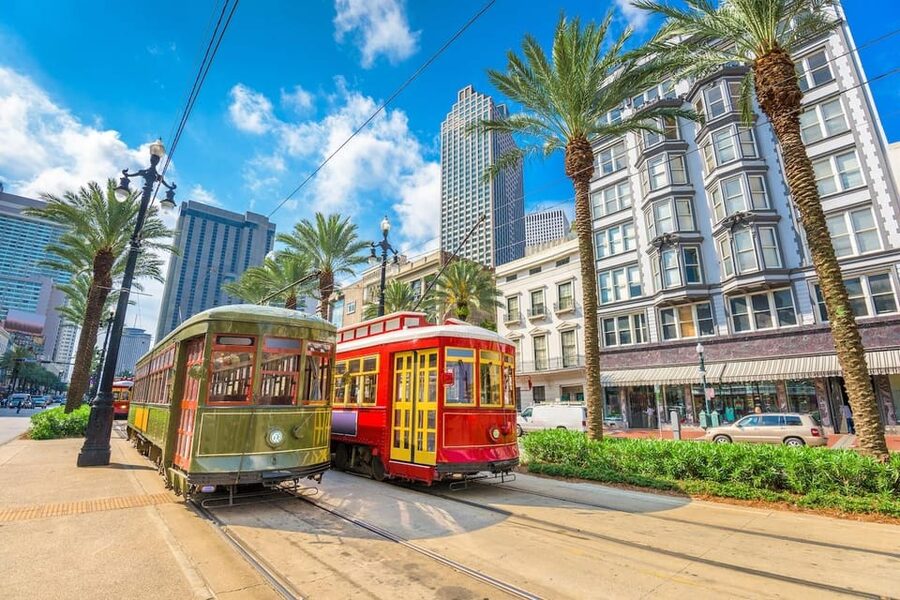
The guide is described as a descendant of founding families in the area, with a perspective that joins recent firsthand history to stories told by ancestors. That’s the most distinctive feature of the experience. A guide’s family connection doesn’t replace careful history, but it can make the past feel less remote and give a story a personal point of entry.
Past guides named for this tour include Angela, Charmaine, and DeAnna. Angela was described as kind and able to share a lot about the city; Charmaine was noted for being helpful; and DeAnna was praised for keeping the walk interesting with anecdotes and historical stories. Those names give you a sense of the guide-led nature of the experience, but you should not assume which guide will lead your departure.
The personal approach is likely to suit you if you enjoy questions and conversation rather than a lecture delivered at a fixed pace. The tour is described as a chance to talk about the city’s cultural intersections and stories of the past. You’ll get more from it if you bring your curiosity and ask about the people, places, or traditions that interest you most.
A few practical points for the walk
The tour lasts two hours, is conducted in English, and is listed as wheelchair accessible. Comfortable shoes and water are the recommended essentials. You’ll be on foot, so plan for a walking outing rather than a seated presentation.
Crowds or street closures may affect what you can see. During Jazz Fest, one participant’s group encountered blocked-off and crowded areas of the Quarter and missed some places, though they still enjoyed the walk. That’s a useful reminder that a live walking route can be affected by events and street conditions. If your visit overlaps with a major festival, allow for possible changes rather than expecting every stop to unfold exactly as planned.
The group size is not specified, so you can’t count on an intimate private-tour feel. The guide’s stories and the two-hour format are the central draw. If you need a particular accessibility detail beyond the general wheelchair-accessible designation, confirm it with the provider before booking.
Is $30 a fair price?
At $30 per person, you’re paying for a licensed guide and a two-hour, English-language walk focused on history, architecture, and local storytelling. The price makes most sense if you value interpretation. You can see the cathedral and river on your own, but you won’t get the same organized account of the people and events that connect those sights.
There’s no food or drink included in the details, so treat Café Du Monde and other recommendations as ideas for after the tour, not part of the ticket. That separation can be handy: you can choose your own meal and budget, then follow up on the guide’s suggestions at your own pace.
The tour also offers free cancellation up to 24 hours in advance and a reserve-now, pay-later option. Those terms add flexibility if your plans are still taking shape. They don’t change the main value question: book if you want a guided historical overview, not if you’re mainly looking for a food tasting, a cocktail tour, or a visit inside a particular attraction.
Who should book this walk?
I’d consider this a good fit for a first visit to New Orleans, especially if you want the Quarter to make more sense than it does from a map and a few photographs. It also suits history-minded visitors who want to hear about several communities and traditions, not just the French and Spanish buildings.
It may be less suitable if you prefer a very narrow subject, such as a full tour devoted only to jazz, or if you want a fixed list of stops guaranteed regardless of street conditions. The tour covers a lot of ground in subject matter, and the route may need to adapt to crowds or closures.
My advice: book if the family-history perspective and broad historical conversation appeal to you. Before you go, confirm whether the group meets at 768 Decatur or 400 Esplanade. That small check will make for a much smoother start.
FAQ
How long is the French Quarter History Walking Tour?
The tour lasts two hours.
What language is the tour conducted in?
The live guide speaks English.
Where does the tour meet?
The meeting instructions name 768 Decatur Street, at the bottom of the concrete steps. Another description names 400 Esplanade Avenue in front of the US Mint, so confirm the exact meeting point before you go.
Where does the tour end?
The itinerary says the walk returns to 768 Decatur Street. Another description says it ends near 848 Decatur Street, close to Café Du Monde. Confirm the finish location with the provider.
What should I bring?
Bring comfortable shoes and water.
Is the tour wheelchair accessible?
Yes, the activity is listed as wheelchair accessible.
Can I cancel and receive a refund?
Yes. You can cancel up to 24 hours in advance for a full refund.
More walking tours in New Orleans
- New Orleans Premier Ghost, Voodoo and Vampire Walking Tour
★ 4.5 · 12,856 reviews - St. Louis Cemetery No. 1 Official Walking Tour
★ 4.5 · 3,941 reviews - New Orleans Haunted Ghost, Voodoo & Vampire Walking Tour
★ 4.5 · 2,731 reviews - Ghost and Vampire Walking Tour Of The French Quarter
★ 4.5 · 2,406 reviews
Newest tours in New Orleans
- New Orleans : Garden District Architecture Walking tour★ 4.8 · 5 reviews
- Ultimate Denver Day Out: Red Rocks, City Views & Ice Cream★ 5.0 · 7 reviews
- True Voodoo History of NOLA’s Congo Square with Local Guide★ 4.9 · 16 reviews
- From New Orleans: Whitney and Laura Guided Plantation Tour★ 4.9 · 20 reviews
- Witches Coven Walking Tour in New Orleans★ 5.0 · 49 reviews
- Treme Bar Crawl & Seafood Experience★ 4.2 · 7 reviews
- Craft brewery hopping through New Orleans | Uptown★ 5.0 · 31 reviews
- New Orleans Self-Guided Kayak Bayou Swamp Tour★ 5.0 · 9 reviews
New Orleans French Quarter Tours, compared.

New Orleans Food Walking Tour of the French Quarter with Small-Group Option
Read our review →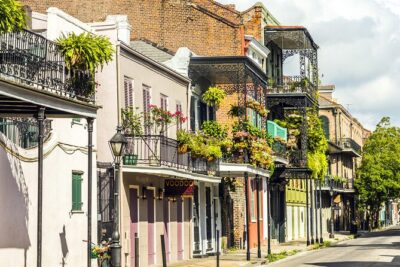
New Orleans French Quarter, Voodoo and Culture Walking Tour
Read our review →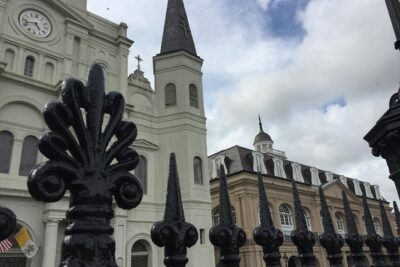
French Quarter Historical Sights and Stories Walking Tour
Read our review →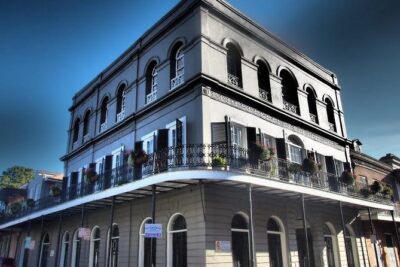
Ghost and Vampire Walking Tour Of The French Quarter
Read our review →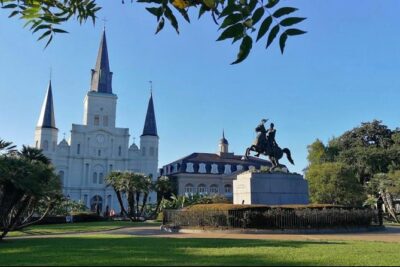
New Orleans City Tour: French Quarter, Garden District & Cemetery
Read our review →

New Orleans French Quarter Food Tour: Cajun, Creole and Culture
Read our review →
New Orleans French Quarter and More Carriage Ride
Read our review →Browse the lists this tour appears in