
Reviewed · NEW ORLEANS FOOD TOURS
New Orleans Food and History Walking Tour
New Orleans food tells a story in every serving: gumbo carries influences from several cultures, while a po’boy or muffuletta can turn lunch into a lesson in local tastes and traditions. This three-hour French Quarter tour makes that connection its main course. I like the mix of classic dishes and the guide’s food history, and I like that five eateries make it easier to sample places you might not find by yourself.
The main consideration is that this is a food-first walk, not a broad architectural tour. You’ll get some city context as you go, but the meal is the focus, and dietary choices are limited: a vegetarian option is available, but vegan, gluten-free and dairy-free meals are not.
What to know before you go
- Gumbo opens the tour: Begin at 3rd Block Depot with chicken and andouille gumbo, often served with potato salad.
- Five eateries, plus a hot sauce stop: Expect a succession of local tastes, though venues and dishes can change with availability.
- The history comes with lunch: Hear about food traditions, Louisiana’s geography, seafood harvesting and the origins of dish names.
- Bring an appetite: Portions are described as generous, and the full food selection can add up to a substantial meal.
- Plan for about three hours: The group is limited to 16, with morning and afternoon departures.
- Wear walking shoes: The route is described as manageable, but some visitors find the pace brisk, and the tour is not recommended for people with mobility or walking issues.
Starting with gumbo in the French Quarter
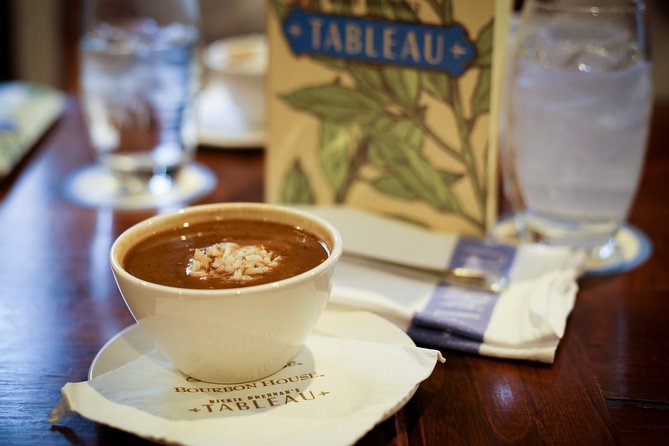
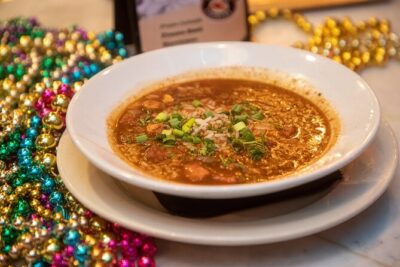
Meet your guide at 3rd Block Depot, 310 Chartres Street, and start with a bowl of chicken and andouille sausage gumbo. The dark roux, smoky sausage and chicken stock offer a useful first taste of Cajun cooking, while the potato salad served with it adds a country-style touch. It’s a filling opener, so pace yourself.
The first stop has a bar where you can buy a drink, but beverages beyond water are not included. A few people have found that the tour spends longer here than they’d prefer, so if you are eager to keep moving, ask your guide about the day’s plan. The tour’s rhythm can vary with the group and the service at each venue.
Your guide does more than point out what’s in the bowl. The conversation connects ingredients and cooking methods to the mix of communities that shaped New Orleans food. Guides who have led the tour include Beth, Meg, John, Sarah and Dylan, also known as Dr. Gumbo. The person leading your departure will vary, but the guiding style is a major part of the experience: expect stories, questions and food explanations, not a scripted lecture.
More food tours in New Orleans:
- New Orleans Food Walking Tour of the French Quarter with Small-Group Option
★ 5.0 · 6,118 reviews - New Orleans French Quarter Food Tour: Cajun, Creole and Culture
★ 5.0 · 1,246 reviews - French Quarter walking Food Tour Famous Flavors of New Orleans
★ 5.0 · 1,115 reviews
Hot sauce, pralines and the pleasure of small stops
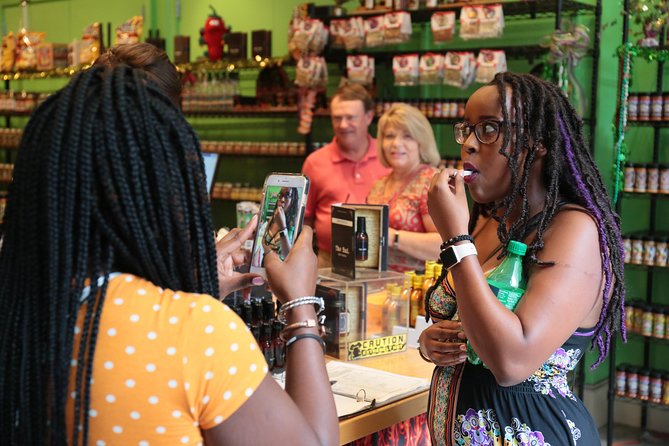
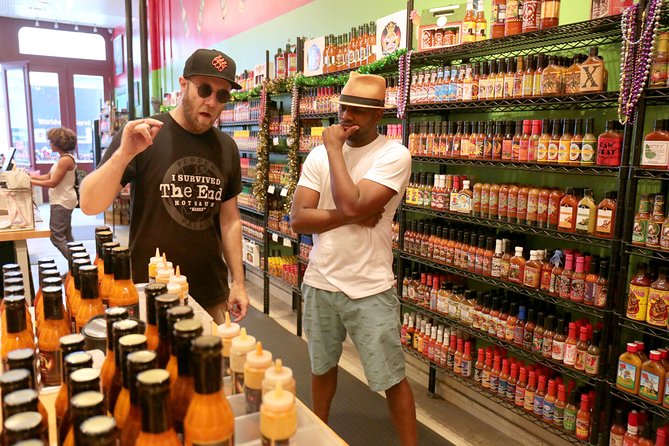
Next comes a hot sauce shop, where you can try a wide range of sauces and seasonings. Samples may include barbecue sauces, marinades, dry rubs and wing sauces. It is a fun change of pace, and a chance to test your heat tolerance before you reach the next meal.
Still, this stop divides appetites. If your priority is trying as many New Orleans dishes as possible, you may prefer smaller tastes of more foods instead of time spent sampling condiments. One visitor wished the stop had been replaced by another restaurant. The trade-off is clear: the hot sauce tasting adds variety and a chance to browse, but it may not satisfy a diner hoping for a full roll call of local classics.
At Leah’s Pralines, the tour turns to sweets. Traditional pralines combine local brown sugar, dairy and pecans; an inventive option might be bacon pecan brittle. This is a good moment to notice how a familiar base can take on a different character through local ingredients and a little kitchen imagination.
The shop stop can also be useful if you want to take home a food gift. You’ll have a chance to look around, but don’t assume every item or tasting will be the same on each departure. The route and venues are subject to availability.
Po’boys and the stories behind the bread
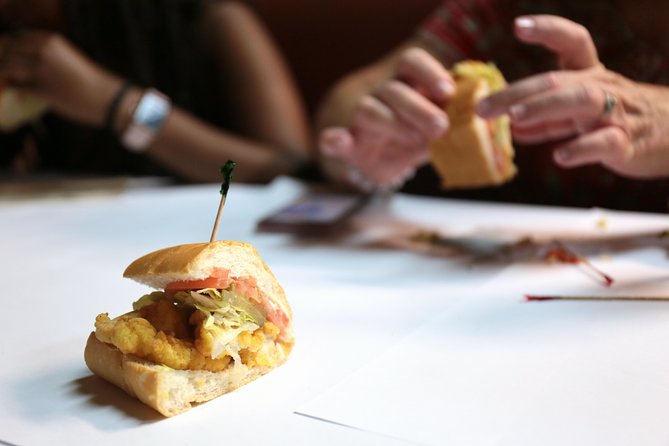
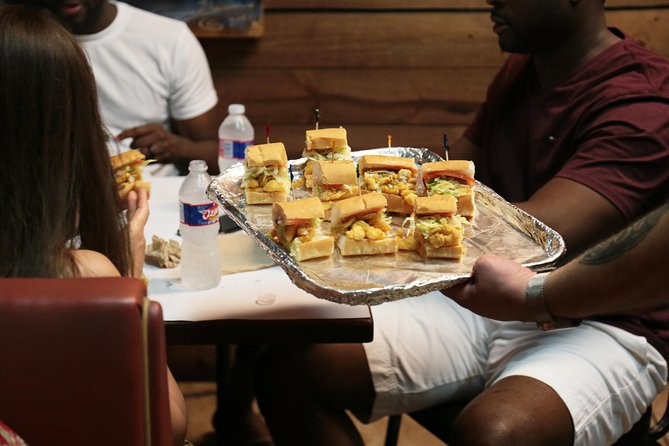
The French Quarter’s signs for po’boys and muffulettas may tempt you, and the guide takes the group to NOLA Poboys for a fried catfish po’boy. The sandwich is served on local French bread, dressed with lettuce, tomato, mayonnaise and pickles, with hot sauce optional. Before you eat, the guide talks about seafood harvesting in Louisiana, adding context to a dish that can otherwise seem like a simple fried-fish sandwich.
A po’boy is a hearty stop, not a dainty tasting plate. The tour’s portions are often described as generous, which is good news if you arrive hungry, but less useful if you hoped to save room for a long dinner afterward. You may want to keep breakfast light and plan the rest of your day around a substantial lunch.
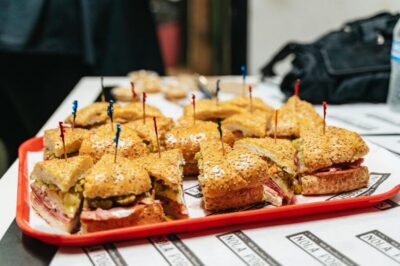
The sample menu also includes muffuletta, a Sicilian-style sandwich built with smoked ham, mortadella, Genoa salami, provolone, mozzarella and local olive salad. The exact lineup can change, so don’t count on every dish listed being served on your departure. When it appears, it offers a different view of the city’s food traditions from the seafood-focused po’boy.
Cajun and Creole tastes, with room for change
Other foods on the sample menu include a boudin ball, red beans and rice with andouille sausage, and seasonal bread pudding. A boudin ball blends smoked pork, rice and spices, then gets fried and served with Creole remoulade. Red beans and rice brings a slower-cooked, smoky flavor, while bread pudding may be baked or fried. One version has been served with bananas Foster flavors.
The menu makes clear that this is not a one-dish gumbo outing. You may encounter several contrasting textures and flavors, from fried seafood to soft rice and beans, then a sweet finish. But there is a limit to how much can fit into a three-hour tour. If your must-try list includes étouffée, jambalaya and every other New Orleans classic, treat this as an introduction, not a complete culinary checklist.
That distinction matters when deciding what the tour is worth to you. Its value lies in combining food with explanations and a route through the French Quarter, rather than in offering a full-sized meal at each stop or a taste of every signature dish. The guide can also explain the linguistic origins of dishes such as étouffée and jambalaya, even when those items are not part of the day’s food.
More history tours in New Orleans:
- New Orleans Garden District History Walking Tour
★ 5.0 · 2,879 reviews - French Quarter Historical Sights and Stories Walking Tour
★ 5.0 · 2,724 reviews - New Orleans Small-Group Haunted History Carriage Tour
★ 4.5 · 2,289 reviews - New Orleans Haunted History Ghost Tour
★ 4.5 · 2,084 reviews
Food history, not a full history walk
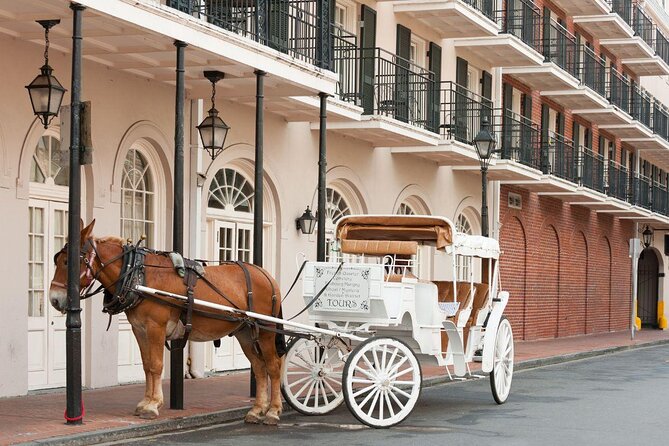
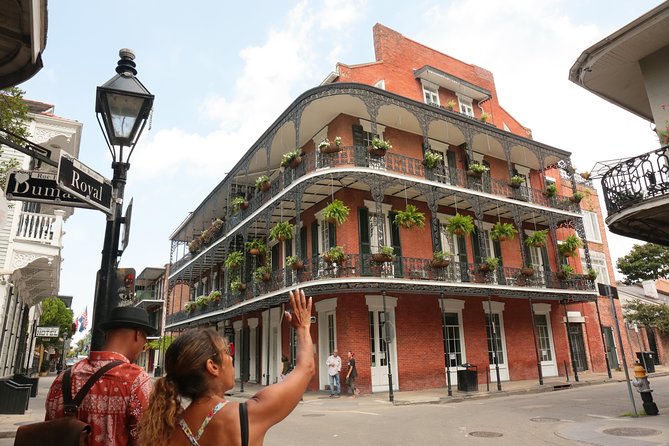
The walking route passes through the Vieux Carré, the French Quarter’s historic core. Along the way, the guide connects local dishes to the people and traditions that shaped them, including the varied cultural influences behind Creole cooking. You’ll also hear about Louisiana’s geography and how it relates to the region’s food.
This is the tour’s strongest pairing: eat a dish, then learn why it belongs in New Orleans. The guide’s explanations give food names and ingredients context, and the small group makes it easier to ask questions. Some guides, including Beth, Meg, John and Dylan, have been singled out for their humor, engaging delivery and willingness to share recipes or answer questions. Guide assignments vary, so no particular person is guaranteed.
Keep expectations in check if you want a detailed tour of architecture or city landmarks. The food is the main event, and the history follows it. You will see parts of the French Quarter as you walk between stops, but the experience is not designed as an architectural survey.
Is $85 a fair price for lunch?
At $85 per person, this costs more than ordering one meal at a restaurant. You are paying for a guided three-hour outing, food at several stops, tastings, and the stories that tie the dishes together. Gratuities for servers at the establishments are included, which helps make the price easier to assess. Drinks other than water and a tip for your guide are extra.
For a first visit to New Orleans, I see the value in starting here. You get to try a range of local foods without having to choose every restaurant yourself, and you leave with useful background for later meals. A few people have returned to places they discovered on the tour, or used their guide’s suggestions to plan where to eat next.
The value is less compelling if you already know the city’s food scene well, want tiny tastes of many more dishes, or prefer to spend the full $85 on a meal of your own choosing. Some portions are generous, but the menu and stops can change, and not every listed item is guaranteed. Think of the price as covering both lunch and a guided introduction, not a fixed tasting menu with every sample promised.
Timing, walking and dietary needs
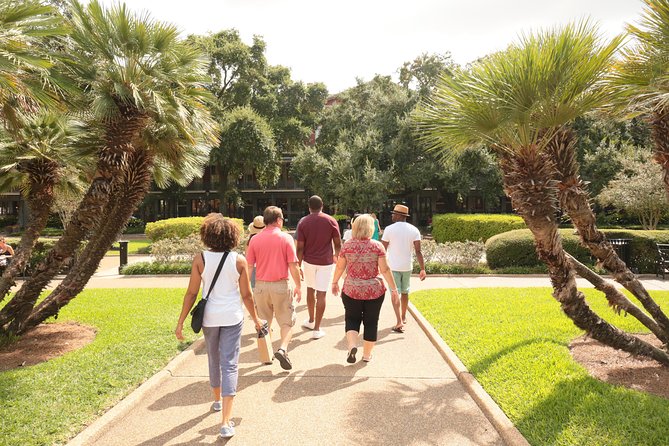
The tour lasts about three hours and offers morning and afternoon departures. It is booked, on average, 26 days ahead, so reserve early if your schedule is tight. The maximum group size is 16, which leaves room for conversation while still allowing the tour to run at a steady pace.
The start is at 3rd Block Depot, 310 Chartres Street. The tour ends at New Orleans Creole Cookery, 508 Toulouse Street. The stops are within the French Quarter, and the walk is considered manageable by some, but the pace can feel quick to others. Wear comfortable shoes and be prepared for walking. The tour is not recommended for people with mobility or walking issues.
It runs in all weather conditions, so dress for the forecast and bring an umbrella or rain jacket if needed. The route may change because venues are subject to availability. Service animals are allowed, and the tour is near public transportation.
A vegetarian option is available if requested at checkout. There is no vegan, gluten-free or dairy-free option, and food aversions cannot be accommodated. If you have a food allergy, notify the operator at checkout. The tour asks for allergies, not preferences, so be specific and confirm your needs before booking.
Who should book this New Orleans food tour?
Book it if you want an easy first taste of New Orleans cuisine and like hearing how food relates to local culture. It suits curious eaters, couples, families and solo visitors who enjoy a guided group experience. The small group limit and the mix of dishes make it especially useful early in a visit, when you’re still figuring out what to order and where to go.
Skip it if you need a vegan, gluten-free or dairy-free menu, dislike walking, or want a tour centered on architecture rather than eating. It may also frustrate you if your goal is to sample as many distinct dishes as possible in tiny portions. But if you arrive hungry, stay open to whatever the day’s stops serve, and enjoy the stories along with the food, this is a practical way to get a first bite of New Orleans.
FAQ
How long is the New Orleans Food and History Walking Tour?
The tour lasts about three hours.
How much does the tour cost?
The listed price is $85 per person.
What foods might be served?
The sample menu includes gumbo, hot sauce and seasoning samples, pralines, fried catfish po’boy, muffuletta, boudin ball, red beans and rice with andouille sausage, and bread pudding. Stops and dishes can change based on availability.
Is there a vegetarian option?
Yes. A vegetarian option is available and should be requested at checkout.
Can the tour accommodate vegan, gluten-free or dairy-free diets?
No. The tour does not offer vegan, gluten-free or dairy-free options.
Are drinks included?
Water is included. Other beverages are not, so bring money if you want a drink at a stop.
Where does the tour start and end?
It starts at 3rd Block Depot, 310 Chartres Street, and ends at New Orleans Creole Cookery, 508 Toulouse Street.
How large is the tour group?
The maximum group size is 16 people.
Can I cancel for a refund?
You can cancel for a full refund if you do so at least 24 hours before the start time. Cancellations made less than 24 hours before the tour are not refundable.
More food and drink tours in New Orleans
- New Orleans Cocktail and Food History Tour
★ 5.0 · 819 reviews - New Orleans: French Quarter Food History Walking Tour
★ 4.9 · 713 reviews - French Quarter walking Food Tour: Signature Tastes of New Orleans
★ 4.5 · 592 reviews - The Premier New Orleans Food Tour
★ 4.5 · 398 reviews
More walking tours in New Orleans
- New Orleans Premier Ghost, Voodoo and Vampire Walking Tour
★ 4.5 · 12,856 reviews - St. Louis Cemetery No. 1 Official Walking Tour
★ 4.5 · 3,941 reviews - New Orleans French Quarter, Voodoo and Culture Walking Tour
★ 4.5 · 2,961 reviews - New Orleans Haunted Ghost, Voodoo & Vampire Walking Tour
★ 4.5 · 2,731 reviews
Newest tours in New Orleans
- New Orleans : Garden District Architecture Walking tour★ 4.8 · 5 reviews
- Ultimate Denver Day Out: Red Rocks, City Views & Ice Cream★ 5.0 · 7 reviews
- True Voodoo History of NOLA’s Congo Square with Local Guide★ 4.9 · 16 reviews
- From New Orleans: Whitney and Laura Guided Plantation Tour★ 4.9 · 20 reviews
- Witches Coven Walking Tour in New Orleans★ 5.0 · 49 reviews
- Treme Bar Crawl & Seafood Experience★ 4.2 · 7 reviews
- New Orleans Self-Guided Kayak Bayou Swamp Tour★ 5.0 · 9 reviews
- Whitney Plantation and Soul of New Orleans City Tour Combo★ 5.0 · 13 reviews
New Orleans Food Tours, compared.
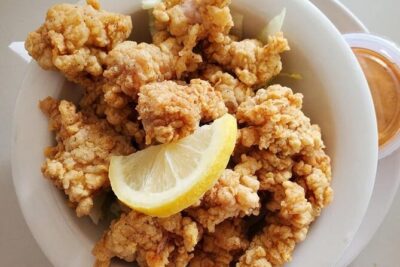
New Orleans Food Walking Tour of the French Quarter with Small-Group Option
Read our review →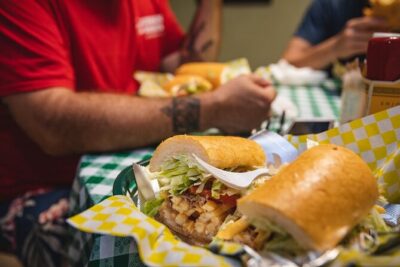
New Orleans French Quarter Food Tour: Cajun, Creole and Culture
Read our review →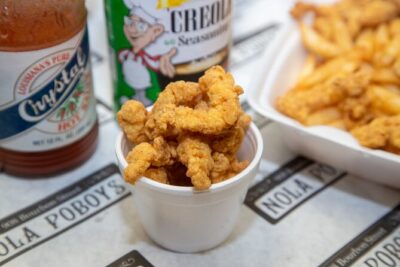
French Quarter walking Food Tour Famous Flavors of New Orleans
Read our review →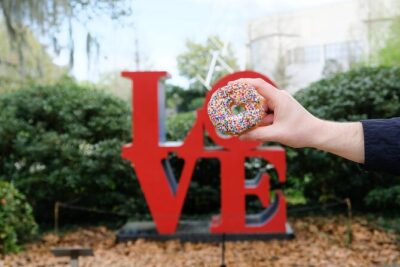
New Orleans Delicious Donuts & Beignets: A Sweet Walking Tour
Read our review →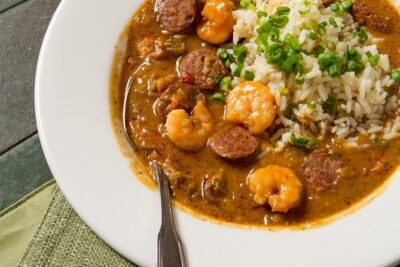
French Quarter walking Food Tour: Signature Tastes of New Orleans
Read our review →
French Quarter Small-Group Cocktail and Foodie Crawl
Read our review →Browse the lists this tour appears in