
Reviewed · NEW ORLEANS CEMETERY TOURS
5 Cemeteries of New Orleans – Anne Rice’s & other famous graves
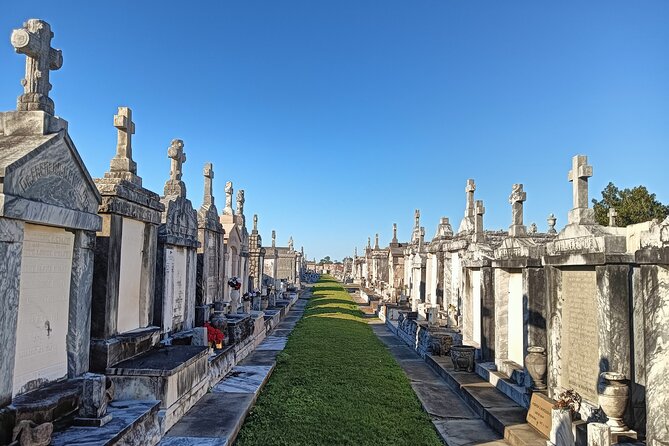
New Orleans tells its story in its cemeteries, where above-ground tombs, family monuments and burial grounds reflect the city’s people and customs. This two-hour morning tour moves from Greenwood and Cypress Grove to Metairie, Irish Catholic cemeteries and a memorial for Hurricane Katrina victims.
I like two things in particular: you get several distinct burial grounds in one compact tour, and a guide can explain details that are easy to miss when you explore on your own. The contrast between modest Irish graves and elaborate monuments is a useful window into the city’s past.
The trade-off is pace. With many stops packed into two hours, you get an introduction rather than time to linger at every tomb. The subject matter also ranges from family feuds to yellow fever and the deaths caused by Katrina, so it is not a light stroll.
- Anne Rice’s grave at Metairie Cemetery adds a literary landmark to a cemetery known for grand monuments.
- New Orleans burial customs are explained through Catholic, Protestant and Jewish burial grounds.
- Irish history comes into focus at St. Patrick Cemetery #1 and #2, where the graves reflect different generations and means.
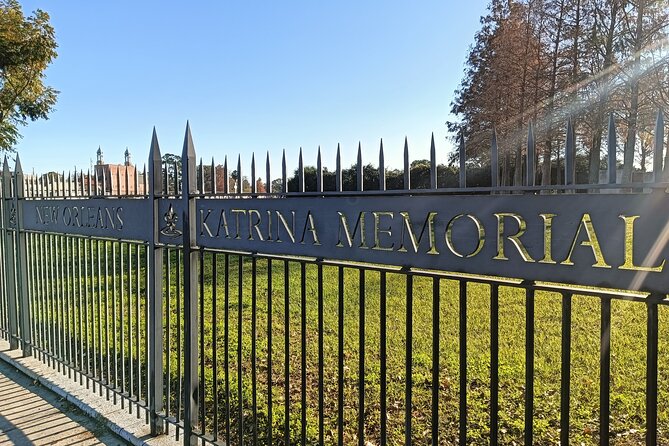
- The Katrina memorial is also the burial place of 80 locals who died in the 2005 hurricane.
- The 10:00 am tour lasts about two hours and limits the group to 22 people.
A short route through a city’s burial customs
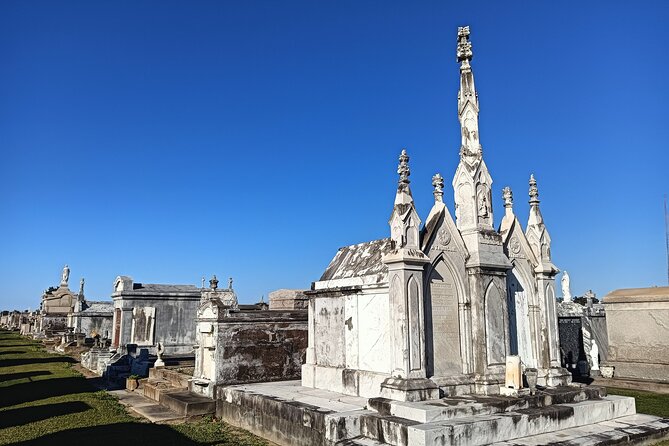
The tour is titled 5 Cemeteries of New Orleans, but its route groups several named burial grounds into a handful of stops. You visit Greenwood, Cypress Grove, Gates of Juhad, Metairie, St. Patrick #1 and #2, Charity Hospital Cemetery, and the Hurricane Katrina Memorial. In practical terms, that means a broad look at the city’s burial traditions, not five long, separate visits.
That variety is the main reason to choose a guided tour. New Orleans burial customs can seem puzzling if you are looking only at rows of tombs. A guide links what you see to religious practice, immigration, wealth, disease and family history, giving each stop a purpose beyond its striking appearance.
The route is arranged in four half-hour segments, with several cemeteries grouped together at the first and third stops. The schedule makes it possible to see a lot in two hours, but it also means you should not expect a slow, solitary visit at each site. Bring questions, and use the time with the guide well.
The tour begins at 10:00 am at Morning Call Coffee Stand, 5101 Canal Boulevard, and ends back at the same meeting point. It is offered in English, with a maximum group size of 22. The cemetery admissions and guide are included; lunch and alcoholic drinks are not.
Greenwood, Cypress Grove and Gates of Juhad
The first stop brings together three distinct burial grounds. Greenwood Cemetery is described as beautiful, with imposing graves and statues. The guide points out celebrity graves and explains why burial procedures in New Orleans differ from those elsewhere in the United States.
That context matters. Rather than treating above-ground tombs as mere curiosities, the tour uses them to introduce local practices and the reasons behind them. If you have wondered why New Orleans cemeteries look so different from a typical American graveyard, this is where you begin to get an answer.
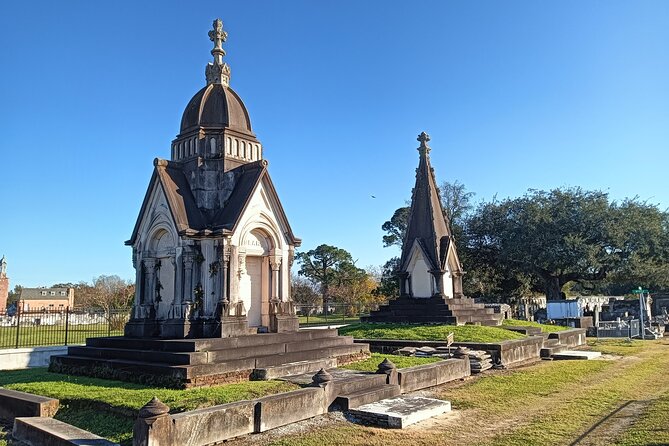
At Cypress Grove, a Protestant cemetery, the focus shifts to more notable graves and two of the city’s largest and most monumental tombs. Their scale is impressive, but the story behind them is even more memorable: the families who built them were rivals, and their feud gives the guide room for a little humor amid the solemn setting.
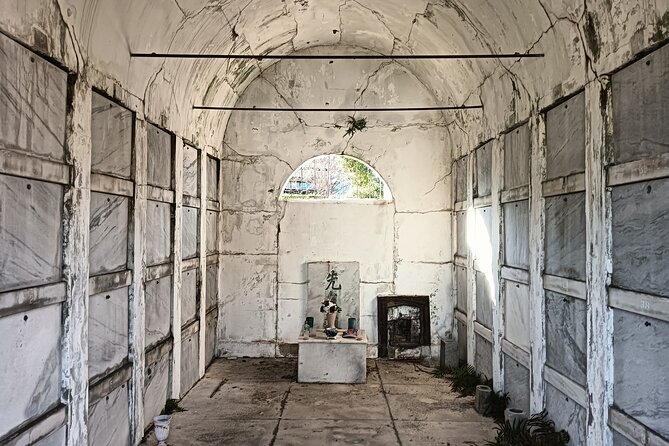
The stop also includes Gates of Juhad, a Jewish cemetery. Here, the guide compares Jewish burial practices with Catholic and Protestant customs in New Orleans. That side-by-side perspective is useful because it shows that the city’s cemetery traditions are not one single story.
These three grounds make for a busy opening half-hour. You will see a range of monuments and hear several stories, but the clock is tight. If a particular grave or subject catches your interest, ask about it as you go rather than counting on extra time at the end.
More cemetery tours in New Orleans:
- St. Louis Cemetery No. 1 Official Walking Tour
★ 4.5 · 3,941 reviews - Cemetery and Ghost BYOB Bus Tour in New Orleans
★ 4.5 · 2,685 reviews - New Orleans City Tour: French Quarter, Garden District & Cemetery
★ 4.5 · 2,209 reviews
Metairie Cemetery and Anne Rice’s grave
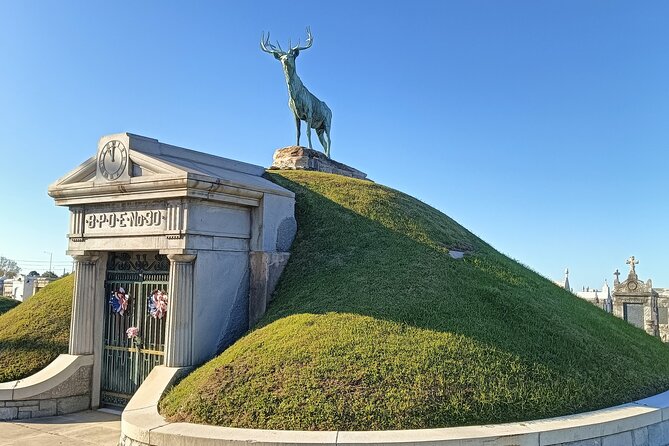
The next half-hour is at Metairie Cemetery, also known as Lake Lawn Metairie in the tour details. It is often called one of America’s most beautiful cemeteries, and the itinerary emphasizes its grand tombs and notable burials. You will see the grave of Anne Rice, author of Interview with the Vampire, along with the grave of musician Louie Prima, actors’ graves and those of people connected to organized crime.
For readers drawn by Anne Rice, this stop is the tour’s clearest literary connection. The grave gives you a tangible link to the author whose work drew so much from New Orleans, while the surrounding monuments broaden the visit beyond a single famous name.
Metairie also offers a chance to take in the cemetery’s scale and style. If your main interest is photography or quiet reflection, keep in mind that this is one part of a tightly timed group route, not a private visit. You will have a guide’s commentary and time to look around, but not an open-ended wander.
St. Patrick’s cemeteries and the Irish story
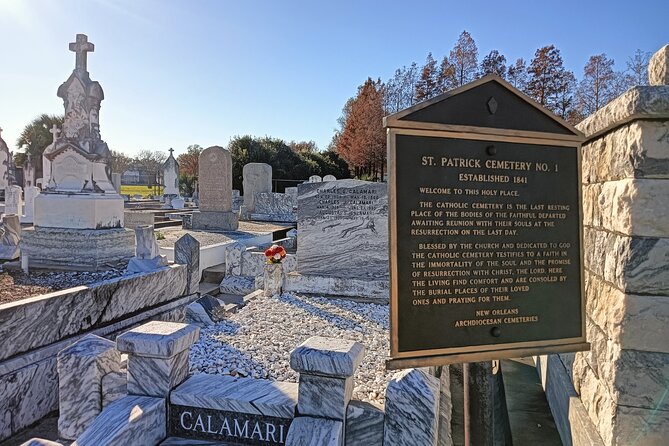
The third half-hour covers three grounds, including St. Patrick Cemetery #1, St. Patrick Cemetery #2 and Charity Hospital Cemetery. At St. Patrick #1, you visit what is described as the city’s oldest Irish Catholic cemetery. It began with immigrants who had escaped the Irish Potato Famine, many of them poor and part of the first generation of Irish New Orleanians.
The graves here are modest and arranged less formally than the elaborate monuments at some other stops. That contrast is one of the tour’s strongest teaching moments. You can see how limited means shaped the burial ground, while hearing about the hardships faced by the early Irish community.
Across the street, St. Patrick #2 reflects a later generation. The graves are more imposing and ornate, showing what growing wealth in the Irish-American community could mean in a cemetery. Seeing the two grounds together gives the story a physical shape: different generations, different resources, and a changing place in the city.
The final cemetery in this group is Charity Hospital Cemetery, a mass burial ground used in the past for victims of yellow fever. The guide explains why the disease was so prevalent in New Orleans and shares the cemetery’s darker history. It is a sobering subject, but it adds important context to the city’s public health past.
Three cemetery settings in half an hour can feel brisk, especially if you want time to absorb the details. Still, the sequence is well suited to comparison. You move from poverty to prosperity, then to the consequences of a deadly epidemic, with each stop adding a new layer to the city’s story.
The Hurricane Katrina memorial
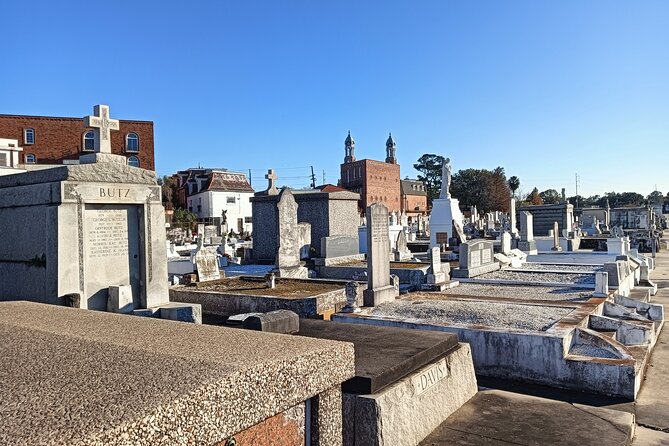
The final stop is a memorial to victims of Hurricane Katrina. It is also a cemetery for 80 local people who died in the 2005 storm. The guide shares the story of how their bodies were lost by local authorities, later rediscovered in an obscure freezer, and finally given a proper burial.
This is the tour’s most recent and personal chapter. The earlier stops deal with customs, old family rivalries, immigration and disease; here, the focus is on a more recent tragedy and the dignity owed to those who died. The memorial offers a quiet, respectful place to hear the story.
Because the subject is serious, this stop may land differently than the more colorful tales at Cypress Grove. I would not treat the tour as a collection of spooky cemetery stories. Its appeal is the range of human experiences, including grief and the lasting consequences of a major disaster.
Same city, a different kind of day:
- New Orleans Premier Ghost, Voodoo and Vampire Walking Tour
★ 4.5 · 12,856 reviews - New Orleans Steamboat Natchez Jazz Cruise with Dinner Option
★ 4.0 · 7,533 reviews - Adults-Only New Orleans Ghost, Crime, Voodoo, and Vampire Tour
★ 5.0 · 6,545 reviews - New Orleans Food Walking Tour of the French Quarter with Small-Group Option
★ 5.0 · 6,118 reviews
What the guide adds
A good guide matters on this route. The experience depends on linking monuments to stories and explaining how religious practice, family circumstances and public events shaped the burial grounds. Guides Bobby and Chris are named by people who took the tour, and Christopher is also mentioned as a guide who answered questions and matched the pace of the group.
The praise focuses on qualities that are especially useful here: clear explanations, a friendly manner, a prompt start, and room to ask questions and take photos. One group was small enough to allow plenty of interaction, while the tour itself can take up to 22 people. Your group may be larger, so expect the amount of conversation to depend partly on who is along.
The tour has also continued in extreme weather, with one account describing a solo tour during rain and a thunderstorm. That is a vivid reminder that weather can shape the feel of a cemetery visit, but it does not guarantee that every tour will operate in the same conditions. Check the forecast and dress for the day.
Is $29 good value?
At $29 per person, the value comes from the amount of ground covered and the guide’s interpretation. You visit multiple cemetery sites, see famous and lesser-known graves, and hear about burial practices and local history in a single two-hour outing. If you tried to piece together the same subjects on your own, you would need to do your own research and organize the visits.
The price includes the guide and cemetery admissions, so there is no separate entry cost listed for the stops. You will need to budget separately for lunch or alcoholic beverages, neither of which is included. The compact schedule is also part of the value: the morning start leaves the rest of the day open for other New Orleans sights.
The limitation is depth. If you want a long, quiet visit at one particular cemetery, this is not the best format. If you want a guided overview that connects several places and makes the city’s burial customs easier to understand, the price is reasonable.
Practical details before you go
The tour starts at 10:00 am at Morning Call Coffee Stand, 5101 Canal Boulevard, New Orleans, and returns to that meeting point. Public transportation is nearby, and the group is capped at 22. The activity is offered in English, and the ticket is mobile.
Plan for a two-hour outing and wear footwear you are comfortable walking in. The route has been described as easily walkable, but the exact amount of walking and pace can depend on the group and conditions. With several stops and stories to cover, it helps to arrive ready to keep moving and ask questions along the way.
The tour offers free cancellation up to 24 hours before the start time. Changes or cancellations made less than 24 hours ahead are not accepted for a refund. If you want more flexibility, keep that cutoff in mind when making plans.
Should you book this cemetery tour?
Book it if you want more than a list of famous graves. The tour connects New Orleans burial customs with Irish immigration, religious differences, yellow fever, family rivalries and the Katrina memorial. That mix makes it a strong choice for history-minded visitors, Anne Rice readers, and anyone curious about why the city’s cemeteries look and function as they do.
Skip it if your priority is a slow, unstructured visit or if you would rather focus on just one cemetery. The route covers a lot in two hours, so its strength is breadth and explanation, not lingering. For a morning introduction to New Orleans through its burial grounds, $29 buys a useful and unusual slice of the city.
FAQ
How long is the tour?
It lasts about two hours.
What time does the tour start?
The start time is 10:00 am.
Where does the tour begin?
It begins at Morning Call Coffee Stand, 5101 Canal Boulevard, New Orleans.
Where does the tour end?
It ends back at the meeting point.
What is the price?
The tour costs $29 per person.
What is included?
A tour guide and cemetery admissions are included.
Are food or drinks included?
No. Lunch and alcoholic beverages are not included.
What language is the tour offered in?
The tour is offered in English.
How many people can join?
The maximum group size is 22 people.
Which famous grave is included?
The tour visits Anne Rice’s grave at Metairie Cemetery.
Newest tours in New Orleans
- New Orleans : Garden District Architecture Walking tour★ 4.8 · 5 reviews
- Ultimate Denver Day Out: Red Rocks, City Views & Ice Cream★ 5.0 · 7 reviews
- True Voodoo History of NOLA’s Congo Square with Local Guide★ 4.9 · 16 reviews
- From New Orleans: Whitney and Laura Guided Plantation Tour★ 4.9 · 20 reviews
- Witches Coven Walking Tour in New Orleans★ 5.0 · 49 reviews
- Treme Bar Crawl & Seafood Experience★ 4.2 · 7 reviews
- New Orleans Self-Guided Kayak Bayou Swamp Tour★ 5.0 · 9 reviews
- Whitney Plantation and Soul of New Orleans City Tour Combo★ 5.0 · 13 reviews
New Orleans Cemetery Tours, compared.
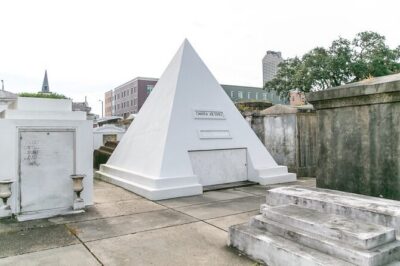
St. Louis Cemetery No. 1 Official Walking Tour
Read our review →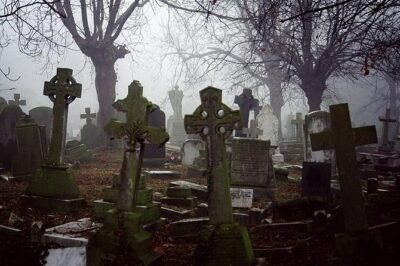
Cemetery and Ghost BYOB Bus Tour in New Orleans
Read our review →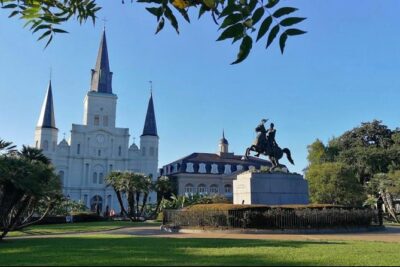
New Orleans City Tour: French Quarter, Garden District & Cemetery
Read our review →
New Orleans Dead of Night Ghosts and Cemetery Bus Tour
Read our review →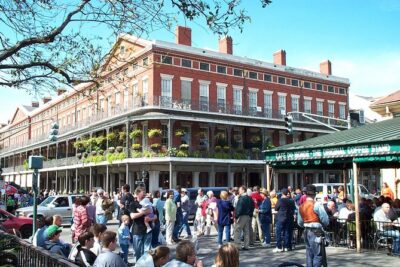
New Orleans City and Cemetery 2-Hour Bus Tour
Read our review →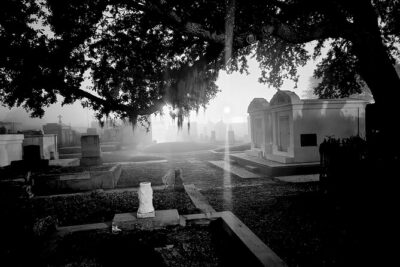
New Orleans Cemetery Bus Tour with Exclusive Cemetery Access
Read our review →
Cemetery Bus Tour At Dark with Exclusive Access
Read our review →
Browse the lists this tour appears in